
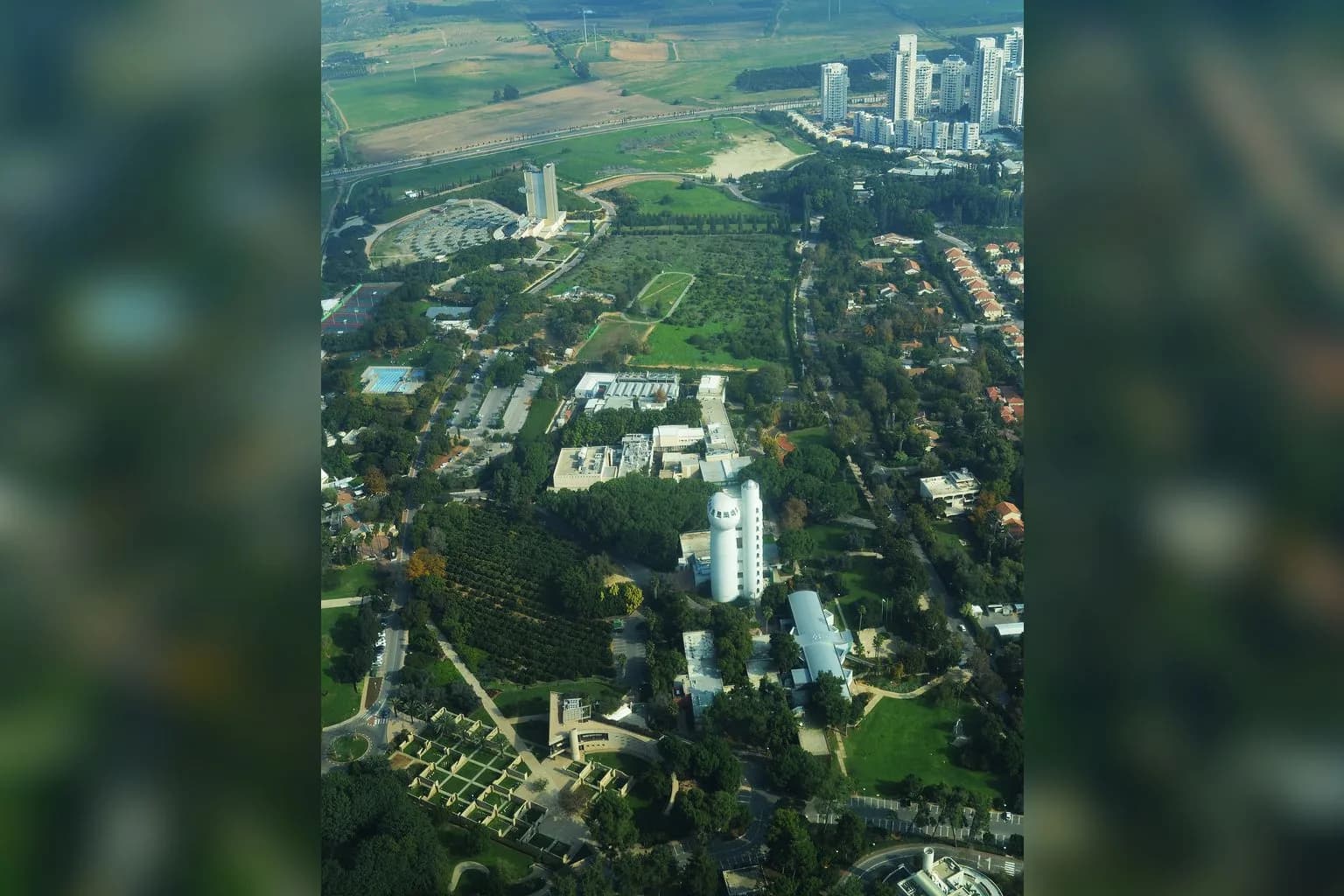
Inside a high-resolution functional magnetic resonance imaging scanner, volunteers watched images of a surfer, a giraffe, a banana next to a bowl and a sleeping woman as the machine recorded changes in their brain activity. Prof. Michal Irani led the team at the Weizmann Institute of Science’s Department of Computer Science and Applied Mathematics that used those records to build Brain-IT.
The project is best read as an advance in making brain-image decoding more practical: Brain-IT can learn to read a new person from one hour of brain scans, while every other model requires dozens of hours. That shorter calibration time is central to its advantage, although the system still works only with pictures and requires a subject to be inside an MRI machine.
The researchers, based in Rehovot, Israel, developed Brain-IT to reconstruct recognisable images that people are viewing from functional MRI, or fMRI, scans. The system achieved high accuracy and outperformed existing models on both image content and detail.
The team includes Navve Wasserman, Jonathan Kogman, Roman Beliy and Amit Zalcher. Its research was accepted at ICLR 2026, and the announcement was made on 14 September 2026.
fMRI uses a giant magnet to follow oxygenated blood through the brain. It detects changes across thousands of tiny three-dimensional areas known as voxels, which gives researchers a record of activity patterns while a person responds to an image.
The researchers analysed publicly available brain-scan data from volunteers who had viewed images in fMRI scanners. The model was trained using data from eight people, each shown around 9,000 images in a high-resolution scanner.
The newer scanners used in the work recorded voxels covering around one cubic millimeter of neurons, compared with three cubic millimeters in typical fMRI scanners. That greater resolution supplied the input for a decoder with two branches: one predicts an image’s structure and the other its content.
Brain-IT uses a diffusion model, a form of AI known for generating images and video by progressively cleaning noise from pixels. In this case, the model was trained to rebuild what someone sees from the neural patterns recorded by the scanner.
Its limits matter as much as its results. Brain-IT cannot reconstruct dreams or arbitrary thoughts, and its reconstructions are confined to pictures a person has viewed.
Even within those limits, the work raises questions over who could gain access to visual information contained in brain data and which privacy rules should govern it. Tommy Sprague, a neuroscientist at the University of California, Santa Barbara, warned that a similar approach could reveal people’s inner thoughts and mental imagery potentially without their consent.
AI technology could also eventually help doctors assess awareness in people left unable to speak or move after a catastrophic stroke, severe brain injury or other conditions.



Comments (0)