
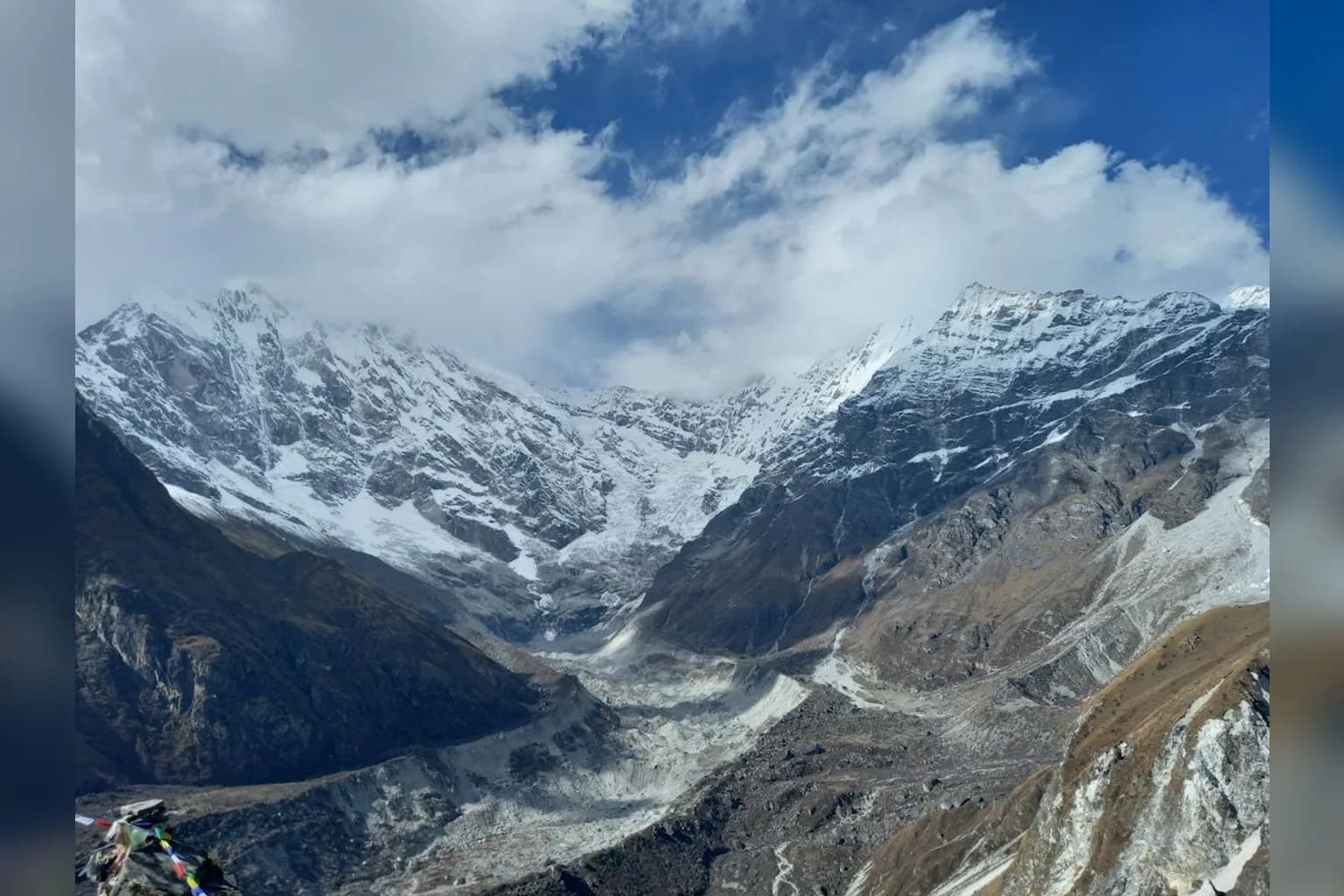
Flash floods that tore through a Himalayan border region of Nepal and the Chinese region of Tibet on the morning of 26 August killed more than 1,300 people, with thousands still missing. Scientists investigating the disaster now say warming-related permafrost thaw and glacial thinning were key factors in a chain of failures that began high on Langtang-Lirung mountain.
A mass of bedrock and glacier ice broke away from the mountain's slope in the Nepalese Himalaya. It fell from approximately 5,200 metres above sea level to the valley floor at 3,000 metres. Rivers downstream rose by between seven and nine metres within 30 minutes, producing the destructive floods.
Early explanations focused on a glacial collapse. Researchers now describe the event as a 'multi-hazard cascade' that started with the collapse of bedrock, followed by the release of glacier ice and the sudden surge of water downstream.
On 17 September, a rapid analysis by the World Weather Attribution service identified permafrost thaw and glacial thinning as 'key' factors in the disaster. The service also cited a 'massive' 2015 earthquake, which it said 'likely influenced' the collapse by weakening the 'underlying rock mass over a long term'.
Permafrost can bind mountain rocks together. As it melts, the rock becomes weaker. Thaw can also leave ground saturated, adding 'pressure in the joints' of rock and helping to 'facilitate' failure.
The findings point to a changing risk in high mountain areas as temperatures rise. A 2025 study of rock and ice avalanches in High Mountain Asia found that more than two-thirds began in places 'where permafrost is probable'. Scientists have also said warming is making ice-rock avalanches in the region more likely.
July and August temperatures around the collapse site have increased by 1.5C because of human-caused climate change. Across the Hindu Kush Himalaya, rapid warming is changing glaciers, snow cover, permafrost and mountain slopes. Climate warming can destabilise these environments through landslides, debris flows, glacial meltwater, lake outbursts and glacier collapses.
The World Weather Attribution analysis identifies important contributing conditions rather than a numerical measure of climate change's role in the scale and severity of this flood. An in-depth formal rapid attribution study has yet to establish that quantitative contribution. The precise sequence through which the bedrock failure produced the full cascade also remains unknown.
Balendra Shah, Nepal's prime minister, called the floods a 'serious signal that…the risks we must bear in the Himalayan region are increasing' due to climate change.
The disaster comes as ice loss accelerates across a mountain region central to water and economic security far beyond its highest valleys. Ice-loss rates in the Hindu Kush Himalaya have doubled since 2000. Between 2000 and 2019, glaciers lost 267 gigatons of ice per year.
More than 63,000 glaciers in the area feed at least 10 major Asian river systems. They support the food, water, energy and livelihood security of billions of people. Around 78% of the glacier area, between 4,500 and 6,000 meters above sea level, is highly exposed to warming.
Reports project the loss of up to 50% of all glaciers, excluding those in Greenland and Antarctica, by 2100 even if global warming is limited to 1.5 degrees Celsius (2.7 degrees Fahrenheit). Current global policies put Earth on a trajectory to warm by about 2.8 degrees Celsius (5 degrees Fahrenheit) above preindustrial levels by the end of the century.
Scientists have yet to determine whether comparable collapses are imminent elsewhere in the Hindu Kush Himalaya, and long-term projections remain uncertain for individual watersheds feeding Asian river systems. The Langtang-Lirung disaster nevertheless offers evidence of how thawing permafrost, thinning ice and earlier geological damage can combine to turn a mountain collapse into a major flood emergency.




Comments (0)