
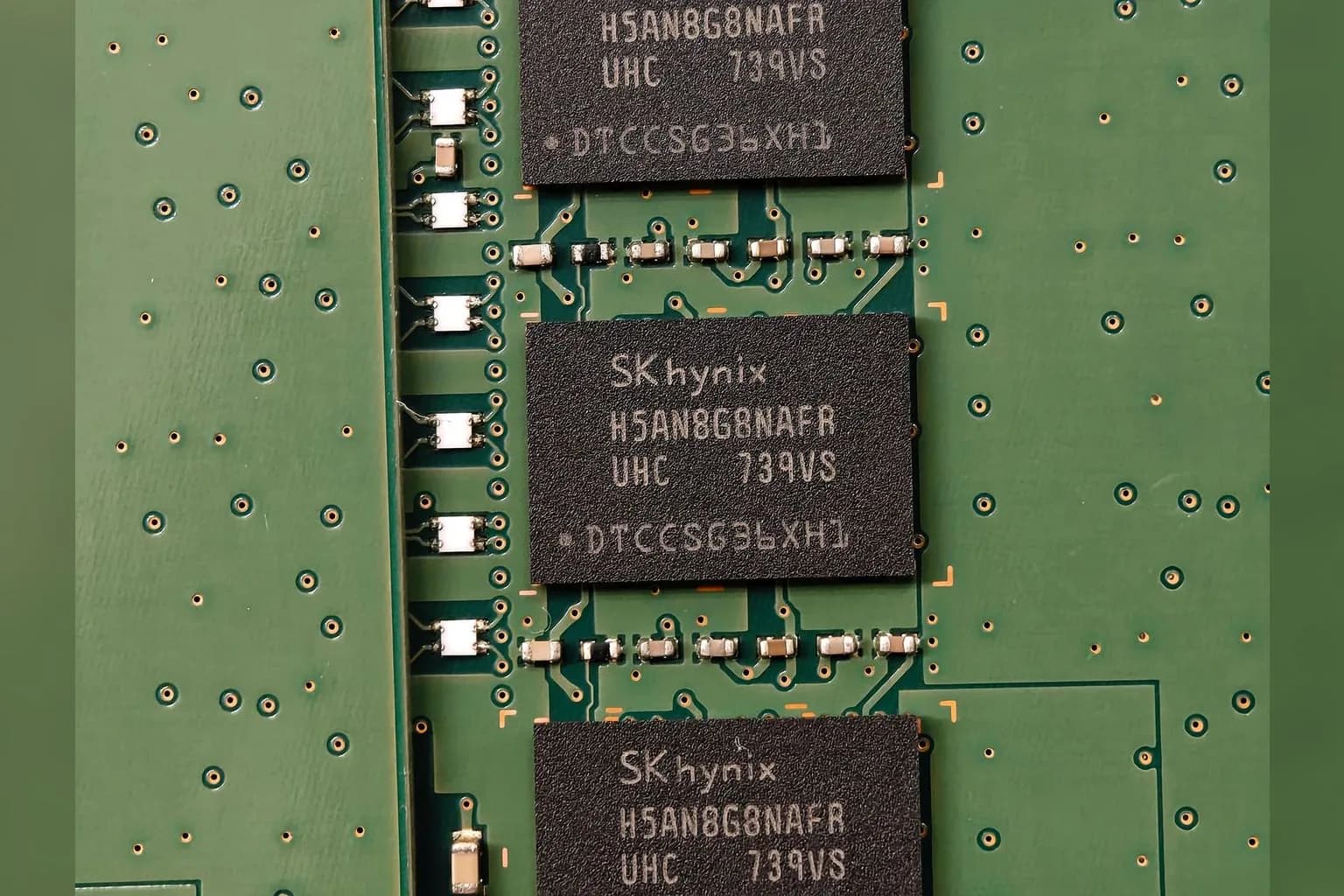
For people looking for a smartphone priced below 99 USD, the memory inside the device has become the largest cost. In the first quarter of 2026, memory accounted for more than 64% of the total material cost of phones in that price range.
That pressure began in late 2025, when the global memory industry faced an unprecedented shortage of RAM, also known as DRAM, as production capacity tightened. AI data centres run by Nvidia, Google and Microsoft were consuming high-bandwidth memory, or HBM, and advanced LPDDR chips, leaving consumer PC, gaming and smartphone markets competing for the remaining DRAM supply.
Samsung, SK hynix and Micron then shifted investment and manufacturing capacity towards AI-focused memory, while holding back expansions of commodity DRAM. The price of a 16Gb DDR5 chip rose from ~$6.84 to ~$27.20 in Q4 2025. LPDDR contract prices also climbed 70–83% month-on-month in Q2 2026.
Phone makers have had to decide whether to pass those costs on to customers or cut back their least profitable models. Chinese manufacturers, responsible for approximately 60% of smartphone shipments worldwide, have drastically reduced their entry-level projects this year as memory costs rose.
Existing smartphone models have become about 15% more expensive globally this year. Newly launched models cost roughly 25% more than they did last year. In 2025, more than one in four smartphones shipped globally cost less than $150.
The increases vary sharply by market. Smartphone prices have risen by 21% in India, 19% across Asia-Pacific and 18% in the Middle East and Africa, compared with just 5% in the U.S.
In Southeast Asia, the average selling price of mobile phones rose 31% year-on-year to 342 USD in the second quarter of 2026, while total shipments fell 23%. Xiaomi’s shipments of phones priced below 100 USD in the region dropped 69%. Shipments of sub-$100 phones in Latin America fell 72%, while those of sub-$200 phones in the Middle East fell 42%.
Claire Sibthorpe, head of digital inclusion at GSMA’s nonprofit foundation, represents the organisation’s concern that higher handset prices could undermine projections for nearly 800 million additional people to use mobile internet by 2030. GSMA has warned that rising smartphone costs threaten that projection.
The supply squeeze may continue. High memory prices and constrained availability are expected to persist into 2027–2028, when new fabrication plants come online.





Comments (0)