
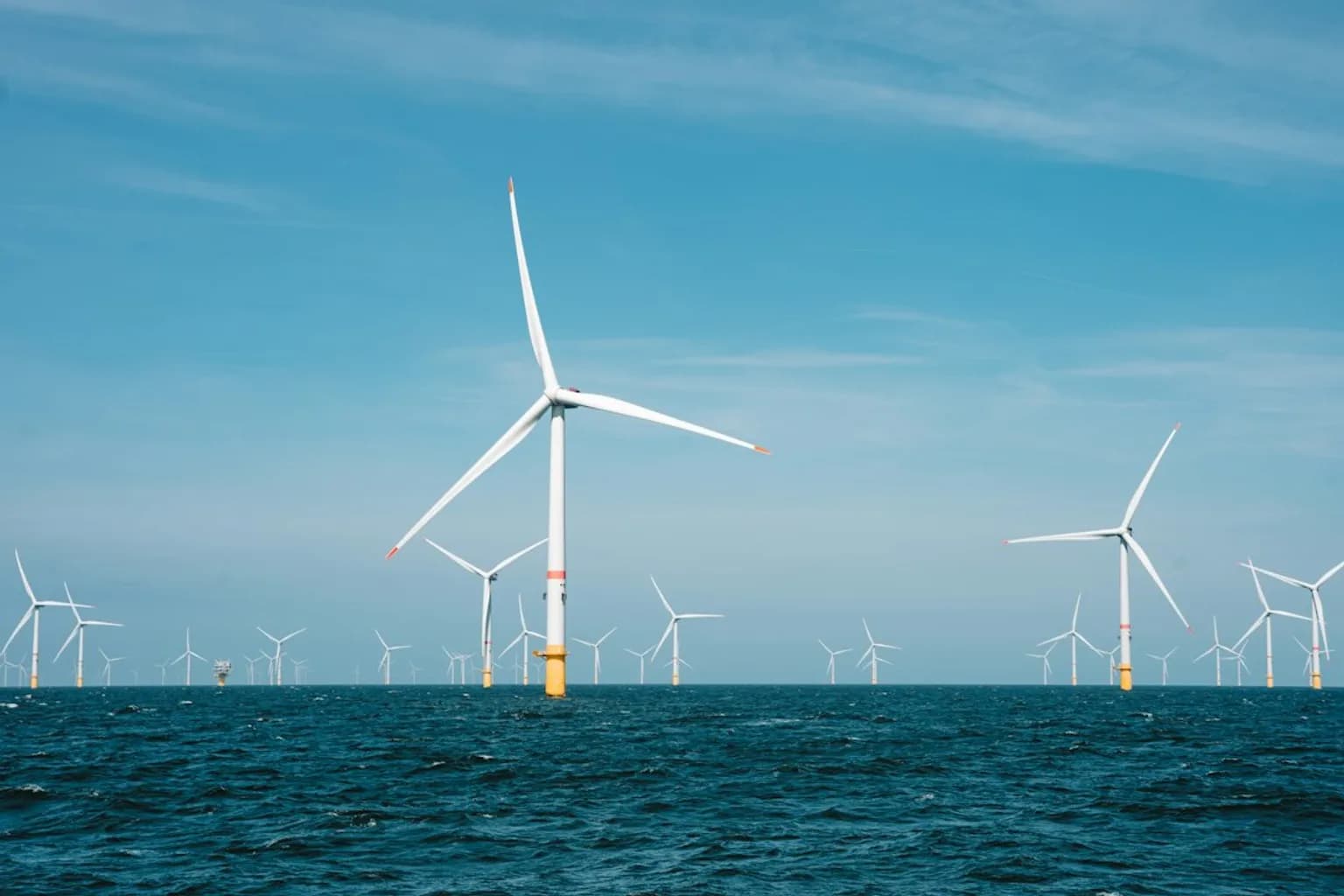
Installation crews working from Hull have completed the hundredth turbine at a wind farm 121 miles into the North Sea off the English coast.
Each of the 100 turbines has a 14-megawatt capacity, bringing the wind farm’s combined capacity to 1.4 gigawatts. It can supply the equivalent of 1.2 million British homes.
The project covers 229 square miles and is the world’s farthest fixed-bottom wind farm ever built.
The first turbine went in during March of last year. The project reached its halfway mark in September, then had 80 turbines installed by mid-April and 91 by late May, before the hundredth was installed on 10 June this year.
Each turbine rises 827 feet above the waterline. Its blades measure 354 feet apiece, while the rotor sweeps 728 feet across, covering nearly 10 acres with every revolution.
The work has required steel foundations to be driven into the seabed. The single steel tubes can be up to 29 feet in diameter and up to 302 feet long, with a weight of as much as 1,690 tons apiece.
The site sits on Dogger Bank, a formation between 50 and 120 feet below the surface. It is roughly 160 miles long and up to 60 miles wide, and lies about 65 feet shallower than the surrounding sea floor.
That seabed was farmland during the last ice age before the sea reclaimed it roughly 8,000 years ago. It formed part of Doggerland, a landscape walked by Stone Age hunters until around 8,000 years ago.
Half of the turbines carry recyclable blades. All 150 of those blades were made in Hull and installed last year.
Electricity from the turbines will travel 137 miles through a high-voltage direct current circuit to landfall at Redcar on the northeast English coast. An offshore converter platform, set on a jacket foundation in 2024, raises voltage from the array to a level the cable can carry.
Operations and maintenance will run from the operator’s offshore wind base at Grimsby. The project is estimated to cost roughly 3.7 billion dollars, or approximately $2.64 per watt of nameplate capacity.





Comments (0)