
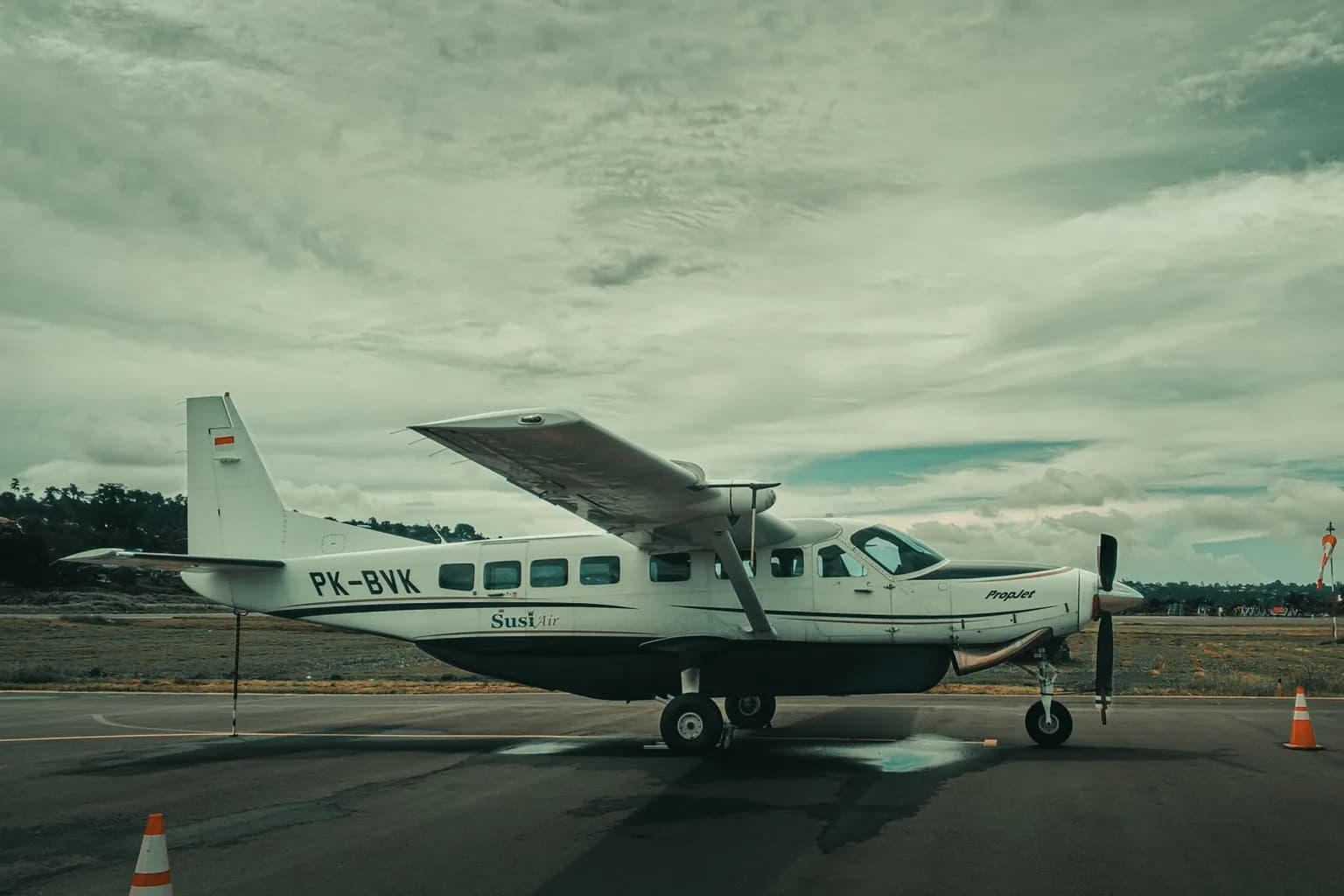
Joby Aviation’s coast-to-coast autonomous flight is best read as a demonstration that its aviation strategy reaches beyond its planned electric air-taxi service. The company said on September 18, 2026, that a Cessna 208B Grand Caravan fitted with its flight technology had completed the first-ever autonomous flight across the United States, covering 3,199 miles without a single control input from the qualified safety pilot required to be on board.
The retrofitted aircraft, designated the J208, left Concord, California on September 8 and arrived in North Carolina on September 14. Joby said its system carried out taxiing, take-offs, route navigation and landings autonomously throughout the journey. The aircraft also managed transitions through controlled airspace, operations at night, weather reroutes and busy general aviation airports.
Federal Aviation Administration (FAA) rules required the safety pilot to fly in the aircraft. Joby said the pilot made zero control inputs. The J208 was supervised remotely from Joby’s Autonomy Headquarters in California and Shaw Air Force Base in South Carolina, with telemetry supervision extending up to 2,323 miles away.
The route’s planned stops included Phoenix Deer Valley Airport, Arizona; Fort Worth Alliance Airport, Texas; and Shaw Air Force Base, South Carolina. The aircraft made an autonomous landing at Dare County Regional Airport. It also conducted an autonomous low pass near the Wright brothers’ First Flight Monument in Kitty Hawk, North Carolina.
Joby said the trip demonstrated the operational maturity and safety of its autonomy technology under conditions closer to regular aviation work than a confined test flight. The company has identified commercial freight, medical transport, disaster response and defence logistics as possible uses for the system.
The J208 programme came from Joby’s acquisition of Xwing’s autonomy division in June 2024. The aircraft had already completed more than 3,900 miles of autonomous missions during the Air Force’s Agile Flag exercise in 2024. The current cross-country tour is planned to cover approximately 6,380 miles across 12 locations during a month-long demonstration.
The demonstration gives Joby a fixed-wing platform for showing long-range autonomous operations while it develops its S4 electric vertical take-off and landing, or eVTOL, aircraft for passenger travel. The S4 has five seats, for one pilot and four passengers. Joby says it has achieved a top speed of 200 mph and has a target range of up to 150 miles on a single charge.
Joby’s first FAA-conforming eVTOL aircraft began Stage 5 flight testing in March 2026. The company currently operates five aircraft and has 12 more in production. Management has set a target of commercial launch by end of 2026, including its first eIPP passenger operations in Texas by year-end 2026.
That timetable remains separate from the certification outlook cited by independent analysts. They place FAA type certification for full commercial service at mid-2027 at the earliest, with a 20–30% probability at that date. Joby has not specified whether it intends to market the J208 autonomy system separately from its eVTOL plans, nor has it set out an expected certification route for autonomous fixed-wing operations.
The coast-to-coast flight therefore provides evidence of the system’s performance under a range of operating conditions, while leaving the commercial and regulatory path for autonomous cargo and logistics services undefined. For Joby, the immediate value is a public record of autonomous flight activity alongside its parallel effort to bring a piloted passenger aircraft into service.





Comments (0)