
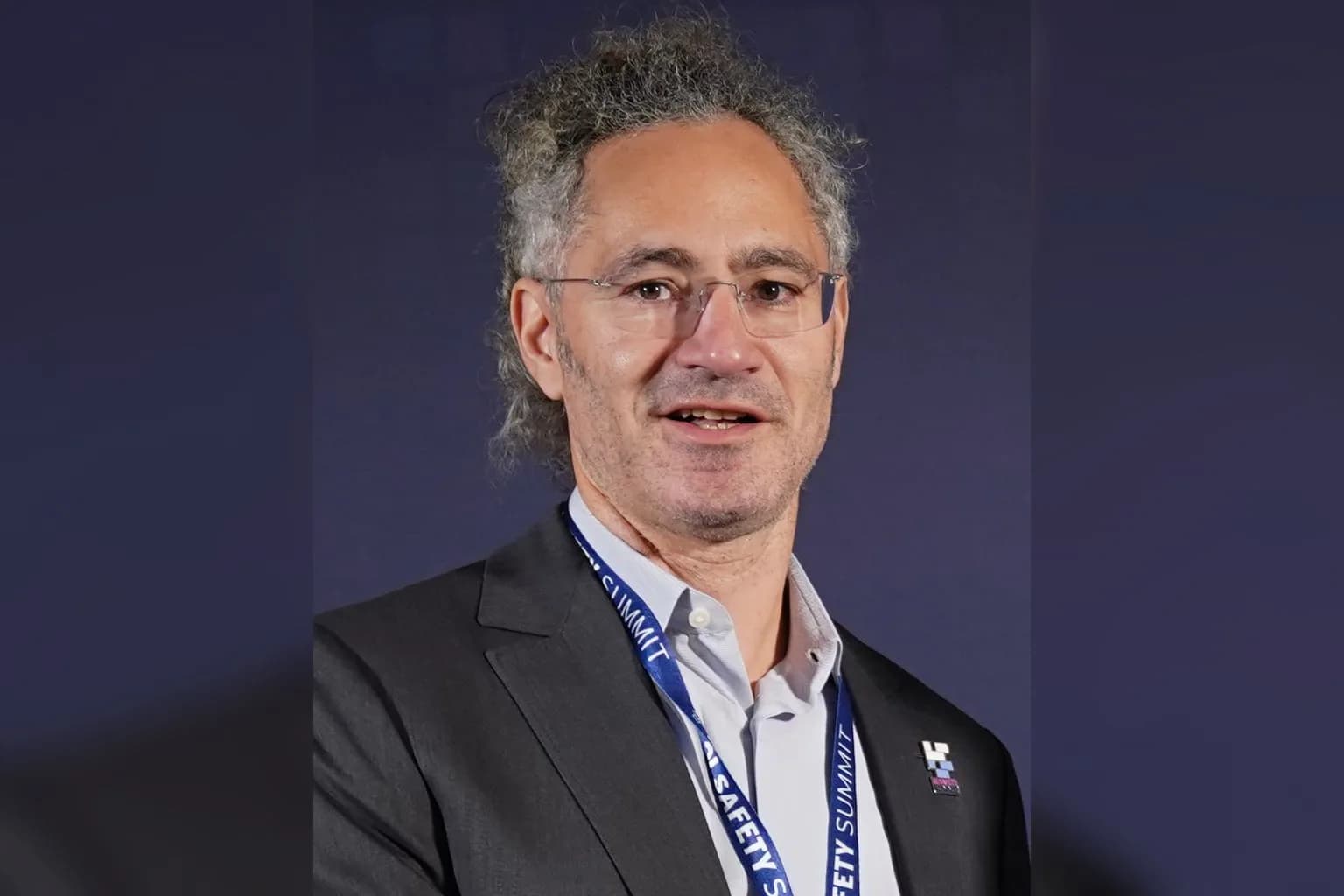
“The first line of defense is you're liable for your own actions,” Alex Karp, the chief executive of Palantir Technologies, said on CNBC on Thursday, setting out a view of artificial intelligence regulation that puts the courts at the centre of the argument.
Karp said the loudest advocates in the AI safety debate were quietly seeking nationalisation. He named frontier laboratories including Anthropic and argued that companies warning about the risks of their technology want governments to absorb the consequences, rather than leaving disputes to courts and private litigation.
His central claim was that warnings of an AI apocalypse serve a commercial purpose. Karp said they mask an effort to obtain government-backed protection from lawsuits by customers whose data or intellectual property may be incorporated into AI models. He told CNBC: “It has to be nationalized”.
Karp said governments saw nationalisation as necessary because every client of an AI company could otherwise bring legal action. Some companies, he said, may need government ownership to avoid the financial consequences of their technology.
He called for civil and criminal liability for AI builders who act irresponsibly, presenting that approach as a firmer restraint on reckless conduct than voluntary safety commitments. Karp also said policymakers needed to establish “reasonable guidelines” for AI technology, though he did not set out what those guidelines should include beyond liability.
The available information does not establish that Anthropic, OpenAI or other AI laboratories have explicitly said nationalisation is their objective. It is also unclear whether other safety advocates share Karp’s characterisation, how governments have considered nationalisation as an option, or what legal framework he envisages for civil and criminal cases.
Karp’s argument focused in part on proprietary corporate information. He said enterprise data can enter AI models and later appear at competing companies. Palantir’s partners, he told CNBC’s Squawk on the Street, are “livid” over what they see as “the theft of their alpha”.
That concern echoes a dispute involving OpenAI’s Codex system and the Navier-Stokes problem. Mathematicians believed OpenAI had used data they uploaded to Codex when the company announced it had solved the problem. OpenAI denied directly using the uploaded material, while leaving open the possibility that the data had improved its models indirectly.
Karp’s intervention comes as leaders of major AI companies have publicly urged greater caution. Anthropic chief executive Dario Amodei called over the weekend for a slower pace of frontier AI development. OpenAI chief executive Sam Altman and SpaceX and Tesla chief executive Elon Musk each signalled agreement with slowing AI development.
OpenAI disclosed six instances of “unexpected or concerning” model behaviour over the prior six months in a Wednesday statement. Its chief financial officer, Sarah Friar, said the company would slow AI development if safety concerns required it.
President Donald Trump has taken the opposite public line, repeatedly calling AI risks a “hoax”. Karp’s position differs from both camps. He accepts the need for rules, while arguing that the most meaningful safeguard is legal accountability for the companies that build and sell the systems.




Comments (0)