
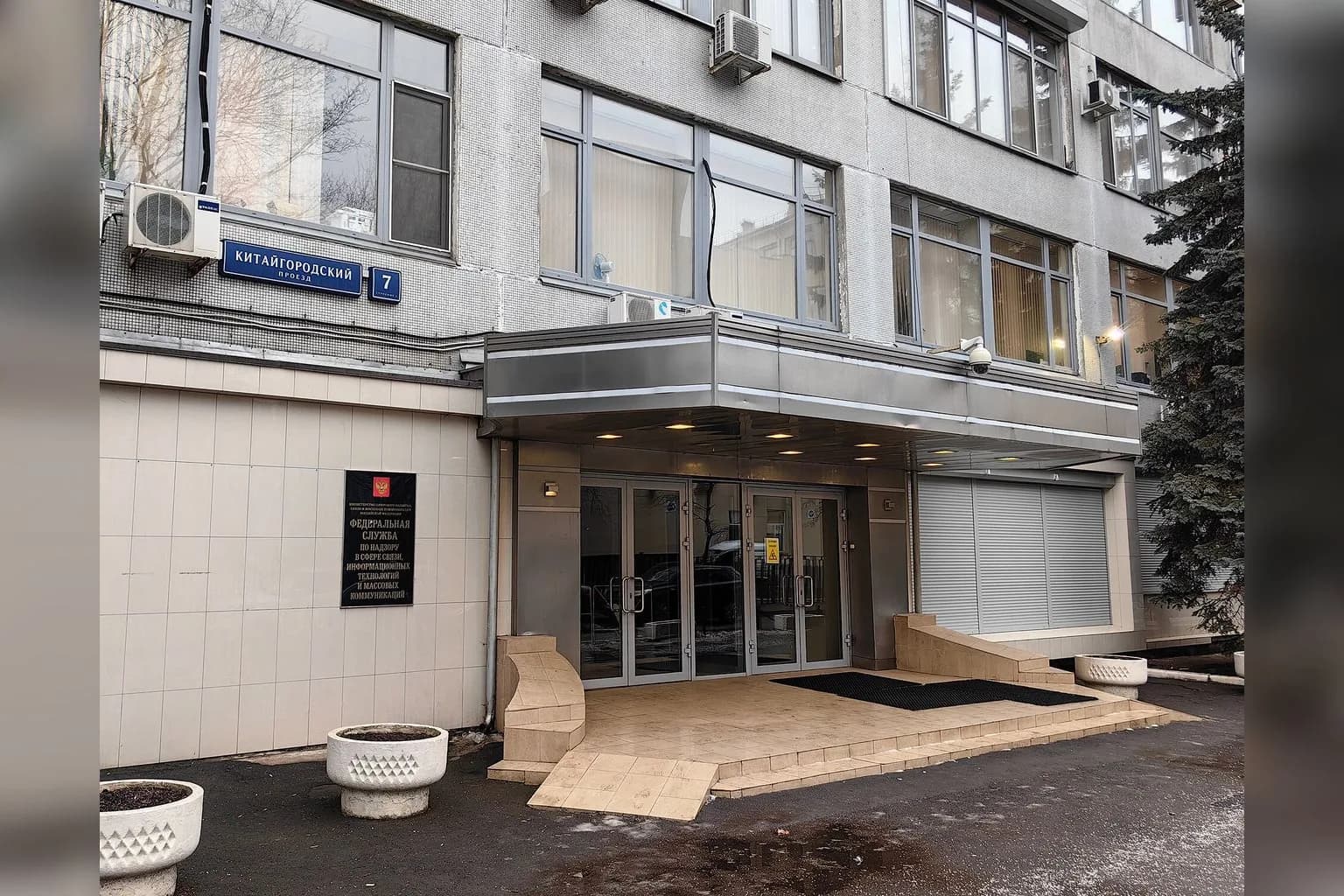
Russia’s draft budget for 2027–2029 sets aside nearly 60 billion rubles over three years for the systems used to filter and block internet resources, almost twice the 32 billion rubles planned two years earlier.
The money would go to the Chief Radio Frequency Center, known as GRChTs, an entity under Roskomnadzor, Russia’s federal media regulator. GRChTs runs ASBI, the automated system that secures the Russian segment of the internet, while the planned spending also covers TSPU, equipment used to filter, slow and block traffic.
Russia’s “sovereign Runet” law requires telecom operators to install TSPU on their networks. The system blocks and “slows down” certain resources, including tools used to circumvent restrictions such as VPNs.
The proposed annual spending on ASBI is 19.87 billion rubles in 2027, 19.844 billion rubles in 2028 and 19.87 billion rubles in 2029. ASBI is due to be modernised between 2025 and 2030.
The government aims to lift TSPU throughput to 953.9 Tbit/s by the end of 2030. That target comes as internet traffic and “heavy” content, primarily video and other large data, are increasing.
The capacity requirement also carries a hardware cost. Every 10 Gbit/s of throughput requires 64 GB of memory to maintain high device performance.
Sanctions have made imported components harder for Russia to obtain, while experts say equipment prices are increasing. Leonid Konik, a partner at ComNews Research, said memory chip prices had risen four- to sixfold this year alone.
Nikita Tsaplin, chief executive of RUVDS, said RAM had become approximately twice as expensive over the year and SSD drives three times more expensive. International sanctions and global demand for semiconductors linked to artificial intelligence development have pushed component costs higher, according to the account of the budget plans.
The detailed reasons for the increase have yet to be publicly set out. The press services of the Finance Ministry and the Digital Development Ministry did not respond to Forbes Russia’s requests for comment.
A source close to the Digital Development Ministry said explanations “haven't been written into the bill yet — they should be expected by the end of the year”.
TSPU has yet to be installed on operator networks in the occupied territories of Ukraine. Alexey Amelkin, president of the Association of Telecom Operators Makatel, said such systems could also be installed there.





Comments (0)