
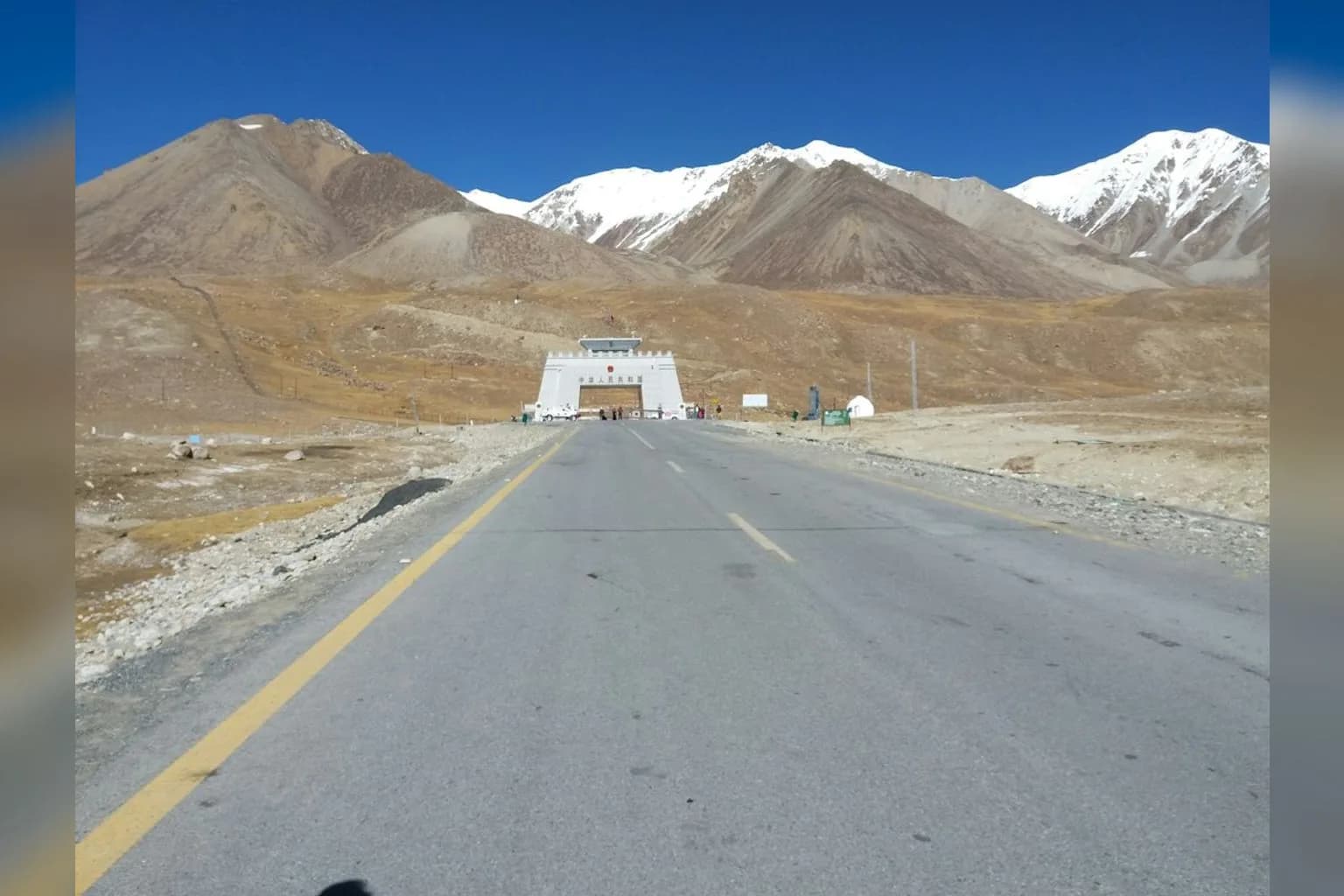
In 1963, Pakistan ceded approximately 5,180 square kilometres of the Shaksgam Valley to China under a boundary agreement India has never recognised. The valley, also called the Trans-Karakoram Tract, forms part of the former princely state of Jammu and Kashmir.
That dispute has now acquired a permanent new forum. Pakistan and China established a border commission in Islamabad on September 16–17, 2026, activating a provision that had sat dormant for thirteen years.
Li Ya of China’s Ministry of Foreign Affairs and Bilal Mahmood Chaudhary, Pakistan’s Director-General for China, formally inaugurated the Boundary Joint Commission on 16 and 17 September 2026.
The commission comes from Article 45 of the 2013 Agreement on the Boundary Management System. China’s then-premier, Li Keqiang, visited Islamabad during the signing of that agreement, which included the plan for a joint commission.
Its work concerns the day-to-day administration of the existing China-Pakistan frontier. The commission will carry out joint border surveys, inspect and maintain boundary markers, handle cross-border facilities, coordinate responses to border-related incidents, and help move people and goods across the border while improving trade and connectivity.
It will also oversee the Khunjerab Pass, the sole land route between China and Pakistan and the main gateway for traffic and goods travelling through the China-Pakistan Economic Corridor.
A separate Joint Boundary Demarcation Commission, created under the 1963 agreement, surveyed the area, set boundary markers and prepared maps. The new commission is a continuing mechanism to manage that already demarcated frontier.
For India, however, the question is the legitimacy of the frontier itself. It passes through Pakistan-occupied Jammu & Kashmir, which India claims as its own. India says the 1947 Instrument of Accession incorporated all of Jammu, Kashmir, and Ladakh into India.
Randhir Jaiswal, India’s Ministry of External Affairs spokesperson, said Pakistan has no authority to enter into boundary agreements concerning territory it occupies illegally.
India does not recognise the China-Pakistan boundary as a legitimate international boundary. Islamabad described India’s objection as “baseless and legally untenable”.
The commission is therefore set to handle practical matters along a route vital to China-Pakistan trade, while operating across territory whose status remains at the centre of India’s claim in Kashmir.





Comments (0)