
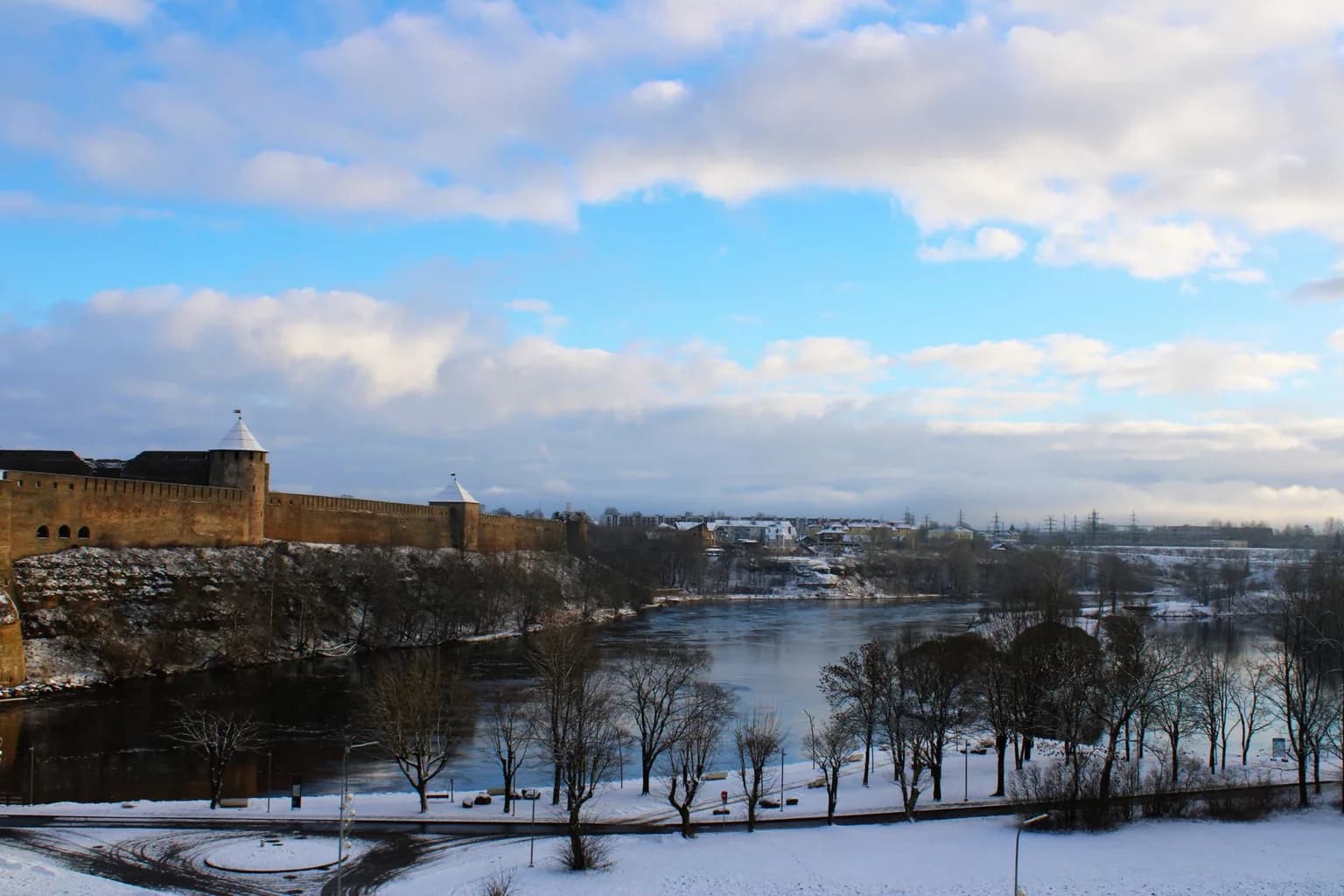
Narva, the Estonian city on the Russian border where more than 90 percent of residents are Russian speakers, has long been seen as a possible flashpoint in Russian aggression. Estonia now plans to build a military base there, bringing a more substantial military presence to its eastern edge.
The project has been pushed back until summer 2028 after political turmoil in Narva blocked the allocation of land. Its projected cost has risen to €20.68 million, €5 million above earlier estimates, after oil and construction prices increased in recent months.
When complete, the base is intended to hold up to around 1,000 personnel, including around 200 stationed there permanently. Indoor accommodation will be available for up to 500 troops, with temporary space for another 500.
The site is to include command and headquarters facilities, accommodation, maintenance and storage buildings, catering and sports facilities, and logistics infrastructure. Estonia also plans a temporary container-based facility for a company-sized unit while the permanent base is being built.
The aim is to strengthen Estonia’s ability to receive and support allied forces moving towards the eastern border. The project is almost entirely financed by the EU Cohesion Fund.
Estonia joined NATO as a full member in 2004. It sits alongside Latvia and Lithuania on a 1,700km border with Russia and Belarus.
Pressure on that frontier has increasingly come from the air. All three Baltic countries have recorded an increase in drone incursions in 2026, widely attributed to Russia. Estonia also faced a stray drone strike against its Auvere power plant in March 2026.
NATO has warned of limited Russian attacks on its territories in the coming months.
Tallinn has paired the planned base with a shift in its spending priorities. In April 2026, former Estonian Defence Minister Hanno Pevkur suspended a EUR500 million programme to replace CV90 infantry fighting vehicles and redirected the investment towards uncrewed systems, C-UAS and air defence.
In May 2026, Prime Minister Kristen Michal announced EUR364 million in drone-related defence investment over the next four years under a new Drone Draft act.
The base’s delayed construction leaves its permanent facilities some way off. Its purpose, however, is already clear: to give Estonia greater capacity to support forces moving to NATO’s eastern border while it invests in defences against the drone threat that has become more immediate across the Baltic region.





Comments (0)