
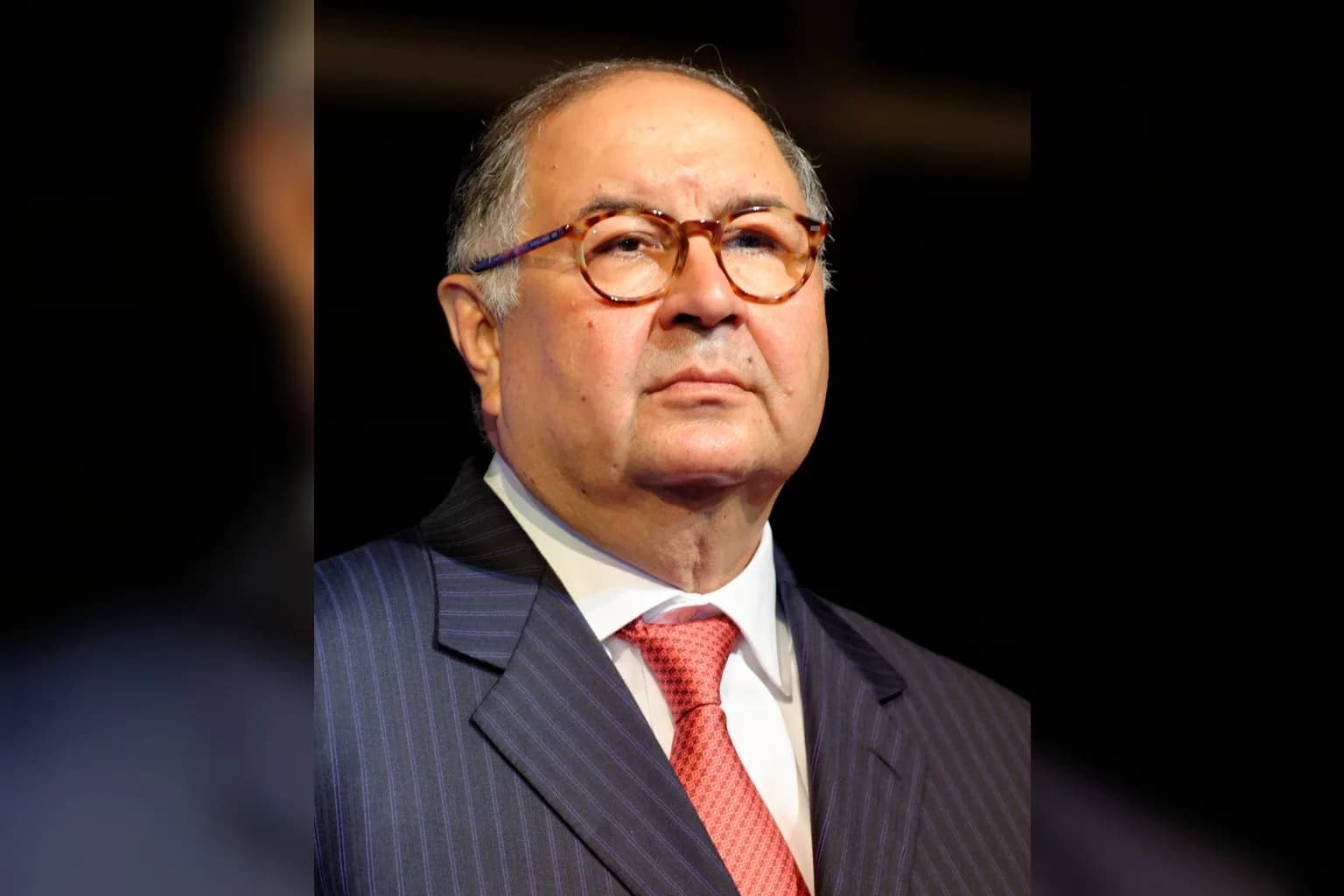
The European Union has agreed to lift sanctions on the Russian oligarchs Alisher Usmanov and Mikhail Fridman as part of a compromise extending restrictions against around 3,000 Russian individuals, entities and companies until 22 September 2029.
The agreement, reached on Tuesday, exposes divisions among EU countries over the future of measures imposed after Russia began its full-scale invasion of Ukraine. France and Luxembourg led the push to remove Usmanov and Fridman, while Latvia gave up its opposition and abstained, allowing the measure to pass.
EU sanctions require unanimity among member countries for approval. Latvia was the final hold-out in the negotiations. Its abstention cleared the way for an agreement under which the wider sanctions regime will run for 36 months, replacing the previous system of six-month extensions.
The decision still requires formal adoption through a written procedure. The available details do not specify whether the removal of Usmanov and Fridman will give them access to assets that had been frozen under EU measures.
Officials in Paris described France's position as related to 'national security' concerns. They did not publicly explain the nature of those concerns. Luxembourg's support for the exemption came as Fridman pursues a $16 billion claim against the country.
Usmanov, who was born in Uzbekistan, built his fortune in metals and telecommunications and founded USM Holdings. Fridman co-founded Alfa Group. The EU sanctioned both men in 2022, shortly after Russia's full-scale invasion began.
Their removal follows an earlier attempt by Hungary and Slovakia to make the change. In March 2026, the two countries sought to block the renewal of EU sanctions on Russia unless Usmanov and Fridman were taken off the lists. That effort failed because it lacked the required consensus.
Ukraine reacted angrily to the latest deal, portraying it as a weakening of European resolve towards Russia. The Ukrainian Foreign Minister, Andrii Sybiha, called the decision 'shameful and unjustifiable'.
Sybiha said: 'Moscow is celebrating because it got what it wanted: a sense of impunity, the humiliation of the EU, and division among Europeans'.
President Volodymyr Zelenskyy made a similar argument, writing: 'Wars end through resolve and strength, not concessions to the aggressor's entourage'.
Kyiv has urged EU countries to impose 'national' sanctions on Usmanov and Fridman. It remains unclear whether other member countries will take that route, or how the EU decision may affect Fridman's wider litigation.
The compromise preserves the main EU sanctions framework against Russia for a longer period than before, while creating exemptions for two high-profile businessmen. For Ukraine, the political cost lies in the signal sent by the removals. For France and Luxembourg, the agreement resolved pressures they had brought into the renewal process while securing the continuation of the broader regime.





Comments (0)