
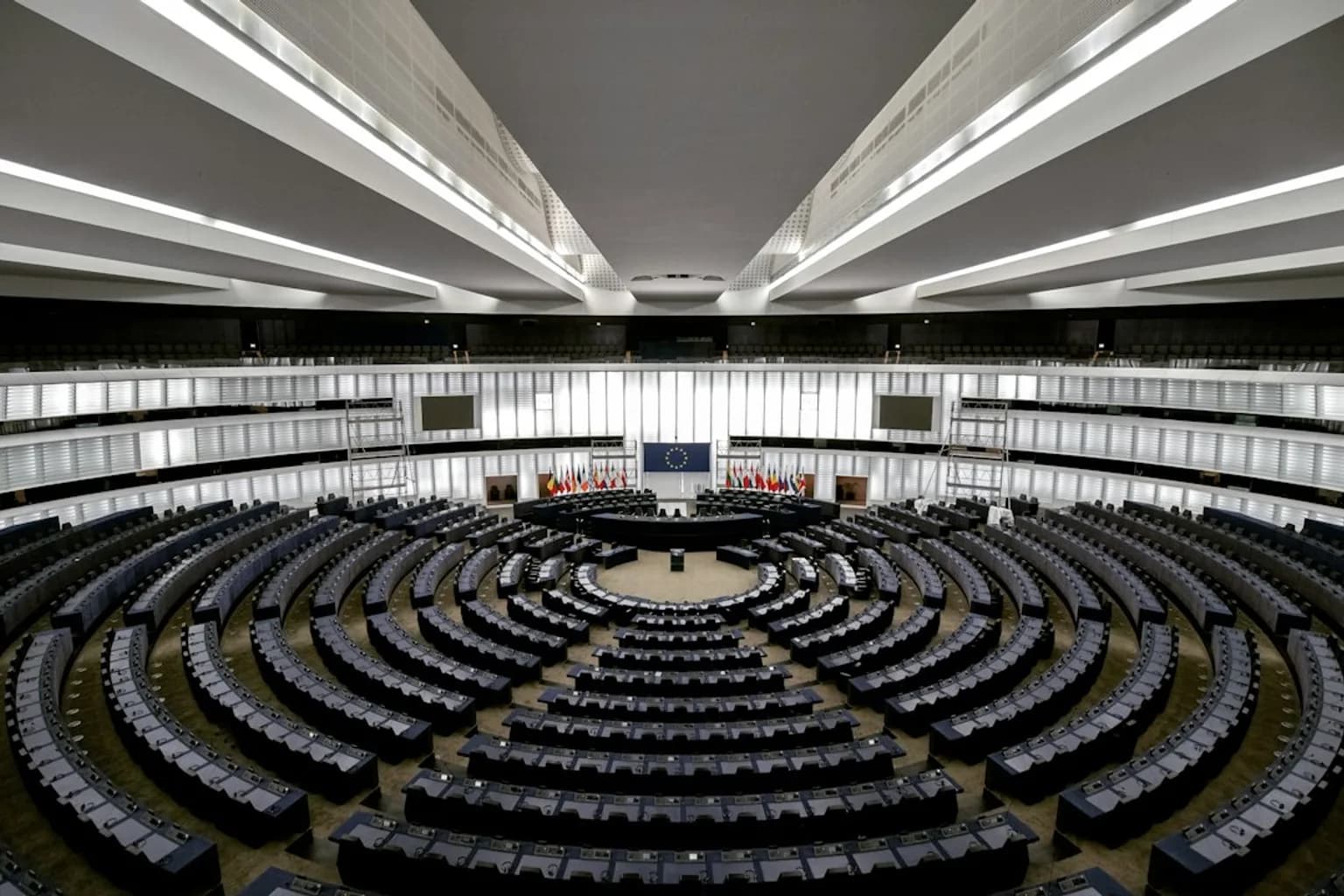
Ursula von der Leyen used her State of the Union address to the European Parliament in Strasbourg on 16 September 2026 to press for a European Security Council and an Emergency Security Protocol. The Commission president had already made a European Defence Union one of the goals in her 2024–2029 political guidelines.
Members of the European Parliament are now proposing a European Defense Union to operate alongside NATO. Their plan would involve Ukraine, Norway and the UK, with the aim of giving European countries greater capacity to defend themselves independently.
The proposal contains six institutions, including a security council and a rapid reaction force.
Von der Leyen’s proposed European Security Council would bring EU leaders together with partners including Ukraine, the UK, Norway and Canada. Her proposed Emergency Security Protocol is billed as “Europe's own Article 4”.
The project is being advanced amid a sharp loss of confidence in the United States as Europe’s main security provider. European governments can no longer confidently explain how the continent’s collective defence will be assured, while US domestic political polarisation is expected to make Washington a far less reliable partner for decades.
Russian hybrid attacks and verbal threats are also escalating, raising the risk that the war in Ukraine could get out of hand. In August, an explosives-laden drone was found near a Ukrainian cargo plane at Leipzig/Halle Airport in an attack Germany blames on Russia.
On September 13, Russian drones struck near the Yahodyn crossing on the Polish-Ukrainian border. One hit a train locomotive shortly after a train carrying visiting European officials had passed through.
The lawmakers’ proposal seeks to build European capacity within the existing alliance. At its 2026 summit in Ankara, NATO declared “a stronger Europe in a stronger NATO” in its communiqué and reaffirmed every ally’s commitment to Article 5, the alliance’s collective-defence clause.
European capabilities should gradually become “separable, but not separate, within the NATO framework in case the United States is not willing or able to engage in a European conflict”.
Europe is also increasing the money available for defence. The €150bn SAFE loan scheme allows governments to borrow against the EU’s credit rating to purchase weapons, and Poland is its largest user, with €43.7bn.
NATO allies have committed to raise military and security spending to the equivalent of 5 percent of national GDP by 2035. The Commission’s next budget proposal would allocate €131bn to defence, security and space.





Comments (0)