
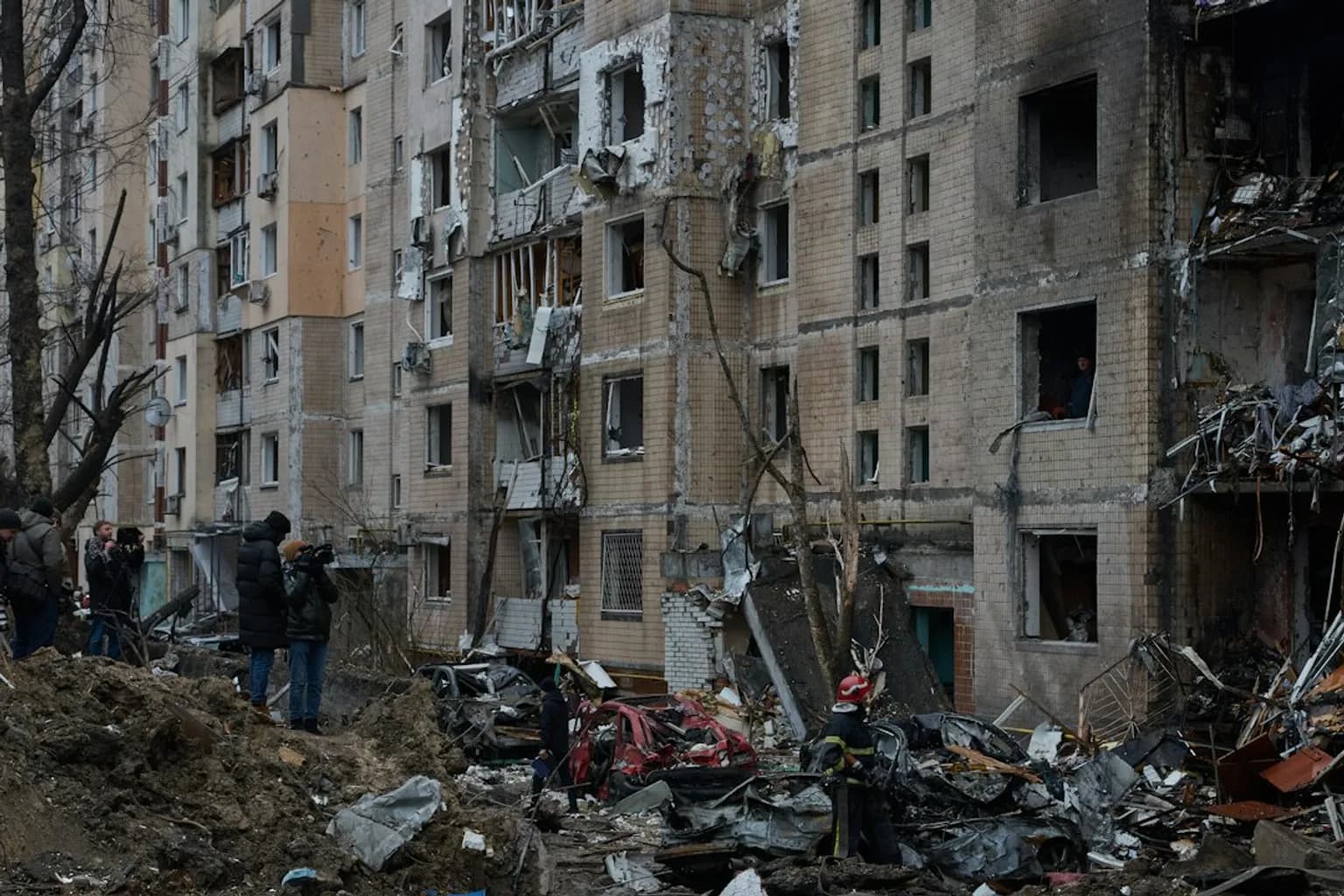
Russian drone strikes on Kyiv on 23 September damaged data centres and communications equipment used by internet providers, disrupting services across the capital and surrounding areas. Ukraine’s Digital Ministry said internet access was affected for approximately one hundred thousand households in Kyiv that day, while providers also reported disruption in Kyiv Oblast, Vinnytsia and Khmelnytskyi oblasts.
The attacks continued for hours from morning into early afternoon on 23 September. An office building in Kyiv’s Solomianskyi district was damaged in a drone strike. The building housed a data centre and key communications and internet backbone nodes serving the capital.
Russia’s Defence Ministry said it had struck two Kyiv data centres, New-Telco and United DC. Moscow alleged that New-Telco carried internet traffic for Ukraine’s Defence Ministry, while United DC supplied communications and data-processing services to Ukrainian security agencies. Those claims could not be independently assessed from the information available.
Ukraine’s Foreign Minister Andrii Sybiha said: “Russia has targeted major Ukrainian data centers, seeking to disrupt the flow of information”. Ukrainian officials have treated the attacks as a threat to communications and alert systems during the war.
Several providers described damage to facilities that hosted their equipment. UTELS said its core equipment was located at a damaged Kyiv data centre and that it had lost power. Pavutyna said one of its data centres was struck, causing outages for some customers. It later said several of its digital infrastructure objects had been damaged and that disconnections affected almost half of its network.
Crazy Network said a strike had damaged a central internet traffic exchange in Kyiv. It said the damage disrupted internet and telephone services in the capital and in Vinnytsia and Khmelnytskyi oblasts. Etherlink said its main network node had been damaged, taking some customers offline on 24 September.
MiroHost said the data centre in Ukraine holding its infrastructure had been destroyed. It said around 90-95% of its customers use infrastructure outside Ukraine. CityHost said equipment it kept at a Kyiv data centre had been destroyed, interrupting some of its services. FEX.NET said a drone attack had damaged a data centre in Ukraine, leaving some files temporarily unavailable.
The scope and duration of the wider disruption remain unclear. Russian strikes have hit multiple Kyiv data centres and internet providers over the past two days, according to the information provided by companies and officials. There has been no full account of restoration times across the affected networks, or of the effect on financial services.
Anatolii Frolenkov, a representative of the 1-IX internet exchange point, described the latest strikes as part of a developing pattern. “This is the beginning of a phase where, since September, they have started taking it out systematically,” he said.
A strike in July damaged a major Kyiv data centre and forced several local providers to suspend operations fully or in part. The 23 September attacks therefore extended pressure on infrastructure that supports household connections, commercial services and official communications.
The data-centre strikes formed part of a wider Russian assault on 23 September. Russian forces launched strikes on Kyiv and Kharkiv, killing eight and damaging a maternity ward. The available information does not establish whether there were casualties from the strikes on data-centre facilities specifically.
The attacks come as the war continues across occupied and unoccupied parts of Ukraine. Russia occupies roughly 20 percent of Ukrainian territory. Ukraine has responded with long-range drone strikes that have affected Russian energy infrastructure.
Earlier this week, Ukrainian President Volodymyr Zelensky said Kyiv intended to increase pressure on Russia further. He said the aim was to “close” Russia’s skies, and warned that drones would penetrate “on a scale that has to be taken into account”.





Comments (0)