
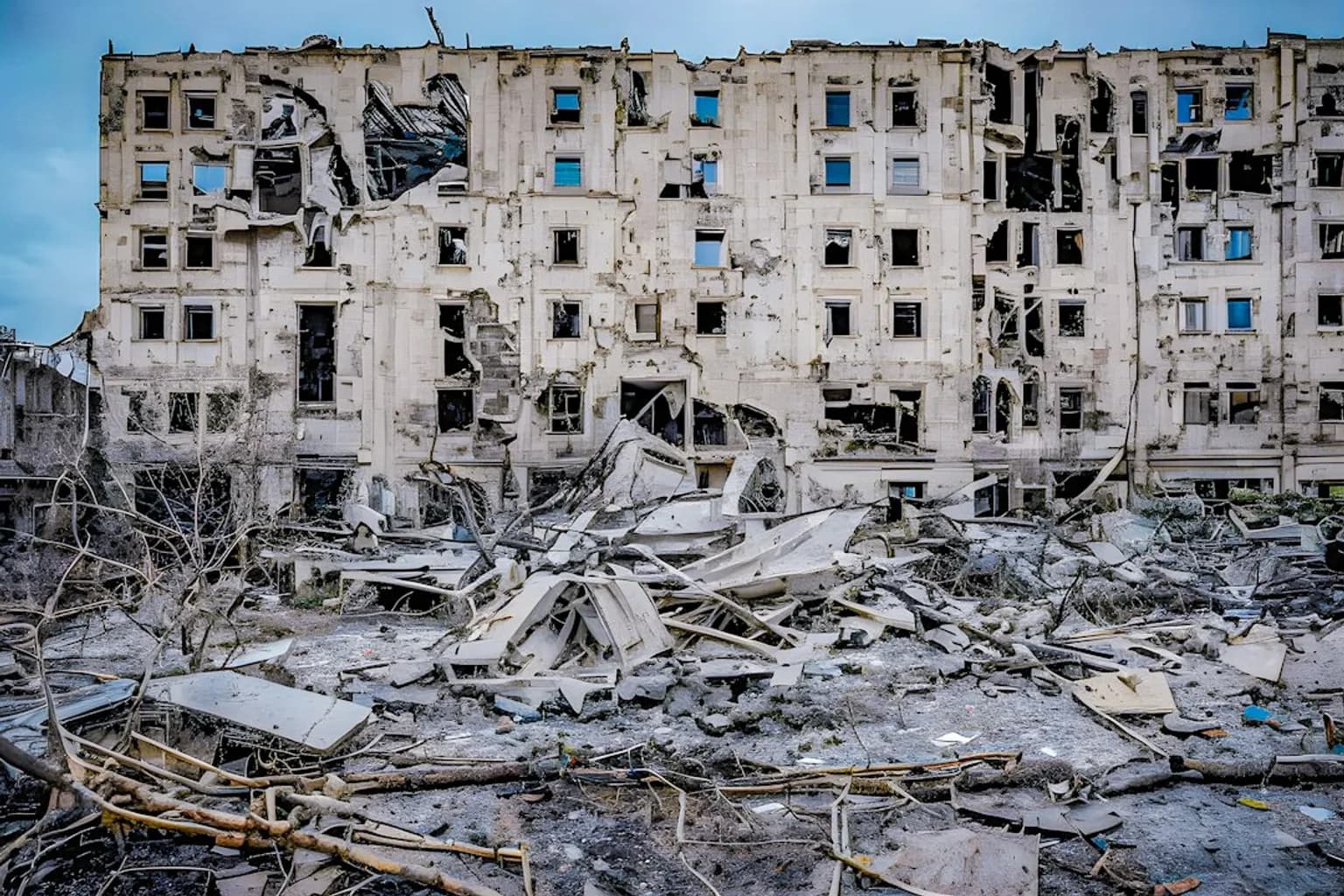
Seven farm workers were killed while sorting vegetables when Russian forces struck a vegetable sorting facility in Stara Hnylytsia, in the Kharkiv region, on 24 September. Another 12 people were injured.
The attack came during a year in which the UN Human Rights Office verified at least 15,280 civilian casualties in Ukraine from January through August 2026. The total included at least 2,222 people killed and 13,058 injured.
The figure was 55 percent higher than in the same period in 2025, more than twice the count recorded in the first eight months of 2024, and had already exceeded the civilian casualty total for all of 2025. The average was more than 400 casualties a week between January and August.
Long-range Russian missile and drone attacks accounted for 47 percent of civilian casualties in August. Those attacks killed 194 civilians and injured 1,077. Russian aerial glide bombs caused nearly 2,500 casualties across the Donetsk, Kharkiv, Sumy and Zaporizhzhia regions, a 62 percent increase from the previous year.
By 23 September, at least 17,257 civilians had been confirmed killed in Ukraine since the beginning of the full-scale invasion, including 835 children. A further 53,693 civilians had been injured.
From 1 to 24 September, the UN Mission recorded at least 200 civilians killed and 1,234 injured. Kyiv recorded civilian casualties on 16 of the first 24 days of the month, a frequency the UN said had not occurred in any other month since the full-scale invasion.
On 28 September, Russian drones struck central Kyiv in the middle of the day, killing two people and injuring 26 others. The strike set the Ukrainian National Academy of Sciences building on fire. Multiple missiles and drones struck the capital overnight on 29 September, damaging a railway station depot, data centres, business centres and an educational institution in the Solomianskyi district, which also caught fire.
The attacks continued after the reporting period. Russian drones struck Kyiv's Southern Bridge on 1 October, the first recorded drone strike on one of the capital's bridges.
Volker Türk, the United Nations High Commissioner for Human Rights, presented the casualty figures to the UN Human Rights Council in Geneva on 4 October 2026. He described the conflict as a “human rights catastrophe that is growing and intensifying by the week.”
Danielle Bell, who heads the UN Human Rights Monitoring Mission in Ukraine, led the documentation of casualties across the country. Rosemary DiCarlo, the UN Under-Secretary-General for Political and Peacebuilding Affairs, said the war was entering a “dangerous new phase” as attacks and civilian casualties continued to rise.
The UN also verified 1,004 cases of conflict-related sexual violence against civilians and prisoners of war between February 2022 and July 2026. It attributed 89 percent of those cases to Russian forces.
In the occupied town of Oleshky, in the Kherson region, approximately 2,000 residents remain without access to food, water, electricity or gas.





Comments (0)