
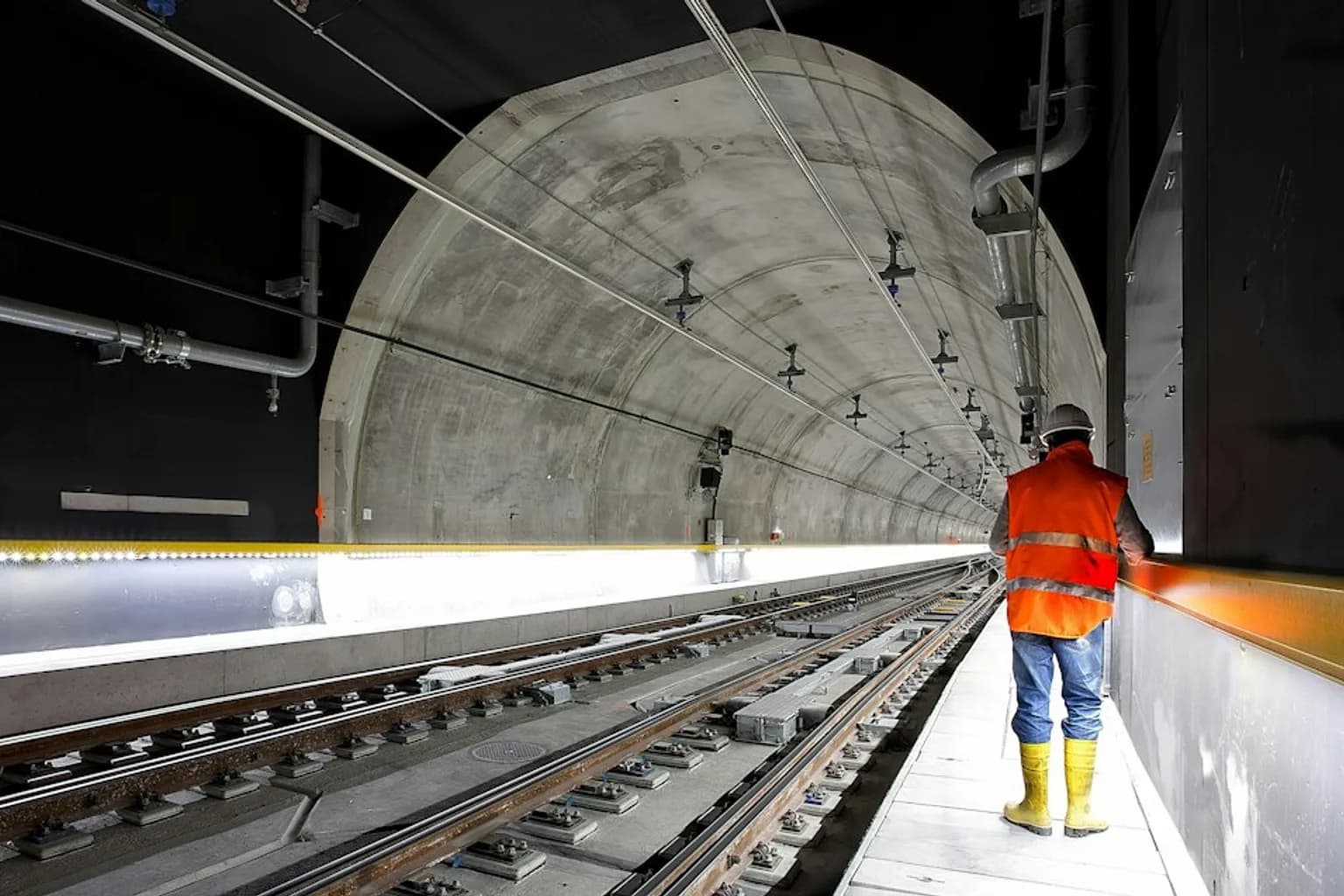
An 81,000-ton concrete box, 712 feet long, has been lowered onto the Baltic seabed as part of an 11-mile undersea crossing. The installed elements have extended the crossing to 2,950 feet.
The construction method is maritime engineering on an unusually large scale. Each 81,000-ton box is floated out like a ship, then lowered one at a time into a trench dredged in advance. The box was lowered by a vessel clamped to both ends.
Two-and-a-half weeks before it was submerged, builders tested the operation in a Danish harbor by lowering a test weight beneath 1,760 tons of water bags.
On 28 September, the Danish state company constructing the tunnel said a fourth element had been placed in the trench south of Lolland.
The material supplied does not identify this concrete crossing as part of NeuConnect, the separate €2.8 billion high-voltage direct-current interconnector intended to form the first direct electricity connection between Britain and Germany.
NeuConnect is planned as about 725 kilometers of land and subsea high-voltage direct-current cabling through UK, Dutch and German waters. Its planned capacity is 1.4 GW, and it is intended to carry electricity in either direction between the British and German grids.
Its converter stations stand on the Isle of Grain in Kent and near Wilhelmshaven in northern Germany. The buildings have reached their full height, at about 24 meters high and 70 meters wide.
At the UK site, more than 2,000 tonnes of structural steel across more than 8,000 sections have been installed. Transformers measuring 7 meters long and 5 meters tall, each weighing more than 200 tons, have also been moved into place.
Prysmian is laying the high-voltage direct-current cables beneath the North Sea. All subsea cable installation in UK waters has finished, while work continues through Dutch waters towards Germany; more than 350 kilometers of the overall cable programme had been laid by July 2026.
Siemens Energy is NeuConnect’s main contractor, and the project is aiming to begin commercial operations in 2028.
The link could deliver a net reduction of more than 13 million tonnes of CO₂ over 25 years.




Comments (0)