
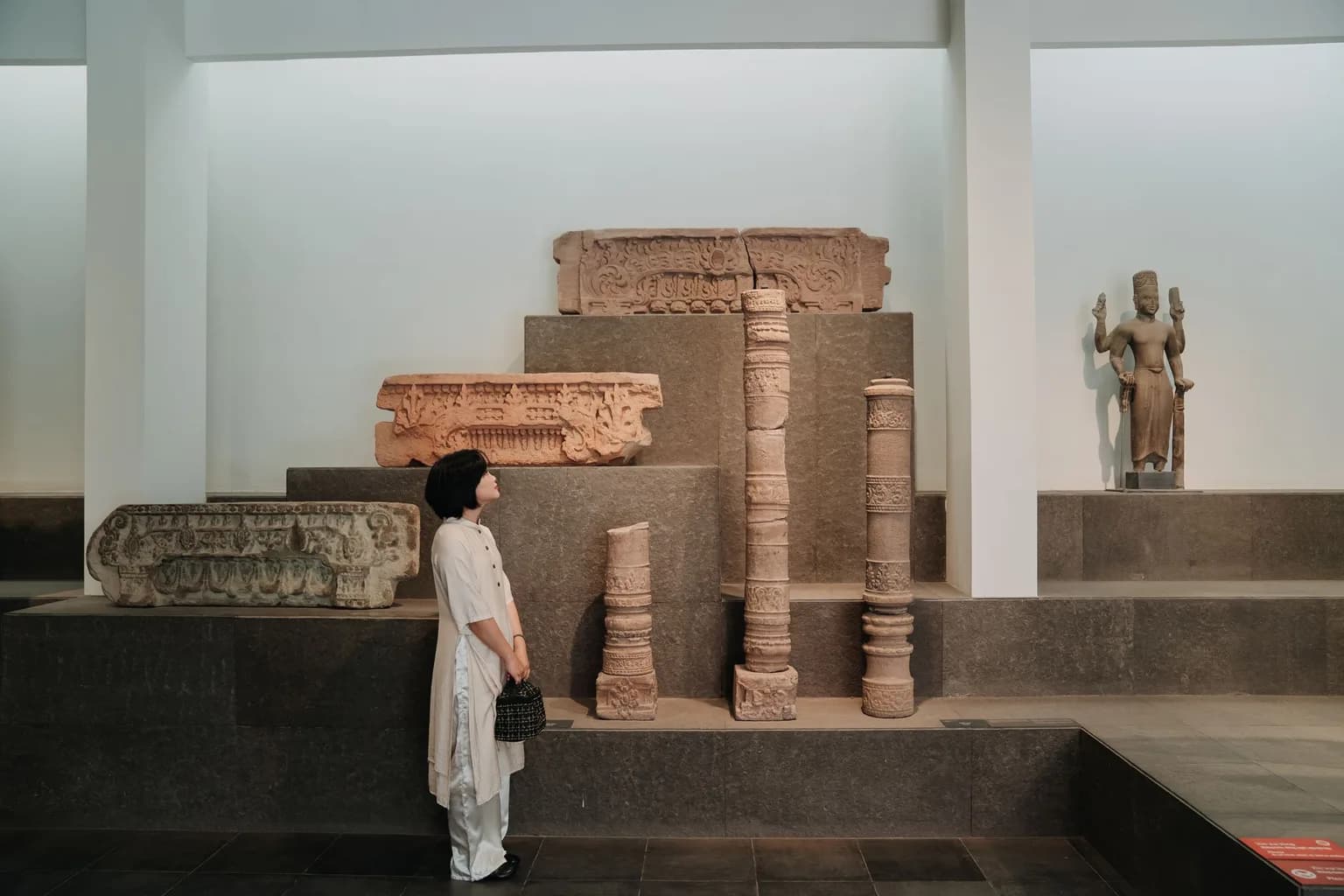
Earl Leopold Stendahl moved from making chocolate to dealing art, opening his first gallery at the Ambassador hotel in 1921 before building an empire in ancient American artefacts.
A 2026 book by Andrew D. Turner, Mary E. Miller and Khristaan D. Villela draws on five years of research in the Stendahl Art Galleries archive. Artifacts to Art: Collecting Ancient America in Midcentury L.A. documents the role the galleries played in the illegal looting, smuggling and sale of ancient Mesoamerican objects for Los Angeles buyers.
At the centre of the trade was Stendahl’s partnership with Guillermo Echániz, a Mexico City bookseller. From 1935, Echániz secretly transferred hundreds of objects to Stendahl over the following decade.
One transaction captures the economics of the arrangement. Echániz received $250 for a fresco looted from Teotihuacan. Stendahl cleaned it and presented it to the collector Robert Woods Bliss for $10,000.
Actor Edward Robinson allegedly summed up Stendahl’s reputation in a remark to him: “Earl, you're an old bandit, but you do get good things.”
The objects were given the setting of respectable culture. In 1940, a photograph by Man Ray showed the Academy Award-winning actor Teresa Wright beside an ancient Chacmool sculpture. Stendahl also ran a house gallery in Hollywood beside the Arenbergs, a prominent Los Angeles collecting family.
He had a workshop on Hillside Avenue in Los Angeles, where looted artefacts were cleaned and prepared for sale. In 1944, he displayed such works at a new gallery on Wilshire Boulevard.
The museum market formed part of the same story. In 1947, the Minneapolis Institute of Art paid $10,000 for a “King Chak Mool” supplied by Stendahl. The sculpture then travelled in a European exhibition from 1958 to 1960. A specialist found, a decade after that tour, that it was a forgery.
Importing ancient objects across the US border was legal until 1972. The researchers’ account nonetheless places the Stendahl Art Galleries among the key drivers of illegal looting and smuggling, a trade that scarred temples across Mexico, Guatemala and Honduras.
The archive that has made this reconstruction possible reached the Getty in 2017, when Stendahl’s grandson donated it. It is now held by the Getty Research Institute. An exhibition, Stendahl’s World, is showing at Getty Center and Getty Villa from 23 June to 18 October 2026.

Comments (0)