
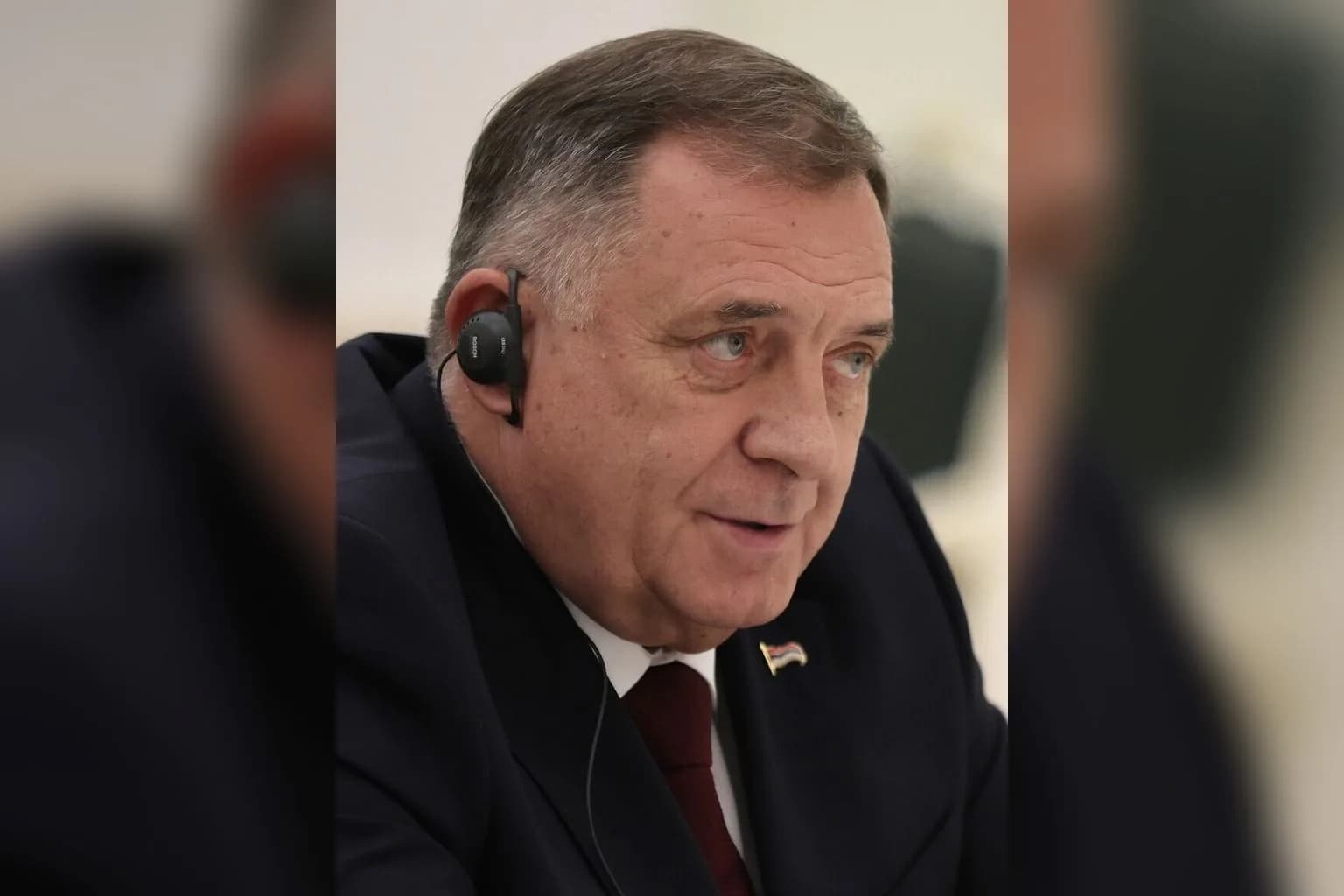
Multiple polling places in Bosnia could not open voting on time on Sunday morning after difficulties with new digital technology introduced to address earlier concerns over vote tampering. The disruption came as approximately 3.4 million voters took part in a general election on 4 October 2026.
Voters were choosing the three members of the country’s multi-ethnic presidency, lawmakers for the national Parliament, and leaders of institutions in the Muslim-majority Federation of Bosnia and Herzegovina and Serb-majority Republika Srpska.
The contest unfolded amid simmering ethnic tensions and carried consequences for Bosnia’s bid to join the EU. At its centre was Milorad Dodik, the separatist and nationalist former president of Republika Srpska, who was barred from holding public office yet dominated the campaign without appearing on the ballot.
Dodik is a staunchly pro-Russian politician. Bosnian Serb leaders met Russia’s President Vladimir Putin ahead of the election.
A Bosnian court sentenced Dodik in February 2025 to one year in prison and barred him from political activity for six years for defying decisions of the international High Representative. He had already been sanctioned by the United States on 5 January 2022 and by the United Kingdom on 11 April 2022.
Born on 12 March 1959 in Banja Luka, Dodik studied political sciences at the University of Belgrade. He has led the Alliance of Independent Social Democrats, known as SNSD, since its founding in 1996. He served as prime minister of Republika Srpska from 1998–2001 and 2006–2010, as its president from 2010–2018 and from 2022, and as a member of Bosnia and Herzegovina’s tripartite Presidency from 2018 to 2022.
Bosnia’s governing structure dates to the peace agreement brokered by the United States in 1995, after a brutal conflict that lasted from 1992 to 1995. The arrangement created a complex system intended to manage divisions among Muslim Bosniaks, Orthodox Serbs and Catholic Croats.
The war included the Srebrenica genocide, in which more than 8,000 Bosniak men and boys were executed. The International Criminal Tribunal for the former Yugoslavia and the International Court of Justice both adjudicated it as genocide.
Dodik has previously stepped back from a confrontation with Bosnia’s state institutions. In 2011, he planned a referendum rejecting those institutions, then cancelled it after Catherine Ashton, the EU’s foreign policy chief, promised that the EU would examine Republika Srpska’s complaints.
The election now tests whether the post-war framework can constrain Dodik’s influence, with voters deciding the makeup of institutions built to hold together a country still divided along ethnic lines.





Comments (0)