
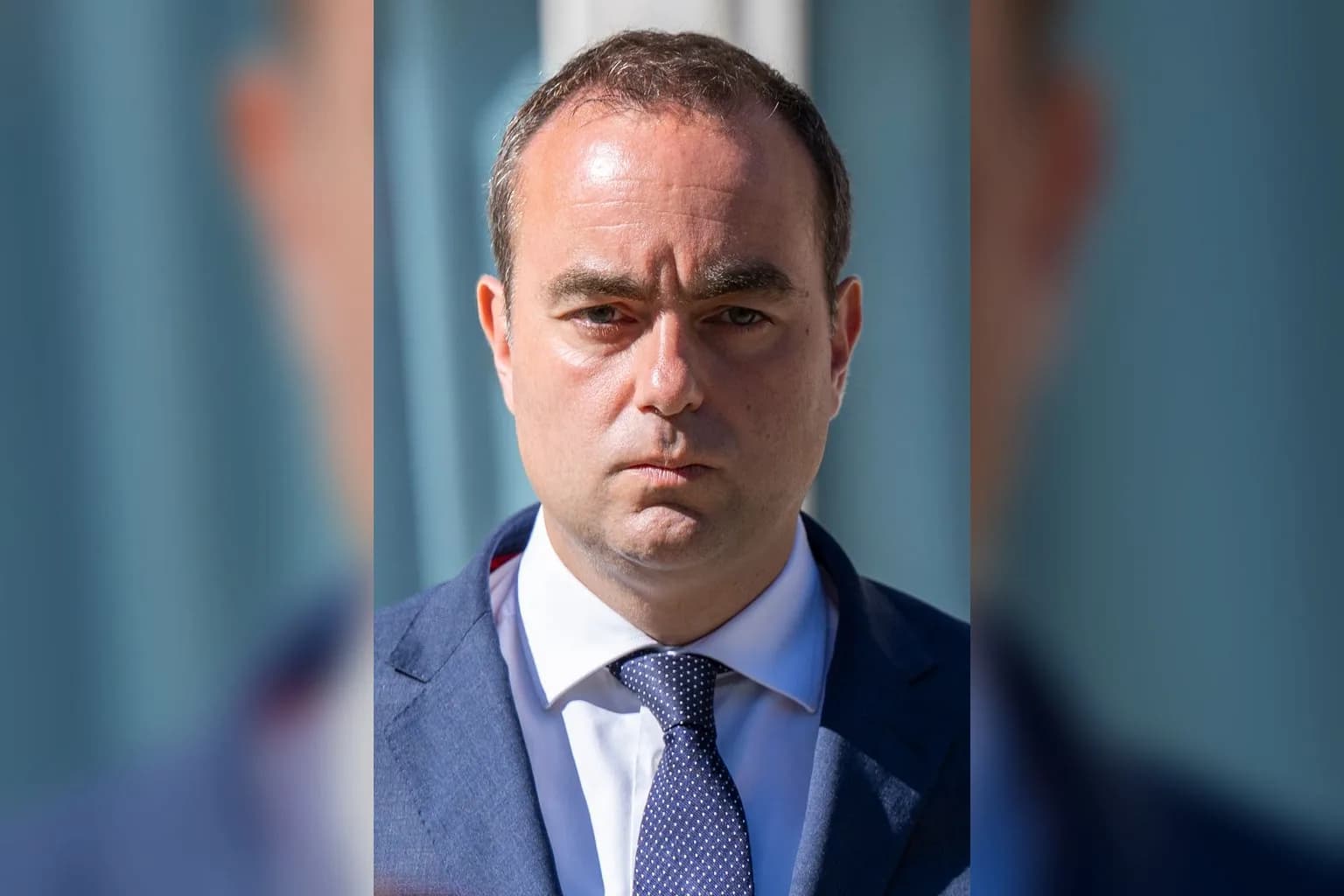
Prime Minister Sébastien Lecornu submitted France’s 2027 budget to parliament last Thursday, putting a programme of wage and pension restraint before a legislature split between far-left and far-right opposition.
Lecornu’s plan freezes public-sector wages and all pensions except the lowest, alongside targeted tax measures. The government says €43 billion in ‘recovery measures’ would form part of a total effort of €54 billion in 2027, provided parliament approves the package.
It forecasts that the deficit will narrow from a projected 5.4% of economic output this year to 5% in 2027. France is already subject to the EU’s excessive deficit procedure, which requires it to move its budget gap back towards the European Union’s 3% limit.
The bill faces a difficult parliamentary passage. France’s independent fiscal watchdog, the High Council for the Public Finances, called the plan to bring the deficit to 5 percent of output in 2027 “limited” and said a “significant” effort was needed to stabilise debt.
The argument over spending is playing out alongside unrest in schools. Students have been protesting across France for almost two weeks over cancelled classes, overcrowding and run-down buildings. A nationwide day of protest was held on Tuesday.
Education Minister Édouard Geffray met student representatives on Friday in an effort to ease tensions. Lecornu took charge of the crisis on Sunday evening, calling for quicker action on class cancellations, school upgrades and greater transparency in Parcoursup, the university admissions system.
The government has accused the left-wing party La France Insoumise, known as LFI, of using the protests for political ends and fuelling blockades. LFI’s role in the protests is an accusation by the government.
France has gone without a balanced budget since 1974. Its spending accelerated during successive crises: Macron released at least 10 billion euros to appease the yellow-vest movement. During the pandemic, the government used the slogan “whatever it costs” and launched one of Europe’s biggest paid-leave programmes, which many companies used for years after lockdowns ended.
The result is a debt burden worth nearly 120% of gross domestic product, with more than $1 trillion of debt due by 2030. France is set to sell a record of about $380 billion in debt next year. A study commissioned by the finance ministry expects the cost of servicing that debt to climb 59% by 2030.
Markets have raised the pressure. France’s 10-year borrowing cost has climbed towards 5%, its highest level since 2002. France now pays more to borrow than Greece and Italy, both former crisis hot spots. Its budget deficit is exceeded among peers only by that of the United States.
France’s central bank chief has described the position as a “gradual stranglehold.”
The election due from April 18-May 2 gives the fiscal dispute a sharper political edge. Marine Le Pen is far ahead in the polls and has promised to lower France’s retirement age to 60 years old, saying it would cost the state an extra 9 billion euros a year.
Her closest rival in the polls, the far-left leader Jean-Luc Mélenchon, wants the European Central Bank to freeze or wipe away the Bank of France’s French bond holdings, valued at 488 billion euros. Whether Lecornu can get his budget through parliament remains unresolved.





Comments (0)