
Prime Minister Takaichi Sanae has cast stronger intelligence as an urgent national task, arguing that the regional security environment has changed around Japan. In July 2024, she published “Japan's Economic Security: The Golden Rule for Protecting the Nation and People”, which emphasised stronger information capabilities, and she now heads a cabinet-level National Intelligence Council.
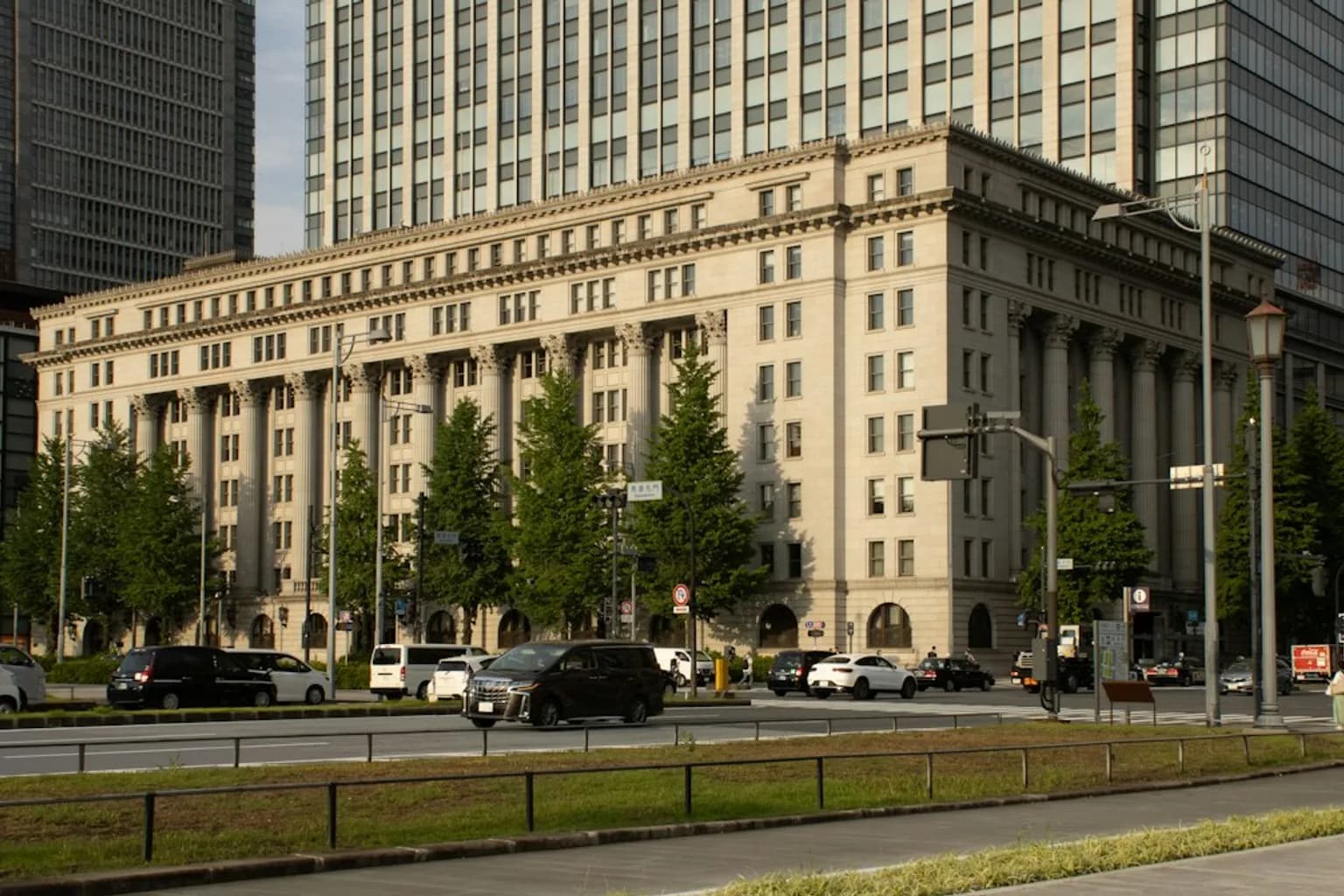
Her government opened the National Intelligence Bureau in Tokyo on 31 July 2026. Led by Kazuya Hara, it is Japan’s first centralised intelligence agency since World War II, with approximately 700 staff.
The bureau is modelled on the US Office of the Director of National Intelligence and is intended to collect, coordinate and analyse information already held by government agencies. It does not replace those agencies’ existing intelligence work.
The change follows decades in which the United States and its allies prevented Japan from creating a powerful central intelligence body, fearing a return to militarism. Japan instead relied on smaller units and heavily on US intelligence.
Its own system remained spread across the police, foreign ministry, defence ministry and Cabinet Intelligence and Research Office. Those bodies did not always share information fully with one another.
Osawa Jun, a senior research fellow at the Nakasone Peace Institute and a member of the government’s expert panel, said the old arrangement had “failed to ensure that the nation as a whole carried out intelligence gathering and analysis in a properly coordinated manner”.
The immediate pressures are military as well as technological. In 2025, China deployed two carrier battle groups to Japanese waters under the guise of training. Chinese fighter and bomber formations also made close-proximity threat flights against Japanese fighter jets on two separate occasions.
Takaichi said intelligence strengthening was “a matter of the utmost urgency”. She pointed to the military build-up of China and North Korea, and to closer ties between China and Russia and between Russia and North Korea.
She has also raised concerns about “the unauthorised leakage of cutting-edge technology involving foreign intelligence agents”, cyber attacks on public and private sectors, and disinformation campaigns “aimed at manipulating public opinion to favour a particular country”.
Japan’s latest defence white paper calls China its greatest strategic challenge. It says a Taiwan crisis or blockade could disrupt energy and semiconductor supply chains important to the Japanese economy.
Julia Longbottom, Britain’s Ambassador to Japan, visited the National Intelligence Bureau and met Hara, pledging stronger intelligence cooperation between Britain and Japan. She posted about the visit on X on 7 August.
Japan is the most actively engaged non-English speaking country in information exchange with the Five Eyes alliance.
Its intelligence infrastructure already includes low-orbit optical satellites with image sensors capable of world-class resolution and synthetic aperture radar able to penetrate cloud layers regardless of weather. Japan also operates an SIGINT centre in Hokkaido’s Wakkanai, where an AN-FLR-12 antenna is known as the “Elephant Cage”. Its identity was revealed following the Soviet fighter jet’s shooting down of Korean Air Flight KAL 007.
The government took its next formal step on 28 September 2026, when it held its first meeting with a panel of experts on intelligence and counterespionage. The panel includes experts in international situation, economic security and cutting-edge technologies. Government spokesperson Minoru Kihara said it would “examine the strengthening of the country's intelligence functions”.
A tentative Japanese Foreign Intelligence Agency, modelled on the US CIA, is also being prepared. The government is debating legislation similar to foreign interference laws in Taiwan and Australia, aimed at countering information operations and united front activity from China.
Questions remain over the eventual scope and timetable of the proposed foreign agency, and over how the new bureau will resolve the coordination problems of the older system. In mid-July, the New York Times reported that Japan had become a “nest of spies”, citing alleged Russian operations in the Japanese capital to obtain information and technology for armaments used in the war with Ukraine.





Comments (0)