
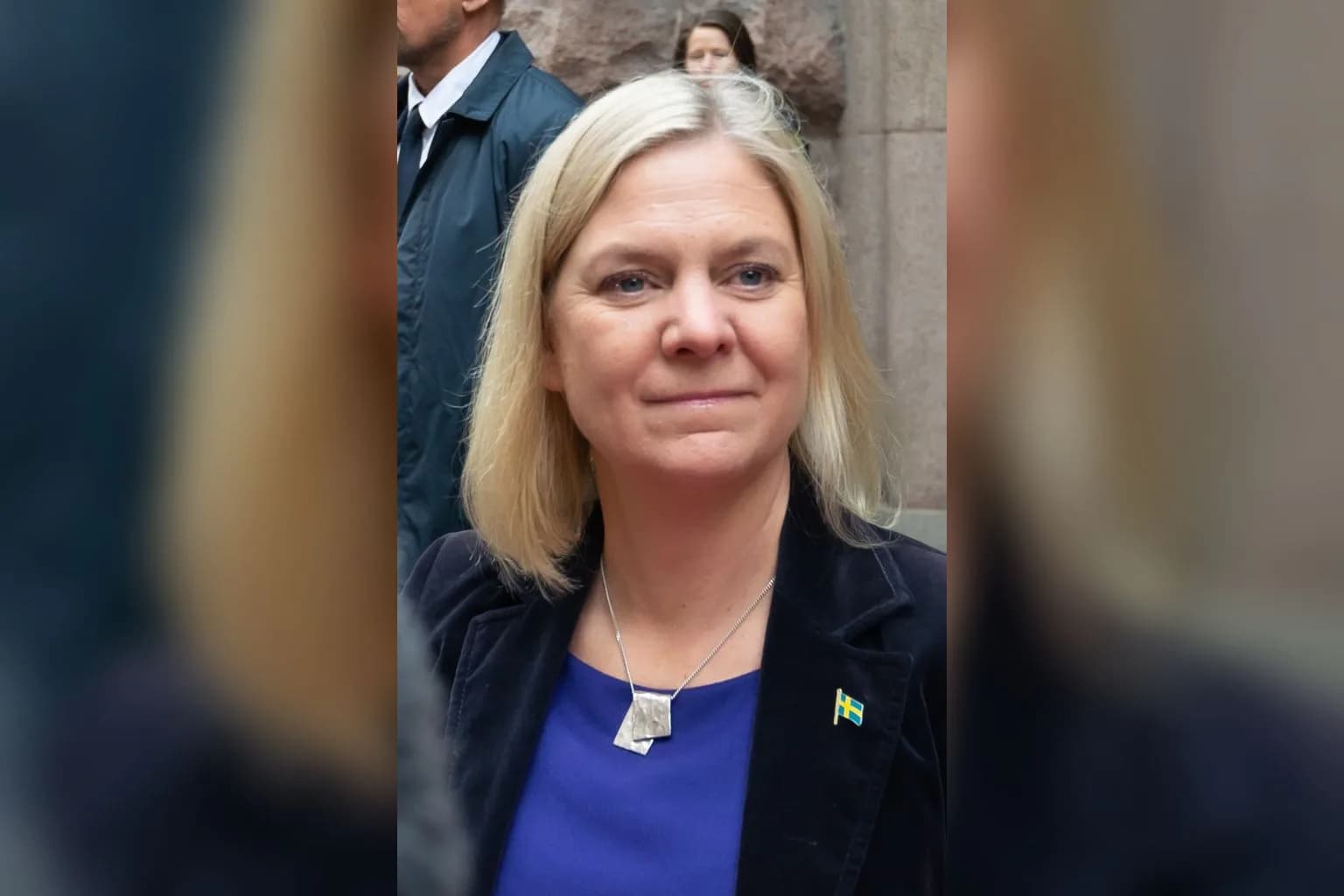
Sweden’s Prime Minister Ulf Kristersson resigned on Thursday after preliminary results from Sunday’s general election put the centre-left opposition on course to defeat his right-wing governing bloc by a narrow margin.
Opposition parties led by Magdalena Andersson of the Social Democrats are projected to take 176 seats in the 349-seat Riksdag. Kristersson’s bloc is expected to win 173 seats. About 50,000 votes separated the blocs in a country with a population of about 10 million people.
Kristersson announced his resignation in a post on X on Thursday afternoon. In his resignation letter, he wrote: “Now it is the speaker who will lead the next steps towards forming a new government. In order for that work to begin immediately, I hereby request to be relieved of my duties as prime minister.”
The result opens the way for Andersson, Kristersson’s predecessor, to return to office after four years in opposition. Andersson was prime minister between November 2021 and October 2022.
“The Swedish people have voted for a new direction for our country,” Andersson said.
Her path back to government remains dependent on negotiations with The Left Party, The Centre Party and The Green Party. Andersson has begun talks with those parties, whose differences on policy could make the formation of a new administration laborious.
The preliminary outcome also marks a setback for the Sweden Democrats (SD), the anti-immigration hard-right party that supported Kristersson’s government. Kristersson had promised the SD cabinet positions if he won re-election.
The SD lost support for the first time since entering parliament in 2010, falling three percentage points from its result in 2022. It also dropped from being Sweden’s second biggest party to third.
The election leaves neither side with much room for error. The opposition’s three-seat advantage in the Riksdag is enough to give Andersson the initial advantage, though it does not settle the terms of a government agreement among her prospective partners.
The results are due to undergo formal certification in the coming days and are expected to be finalised this weekend. Once a prime minister has resigned, the Speaker of the Riksdag, Andreas Norlén, holds discussions with every party before proposing a candidate to lead the next government.
Those talks could take time. Sweden required 37 days to form a government after the 2022 election. Andersson’s alliance now faces its own negotiations as it tries to translate a narrow electoral lead into a working parliamentary government.




Comments (0)