
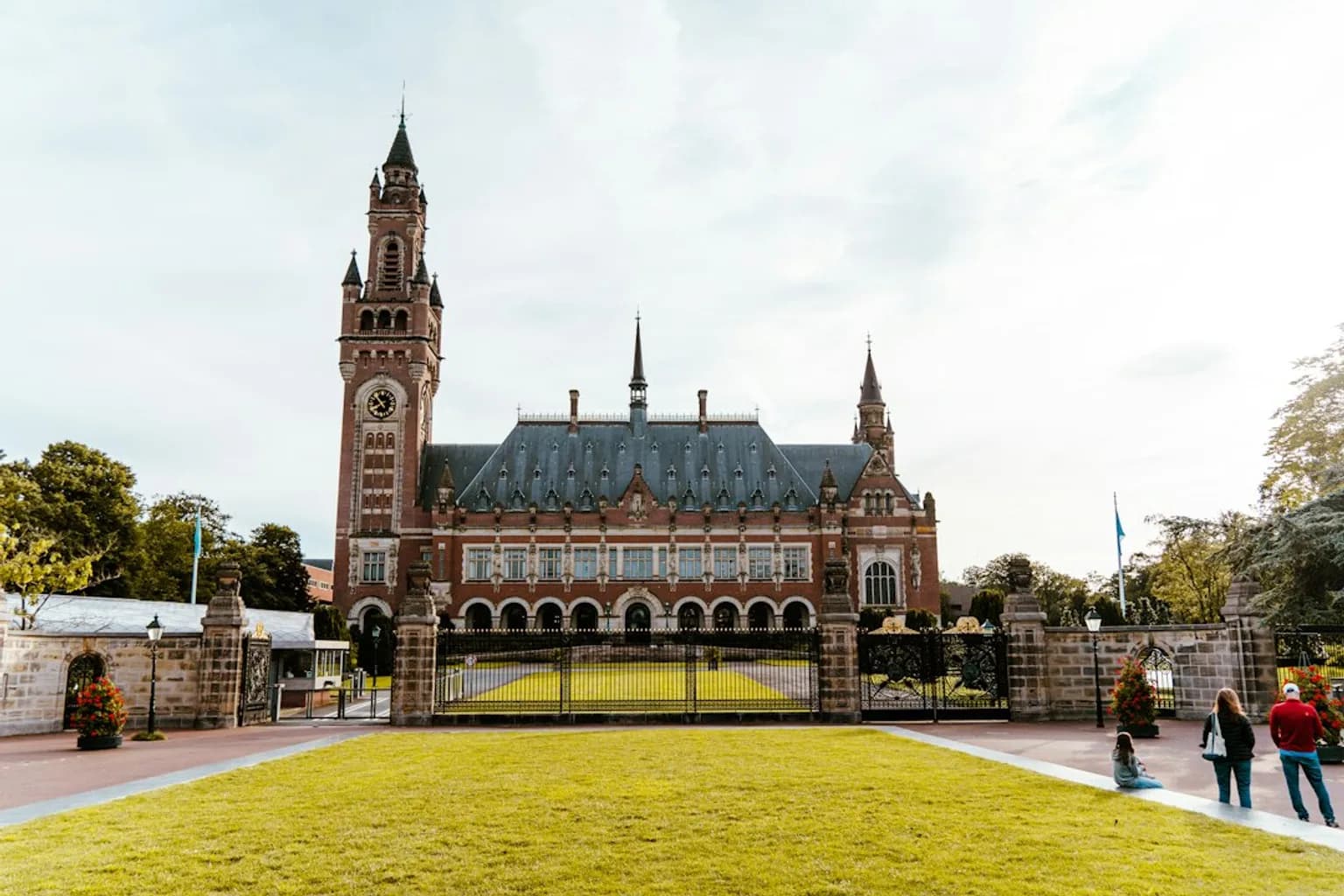
The Trump administration is preparing sweeping sanctions against the International Criminal Court that could restrict the tribunal’s finances and daily operations, escalating its campaign from penalties on individual officials to measures aimed at the institution itself.
The proposed sanctions would prohibit most transactions with the Hague-based court after a grace period of six to seven months. US citizens and companies would generally be barred from providing money, goods or services to the ICC unless they obtained a licence from the US Treasury.
A decision could be finalised during this week’s United Nations General Assembly gathering in New York or soon afterwards, The Journal reported, citing anonymous officials. A State Department spokesman declined to preview any sanctions decisions.
The measures could have consequences beyond direct dealings between American firms and the court. Banks often go further than sanctions rules require because they rely on access to the American financial system. The response of third-country businesses and financial institutions remains unclear.
The ICC president and registrar have previously said organisation-wide sanctions could disrupt the court’s ability to buy information technology and insurance services, recruit investigators and make routine payments. Those payments include salaries for American employees. It is unknown whether US-based ICC staff would be allowed to continue receiving salaries during any sanctions period.
Washington has already sanctioned more than a dozen ICC judges and prosecutors under an executive order President Donald Trump signed in February 2025. In August, the administration added the court’s President Tomoko Akane and senior trial lawyer Abdoulaye Seye to its sanctions list. Restrictions on them took effect on 17 September.
The administration’s pressure on the court is tied to ICC investigations involving US personnel in Afghanistan and to the warrants issued against senior Israeli officials. Neither the United States nor Israel belongs to the ICC.
The dispute returned to prominence in November 2024, when Trump was reelected and the ICC issued an arrest warrant for Netanyahu for alleged war crimes and crimes against humanity in the Gaza conflict. The court issued arrest warrants in 2024 for Israeli Prime Minister Benjamin Netanyahu and former Defence Minister Yoav Gallant over war crimes and crimes against humanity in Gaza.
Secretary of State Marco Rubio said in July that the administration would dismantle the court 'brick by brick' if necessary. Rubio has argued that the ICC’s pursuit of officials from countries outside its membership creates a dangerous precedent for the United States.
Last month, the ICC strongly rejected US sanctions against Akane and a senior lawyer in its prosecutor’s office. It described those measures as a 'flagrant attack' on judicial independence.
The planned institutional restrictions would pose a wider test for governments that have backed the court. The European Union has considered activating its Blocking Statute to protect European businesses from United States sanctions. Japan and European governments have also pledged protection to the ICC.
It remains uncertain whether the administration will announce and implement the broader measures, what any final order would say, and whether the grace period would apply uniformly. The Treasury’s arrangements for licensing exceptions have also yet to be set out.





Comments (0)