
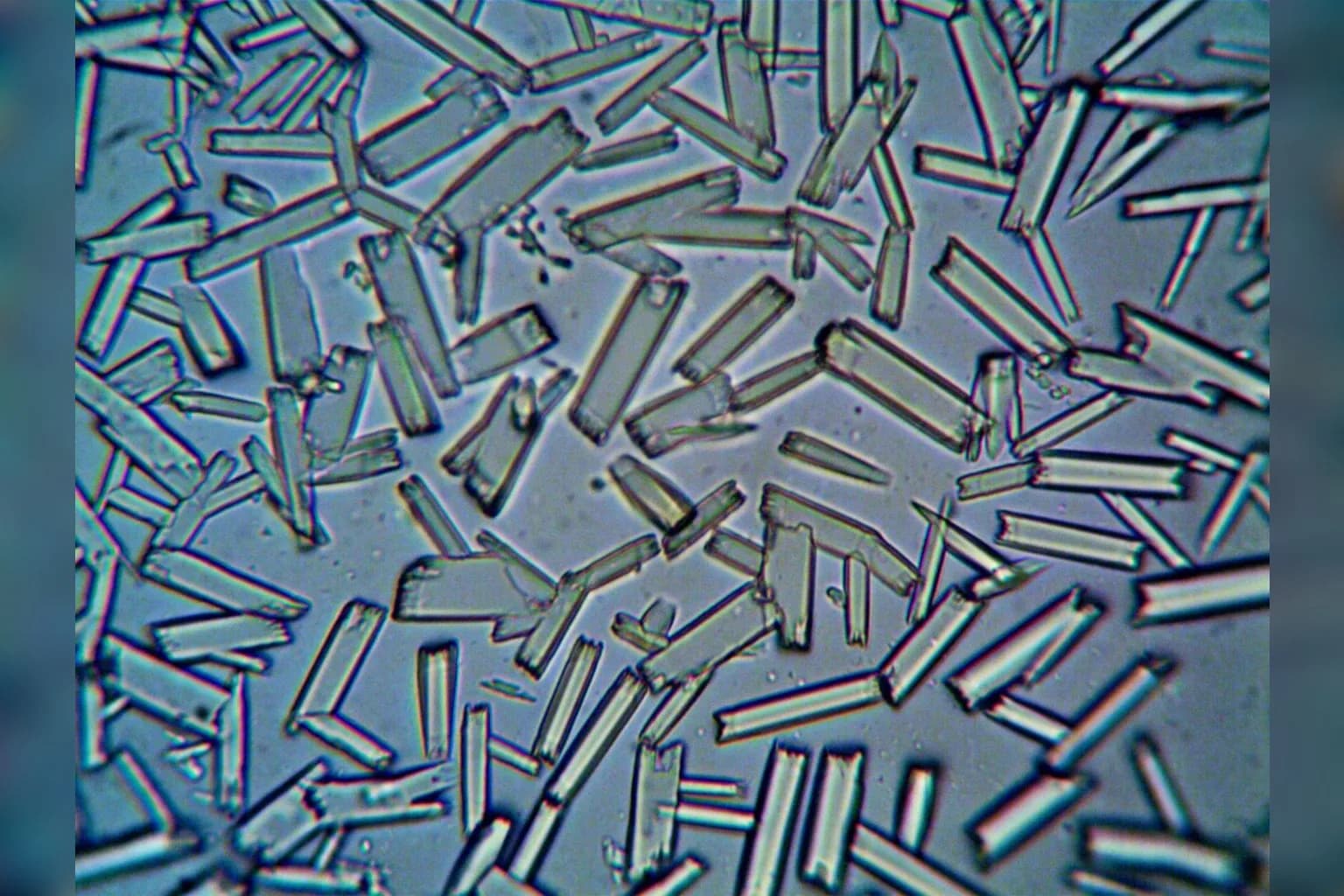
Ding Shiqian led the Tsinghua University team in Beijing whose thorium-229 clock showed that two separately grown crystals could keep time in agreement to within about three parts per 10 trillion. The clock’s tick also matched earlier measurements by physicist Jun Ye’s group at JILA.
For more than seven decades, atomic clocks have been the world’s most precise timekeepers. They measure time through electrons moving between energy levels in atoms or ions.
In 2003, the Germany-based physicists Ekkehard Peik and Christian Tamm proposed moving the clock’s reference point into the atom’s nucleus. Their proposed material was thorium-229, a rare radioactive form of the metal whose nucleus can be switched with a nudge of ultraviolet light.
That idea has now produced its first working prototypes. Ding’s group and researchers at TU Wien in Vienna independently and simultaneously built thorium-229 nuclear clocks, each using thorium-229 nuclei embedded in crystals.
The Vienna researchers built a competing prototype and used it in a search for dark matter, which did not find a signal.
On 07 October 2026, Nature published papers describing both clocks. The papers showed that the Chinese clock had demonstrated six times greater stability than the Vienna design.
Ding said the change from electrons to the nucleus matters because the nucleus is much smaller and is less affected by stray electric and magnetic fields.
Thorsten Schumm, a member of the Vienna team, described the contest in direct terms: ‘now we have a fierce but friendly global competition’.
The results put nuclear clocks alongside the atomic clocks that have set the standard for decades. The Beijing and Vienna prototypes offer a new way to pursue highly precise measurement and research in fundamental physics.





Comments (0)