
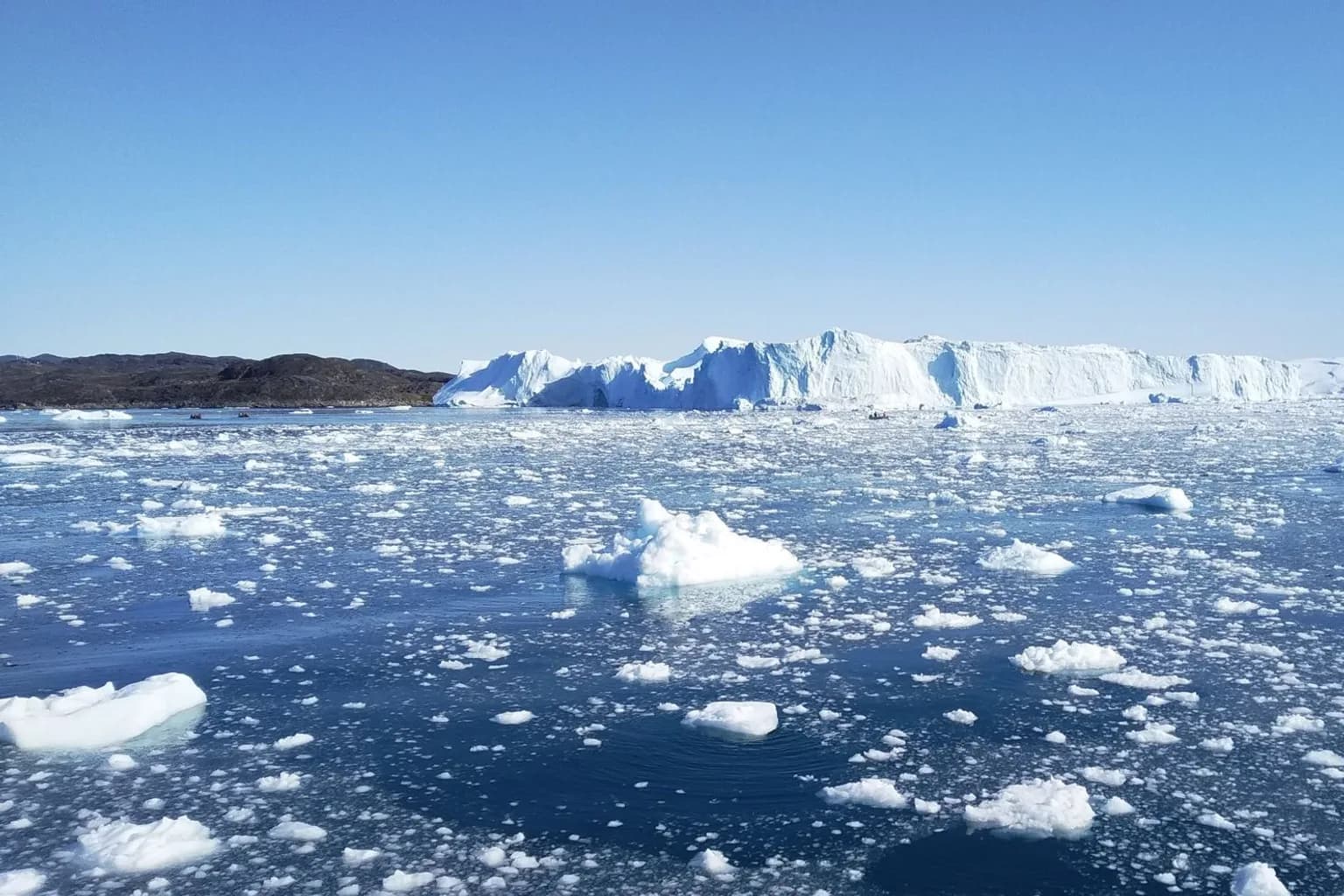
Greenland and Antarctica lost a combined 11.3 trillion metric tons of ice between 1979 and 2023, adding 3.14 centimeters (1.24 inches) to worldwide sea-level rise, according to a new study by an international group of polar scientists.
The research, published on Wednesday in the journal Scientific Data, brings together 42 independent estimates of ice sheet mass balance drawn from data collected by 27 satellite missions. The Ice Sheet Mass Balance Inter-comparison Exercise, known as IMBIE, said the work had produced the longest satellite record of ice-sheet changes yet assembled. Its data extends to 1972 for Greenland and 1979 for Antarctica.
Inès Otosaka of Northumbria University in England led the study. Andrew Shepherd, a Northumbria professor, IMBIE founder and study co-author, was also involved in the research. IMBIE is an international team of polar scientists headed by the European Space Agency.
The findings identify faster glacier discharge into the ocean as the main source of the loss. About 84% of the ice shed by the two ice sheets came from glaciers flowing more quickly into the sea. Surface melting accounted for 16%. The long-term trend is being driven by the ice sheets' response to a warming ocean, the study found.
Warming ocean waters can erode ice sheets from below and along their sides, contributing to faster glacier flow. The study does not establish the precise timing at which individual glaciers began accelerating, identify the glacier systems responsible for most of the change, or set out how oceanic warming affects every region.
Greenland accounted for about 60% of the combined loss, while Antarctica accounted for about 40%, even though Greenland is about one-eighth the size of Antarctica. Greenland lost 6,215 billion tonnes since 1972. Antarctica lost 4,780 billion tonnes between 1979 and 2023, contributing 13.3 millimeters to global sea level rise.
The scale of the combined loss, 11.3 trillion tons, is equivalent to a cube 23 kilometers (14.3 miles) in height. Ice sheets are now responsible for around one-quarter of all global sea level rise, according to the study. The 3.14-centimeter increase puts between 6 and 9 million people at risk of annual coastal flooding and erosion.
The satellite record also shows a marked increase in loss after the 1990s. The rate of ice sheet retreat in the 2010s was about four times higher than in the 1980s. In West Antarctica, ice discharge rose from 29 billion metric tons per year in the 1980s to 163 billion in the 2010s. Greenland ice loss reached 192 billion metric tons in the 2000s and 264 billion in the 2010s.
There was a slowdown in ice loss between 2020 and 2023. The study does not say whether that period signals a lasting change or temporary variation. It also does not provide projections for losses in coming decades, nor does it determine whether current trends will continue, stabilise or reverse under different climate pathways.





Comments (0)