
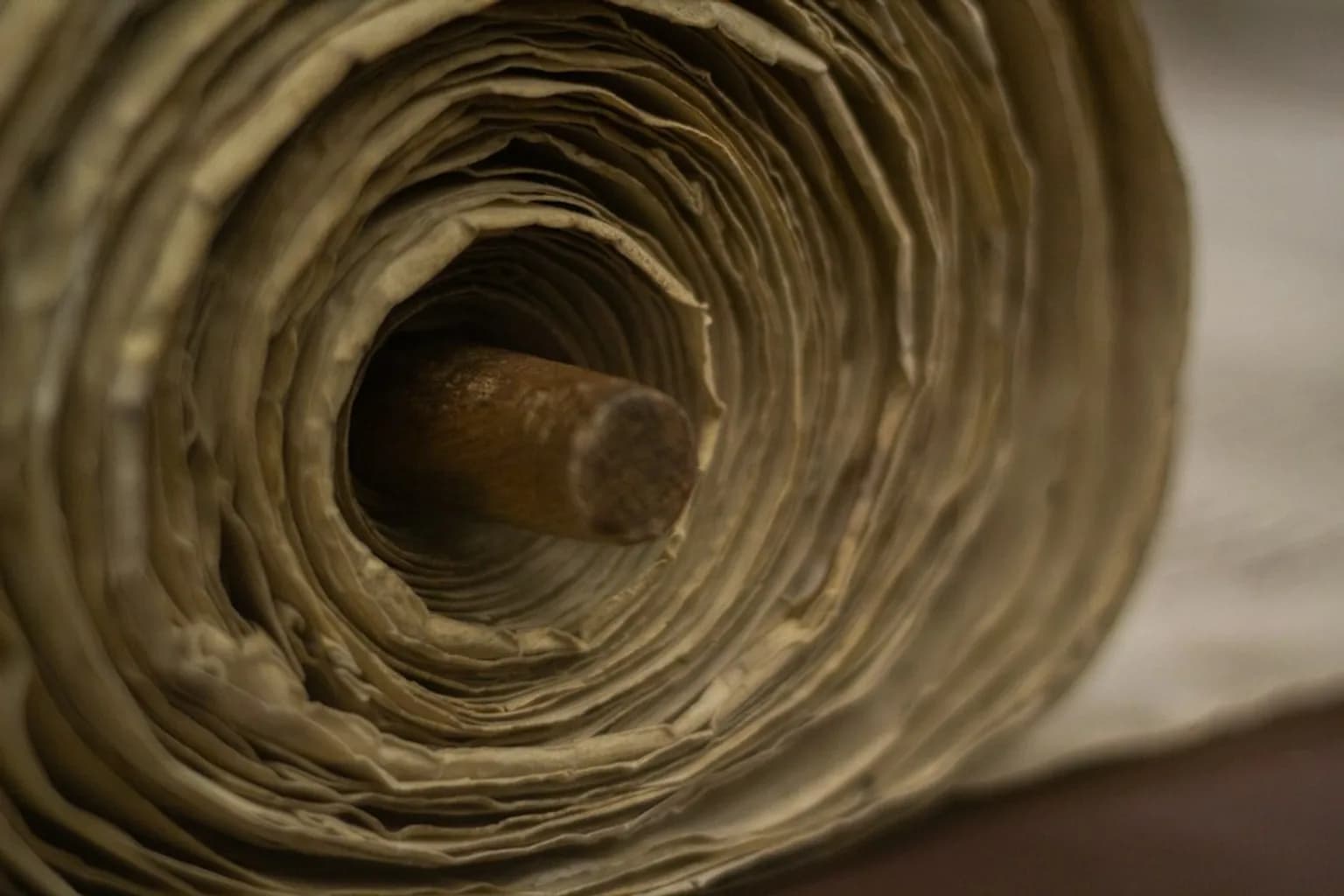
Scientists have developed a method that could help identify ancient Herculaneum scrolls most likely to yield readable text without opening them. The approach uses a handheld X-ray fluorescence, or XRF, scanner to find lead in ink, allowing researchers to select promising documents for more detailed X-ray imaging and virtual reconstruction.
The research, led by Douglas Seiler, a retired inventor, was published by Seiler et al. in PLoS ONE on 16 September 2026. The interdisciplinary team created model papyrus scrolls using inks with varying concentrations of lead, then charred them to resemble the carbonised documents from Herculaneum.
Lead-based ink gives a much stronger signal in X-ray imaging than carbon-based ink. The researchers said lead can absorb up to 25 times more X-rays than charred paper. This difference means a handheld XRF unit can flag burned scrolls containing lead before they undergo more detailed examination.
In the model-scroll experiments, the writing could then be revealed in a virtually unrolled X-ray representation. At least part of the text could be visually read while the carbonised scroll remained closed.
The proposed process begins with XRF screening for lead. Scrolls selected through that screening would be examined using X-ray tomography, which produces three-dimensional images of their rolled structure. Software can use those images for virtual unrolling, avoiding the physical handling that has often damaged carbonised papyrus.
Physical attempts to open carbonised scrolls have often reduced them to ash. The documents were carbonised in the eruption of Mount Vesuvius in 79 AD, which buried the Herculaneum library, described as the only intact library of classical antiquity.
More than a thousand scrolls from that library were carbonised in 79 C.E. About 1,800 whole scrolls and fragments from Herculaneum are held in Italy, France, and England. Much of the collection remains unread because the papyrus is brittle and blackened.
The work could support the Vesuvius Challenge, an ongoing initiative seeking to digitally unwrap and decipher hundreds of fragile scrolls excavated from Herculaneum. The project has recovered at least one readable word, “porphyra”, from faint carbon-on-carbon texture.
The new results establish that lead-based ink can be detected in the team’s model scrolls with portable equipment. They do not yet establish which Herculaneum documents contain lead, whether ancient ink formulations will behave in the same way, or how many scrolls could be screened and deciphered through the workflow. It also remains unclear whether lead-based inks were used consistently across the library, and how quickly a wider screening programme could proceed.





Comments (0)