
Mercury has shrunk significantly more than planetologists previously believed, according to a new study published in Geophysical Research Letters that re-examined signs of contraction across the planet’s surface.
The researchers found that Mercury has likely shrunk 10 to 30 percent more than earlier estimates suggested. The planet has cooled and contracted over the past 4.5 billion years, the study said, although the evidence indicates that shrinkage occurred over part of that period. The findings add to evidence that cooling has altered the smallest planet in the solar system over geological time.
Earlier estimates put Mercury’s contraction at between 2.5 miles and 10 miles in diameter. Mercury now measures 3,023 miles across. Saturn’s moon Titan and Jupiter’s moon Ganymede both have greater diameters than Mercury.
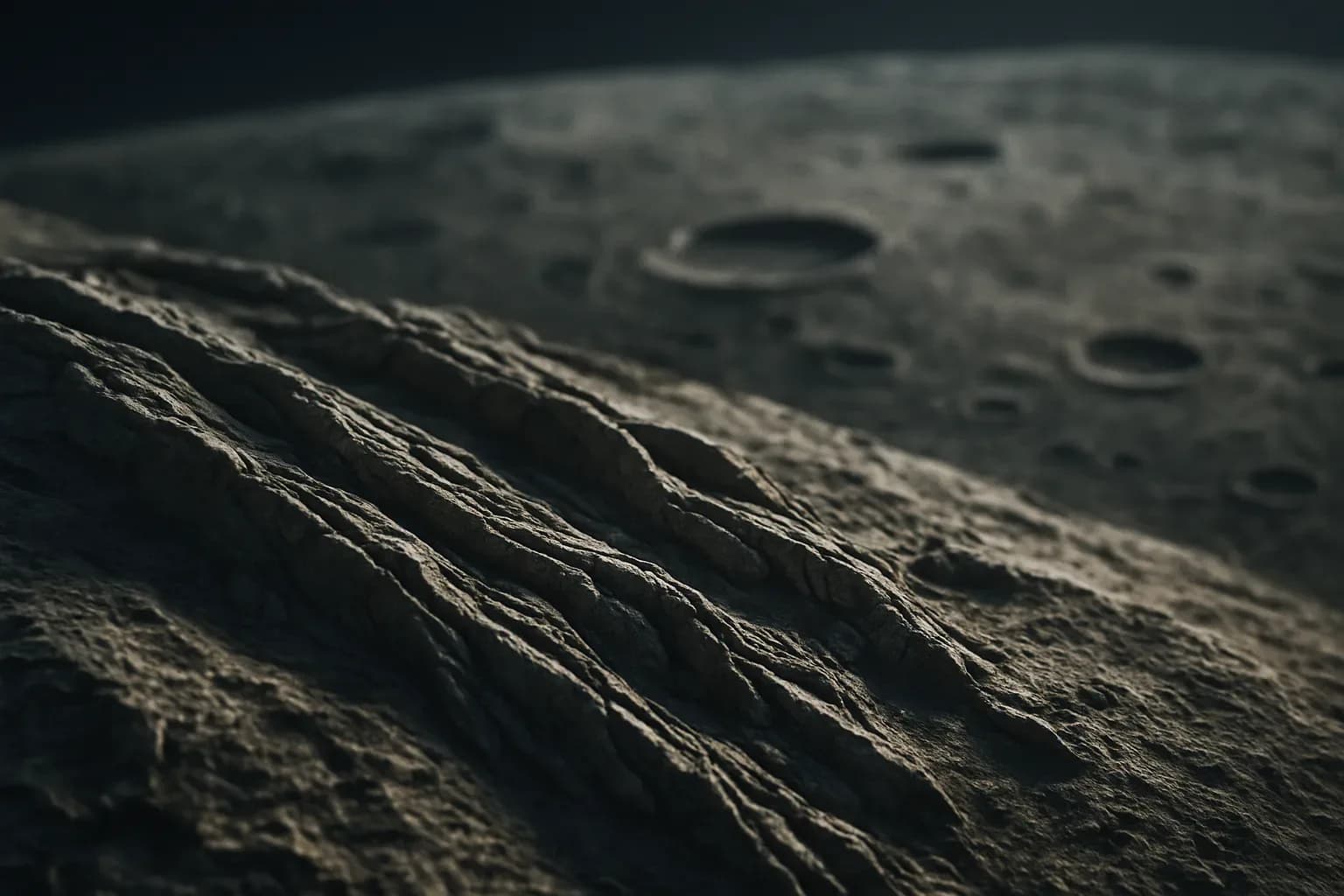
The study focused on features known as shortening structures, hills and ridges formed as the planet cools, shrinks and its surface is compressed. These structures provide visible evidence of contraction, though they can be difficult to identify across Mercury’s heavily altered terrain.
The researchers assessed surface roughness, including roughness associated with craters and debris. Impact bombardment has obscured some of Mercury’s contraction features, making its wrinkles harder to distinguish. By accounting for that roughness, the analysis sought to separate evidence of shrinking from marks left by impacts.
The measurements relied on data from NASA’s MESSENGER spacecraft, the only spacecraft ever to have entered orbit around Mercury. MESSENGER launched in August 2004 and arrived at Mercury in March 2011. It spent four-plus years studying the planet and completed 4,105 orbits before running out of fuel and crashing into Mercury’s surface on April 30, 2015.
The spacecraft carried seven scientific instruments. Its Mercury Laser Altimeter measured surface features to within one meter, providing the detailed mapping needed to examine the planet’s ridges, hills and other variations in terrain.
Paul Byrne, a planetary scientist at Washington University in St. Louis, commented on the research. The study does not establish a specific speed of Mercury’s shrinkage, whether contraction was steady throughout the past 4.5 billion years, or what factors beyond cooling may have affected the process.
It also leaves open how the revised estimate might change models for other terrestrial planets, or what it may show about Mercury’s interior composition and structure. Its central result is a higher estimate of the total contraction recorded in Mercury’s surface than earlier models had indicated.





Comments (0)