
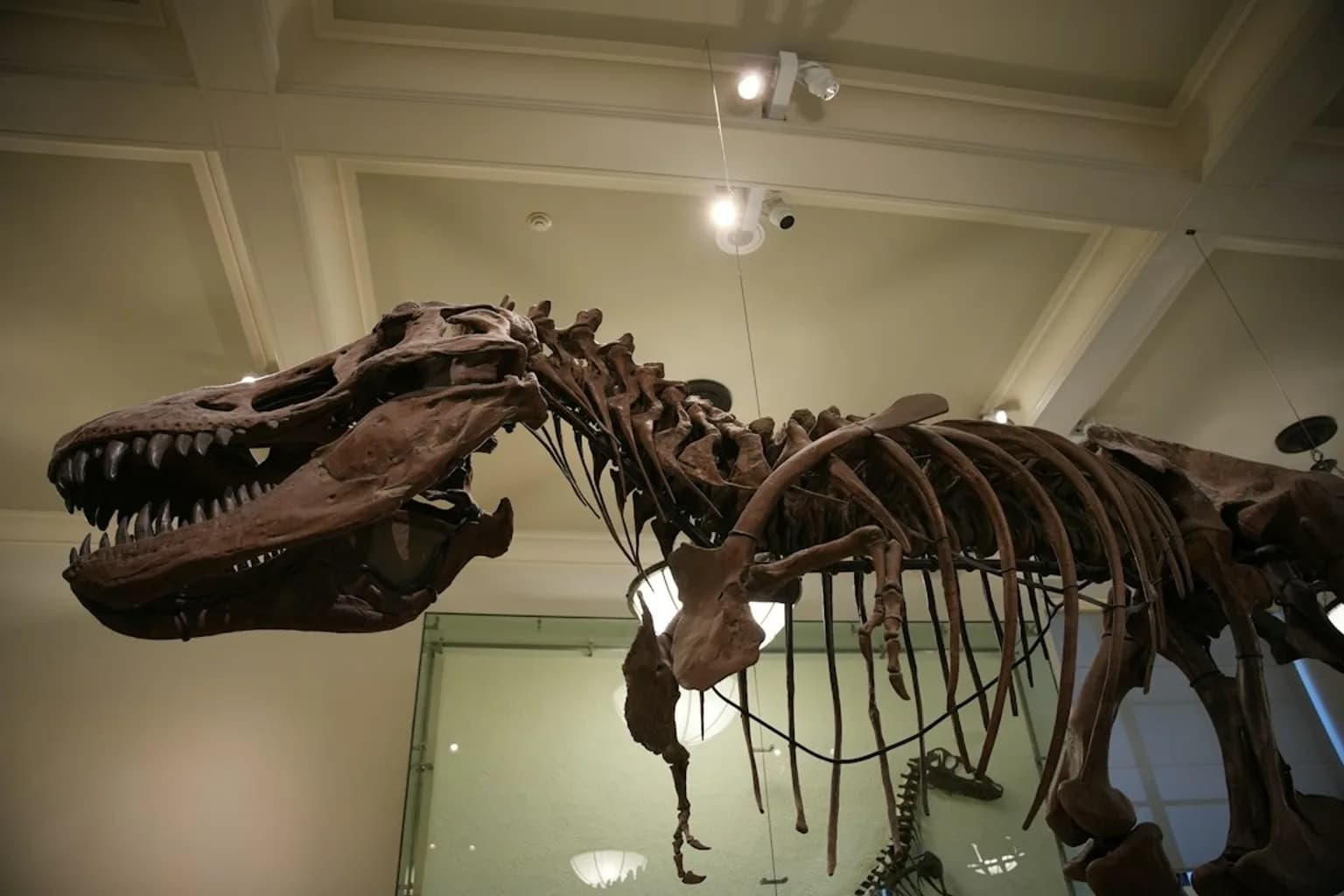
Tyrannosaurus rex had an estimated body temperature of 97.3 degrees Fahrenheit (36.3 degrees Celsius), plus or minus 4.5 F (2.5 C), according to a new study that examined chemical isotopes preserved in fossilised tooth enamel.
The estimate places T. rex close to the average human body temperature of 98.6 F (37 C), and suggests the dinosaur could regulate its own temperature. The research, published Wednesday in Science Advances, strengthens the case that T. rex was a warm-blooded, high-energy predator whose food needs were greater than estimates based on cold-blooded physiology.
For decades, scientists have debated whether dinosaurs had metabolisms closer to those of modern reptiles or to those of mammals and birds. Earlier work relied on indirect evidence, including bone structure and comparative anatomy. The new research offers one of the first direct measurements of an extinct animal's core temperature.
Randon Flores, a geologist at the University of California, Los Angeles (UCLA), led the research. Aradhna Tripati, a climate scientist and professor of geochemistry at UCLA, was the senior study author.
The team studied enamel from three T. rex teeth from specimens found in the Hell Creek Formation in Montana. The teeth came from a specimen nicknamed Thomas, which is housed at the Natural History Museum of Los Angeles County.
Researchers used a method called clumped isotope analysis. It measures the ratio of certain forms of carbon and oxygen in enamel. Tooth enamel forms within an animal's body at its body temperature, allowing its chemistry to act as a thermometer long after the animal has died.
Rare heavy isotopes of carbon and oxygen bond with each other at rates linked to heat. Cooler temperatures lead to more of these bonds, while warmer temperatures produce fewer. Warm-blooded animals able to control their internal temperature therefore have fewer such isotope bonds in their teeth than cold-blooded animals.
The scientists collected about 5 milligrams of enamel powder from each tooth using a low-speed rotary drill and tungsten carbide bit. The method was designed to be minimally destructive. Researchers spent more than a decade refining it, reducing the amount of fossil material needed by roughly 90%.
To compare the results, the team also analysed five crocodilian teeth from the same rock formation. Those specimens had an average estimated body temperature of 87.6 F (30.9 C), consistent with modern crocodiles and below the estimate for Tyrannosaurus.
Modern cold-blooded reptiles tend to have body temperatures of about 82-86 F (28-30 C). Most birds tend to have body temperatures of 104-109 F (40-43 C). The T. rex result therefore falls nearer the temperatures associated with humans and elephants than with modern reptiles.
The findings suggest that a warm-blooded T. rex needed “significantly more food” than a cold-blooded animal of comparable size. The study also supports the view that the dinosaur was capable of thriving across diverse climates.
The measurement does not establish whether T. rex held a constant temperature throughout the year, or whether it changed with the seasons. It also does not show how temperatures varied among different T. rex populations or geographic ranges. The study does not calculate a specific metabolic rate or daily food requirement, and it leaves open whether other dinosaur species had similar physiology.





Comments (0)