
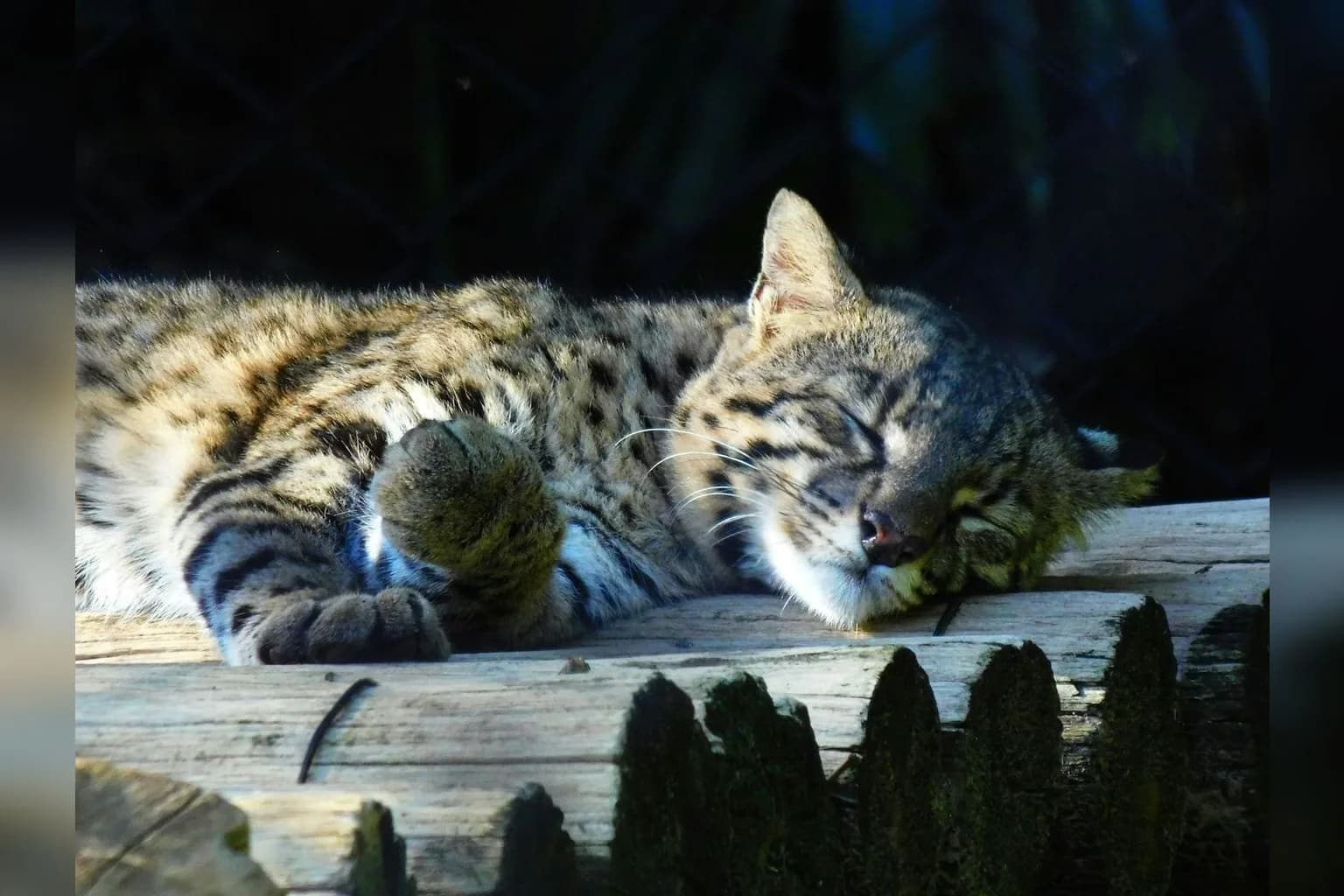
Researchers have formally identified the tilcayo, Leopardus tilcayo, as a distinct wild cat species after genetic testing of a single animal living at a rescue sanctuary in Bolivia. The study, published in Current Biology on 17 September 2026, marks the first identification of a new wild felid species in more than a century.
The cat is smaller than a house cat and has leopard-like spots. It is native to the Yungas cloud forests on the eastern slopes of the Andes mountains. Local communities have long used the name tilcayo for the animal, although reports of small wild cats in the region’s dense forests had not previously been examined by scientists.
Only one confirmed tilcayo is known. The 10-year-old cat, known as ‘Tigrino’, lives at La Senda Verde Animal Refuge in Bolivia’s Nor Yungas region. A local resident found the animal in the forest and initially believed it was a domestic kitten. A man later brought it to the sanctuary, where Paola Nogales-Ascarrunz, a study co-lead author and volunteer at the refuge, became involved in its examination.
Genetic tests indicated that Tigrino belonged to an unknown species. The researchers concluded that the tilcayo had probably separated from its closest tiger cat relative some 1.4 million years ago.
The finding forms part of a wider revision of tiger cats, small South American felines in the genus Leopardus. Tiger cats are also called oncillas and belong to the same broad genus as ocelots. They are generally about the size of a domestic cat, measuring between one and two feet long and weighing between four and six pounds.
They are nocturnal animals that can be difficult to observe. Tiger cats occur across Central and South America, from Costa Rica to Bolivia, Brazil, Venezuela, Colombia, Ecuador, Peru, and Argentina. Their elusive habits and the dense forests where some live have complicated efforts to establish where individual species occur.
For the new study, researchers examined complete genomes from 38 Leopardus cats, including 26 tiger cats. The material included DNA from living animals and museum specimens. The analysis identified five distinct tiger cat species in South America, replacing a classification that had recognised three.
Historically, many local and scientific names for tiger cats were grouped within Leopardus tigrinus, a species first described in 1775. Genetic research has gradually separated that broad category into several species. A study in 2013 distinguished northern Leopardus tigrinus from southern Leopardus guttulus. Leopardus emiliae received formal recognition in 2017, followed by Leopardus pardinoides in 2024.
The tilcayo extends that revision to Bolivia’s cloud forests. Its formal description also gives scientific recognition to a name already used by communities in the Yungas.
Much about the species remains unknown. Researchers do not know how many tilcayos survive in the wild, the full extent of their range beyond the Yungas cloud forests, or whether other animals have been documented by local residents or are living outside captivity. Its conservation status, population trends, behaviour and ecology have also yet to be established. The evolutionary relationships among all five tiger cat species and other felids are still incomplete.





Comments (0)