
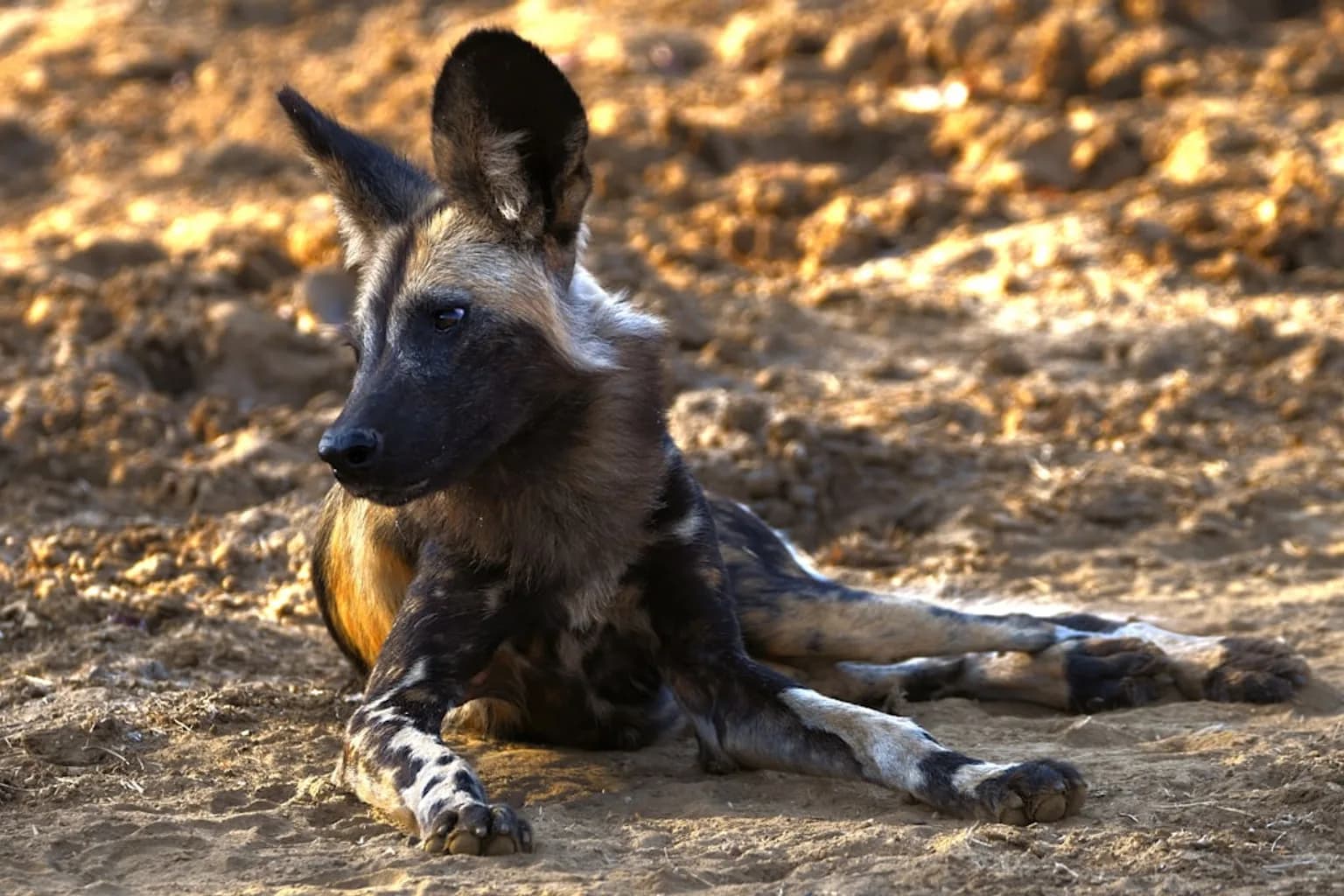
Three African wild dog brothers have completed a record-breaking 2,485-mile (4,000 km) journey across Zambia in search of mates, according to research published in the journal Ecology. Scientists say the trek is the furthest recorded by any African land mammal dispersing to breed.
The littermates, known as the Mayukuyuku males, left their birth pack in Kafue National Park in mid-2025. Their route zigzagged east, then north towards the industrial cities of Kitwe and Ndola, before turning east again towards the Luangwa River Valley. They crossed a landscape increasingly shaped by people, including farms, roads and towns, while avoiding major cities including Lusaka.
The brothers travelled about 260 miles in a straight line over eight months. Their actual route was nearly 10 times longer. By April 2026, the pack had traversed 4,126 km (2,564 mi) and reached a game management area between South Luangwa and Lower Zambezi national parks.
The study does not establish whether the brothers found mates or formed a breeding pack. They eventually settled in the Luangwa River Valley, which has a 400-or-so-strong wild dog population.
African wild dogs are among Africa's rarest predators. Only about 6,000 remain in the wild. The species is endangered, and dispersal is central to its genetic viability because dogs cannot breed within the pack in which they were born.
Wild dogs can remain in their birth pack and potentially inherit it. Alternatively, males and females leave at the age of two or three to seek mates elsewhere. The Mayukuyuku males survived their journey, although two of the three females travelling in the same cohort died.
The study, led by Professor Scott Creel of Montana State University, tracked 19 wild dog groups using GPS collars. Creel has studied African wild dogs since 1991. Its findings show how dispersing animals cross human-modified terrain and, in some cases, national boundaries.
Illegal snares were a recurring danger. Other GPS-collared wild dogs in the study died in snares. Three sisters came close to completing a similarly long dispersal journey before stopping after one became caught in a snare.
One female, EWD-1355, travelled 2,300 kilometres from Zambia into Mozambique before dying in a snare in June 2022. Her journey was part of a wider set of movements in which four separate dispersing groups covered a combined 9,863 km, more than twice the width of the United States.
The researchers say these movements suggest surviving wild dog populations across eastern and southern Africa have stronger connections than previously understood. Professor Creel said: 'It's plausible to believe that every major wild dog population in eastern and southern Africa, other than fenced ones, are potentially connected.'
The finding has implications for conservation planning, the researchers said. Protected parks remain important, though the study argues that conservationists should also consider linked ecosystems that allow animals to move between populations. The dogs' journeys show that such links can persist across fragmented landscapes, while the deaths caused by snares illustrate the risks animals face along the way.





Comments (0)