
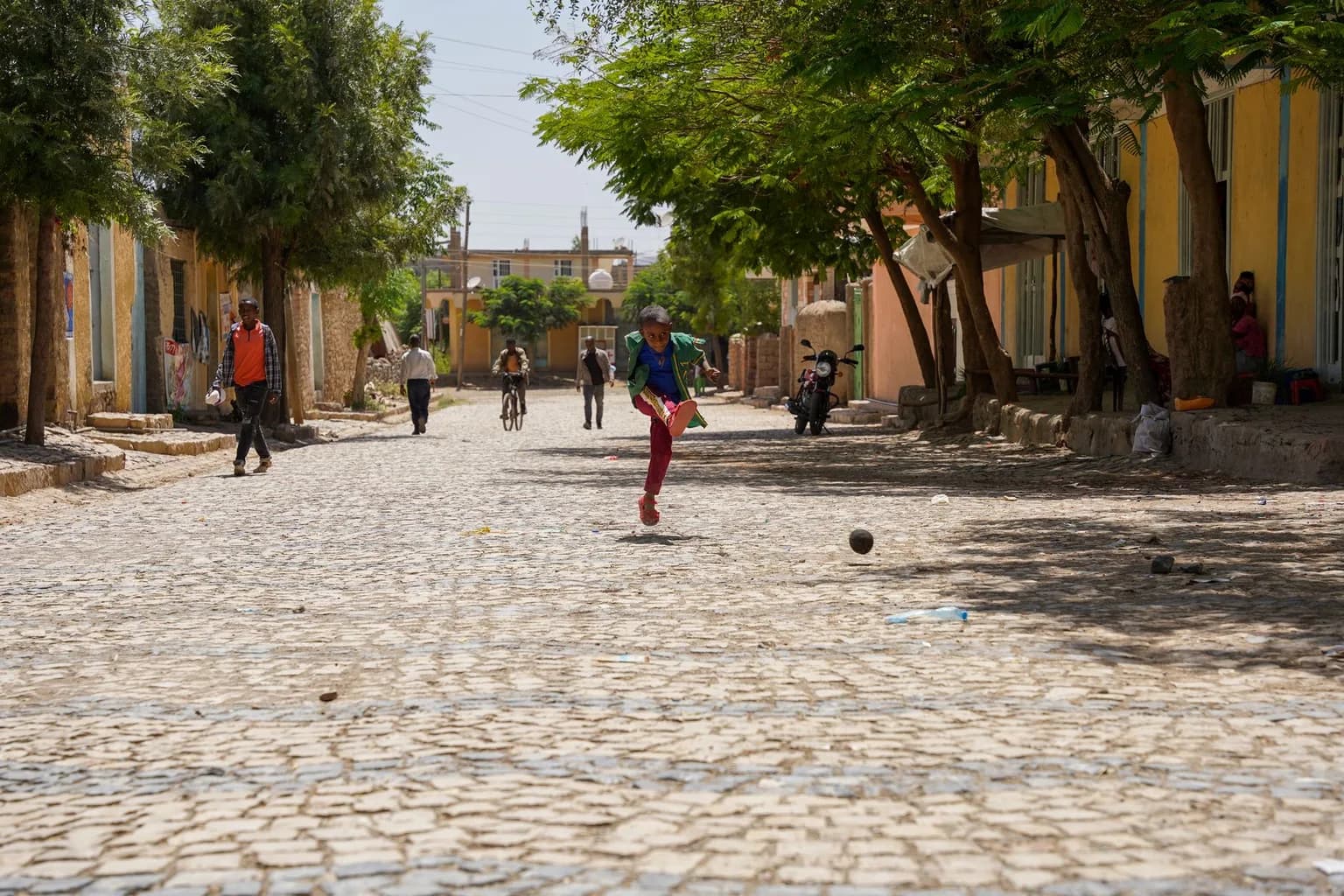
Residents of the Tigrayan town of Adigrat saw Eritrean soldiers and equipment before Ethiopian drone strikes hit their positions on Wednesday and Thursday. A resident described the overnight bombardment to AFP news agency, saying: “there were many, many drone strikes” and some Eritrean lorries had been destroyed.
ACLED, a US-based conflict monitor, reported multiple overnight drone strikes on Eritrean troops and ammunition in Adigrat. No verified casualties from the strikes have so far been reported.
The strikes came as Ethiopia accused Eritrea of sending forces into its territory. In a letter to the UN Security Council dated 8 October, Foreign Minister Gedion Timothewos described an “all-out invasion” and said Eritrean troops had advanced up to 60 kilometres into the northern Tigray region. He invoked Ethiopia’s right to self-defence.
The letter, addressed to French Foreign Minister Jean-Noel Barrot, was shared with news agencies on 9 October.
Eritrea rejected the accusation that it was backing the Tigray People’s Liberation Front, or TPLF. Its information minister, Yemane Gebremeskel, said the Ethiopian regime had been pursuing “an unprovoked war of aggression against Eritrea for more than three years now”. He also accused Addis Ababa of using the conflict in an effort to take Assab, an Eritrean port, and restore access to the Red Sea.
The TPLF is an armed opposition group which, with six allied armed groups, launched a major offensive in September 2026 aimed at overthrowing Prime Minister Abiy Ahmed’s government. The fighting began with attacks in the Afar region, and was reported to have broken out between the government and the TPLF over two weeks ago.
Ethiopian forces used drones against TPLF positions during the initial fighting. Over the past week, the army pushed the TPLF back and seized the Tigrayan capital, Mekelle, while witnesses told AFP that the rebels also lost Shire and Adigrat.
It was during this reversal that Eritrean troops were reported to have entered Tigray from the north in early October. Residents told AFP and Reuters that they had seen Eritrean soldiers and vehicles in northern Ethiopia.
The conflict is also moving beyond Tigray. The president of the Afar regional state said Eritrean forces were directly involved and controlling areas in Afar, while the conflict has spread to the Afar and Amhara regions.
For Ethiopia and Eritrea, the present confrontation reverses a recent period of cooperation. Eritrea became independent from Ethiopia in 1993, and relations were normalised in 2018 after Abiy came to power. During the two-year civil war, Eritrea had been an important ally of Ethiopia’s government, fighting alongside it against the TPLF.
Both governments now accuse the other of breaking the 2022 deal that ended that civil war.
The diplomatic rupture has followed the military one. Ethiopia closed its embassy in Asmara and ordered 10 Eritrean diplomats to leave the country last week. Eritrea then announced that it was severing diplomatic ties.
There has already been civilian harm elsewhere in the fighting. Alamata was hit by heavy weapons from 26 to 28 September, killing civilians, and a doctor at Alamata General Hospital told the BBC that at least 52 people had died.
The scale of Eritrea’s military commitment, whether it supported the TPLF before this escalation, and whether the fighting will develop into a wider war between the two countries remain unclear.



Comments (0)