
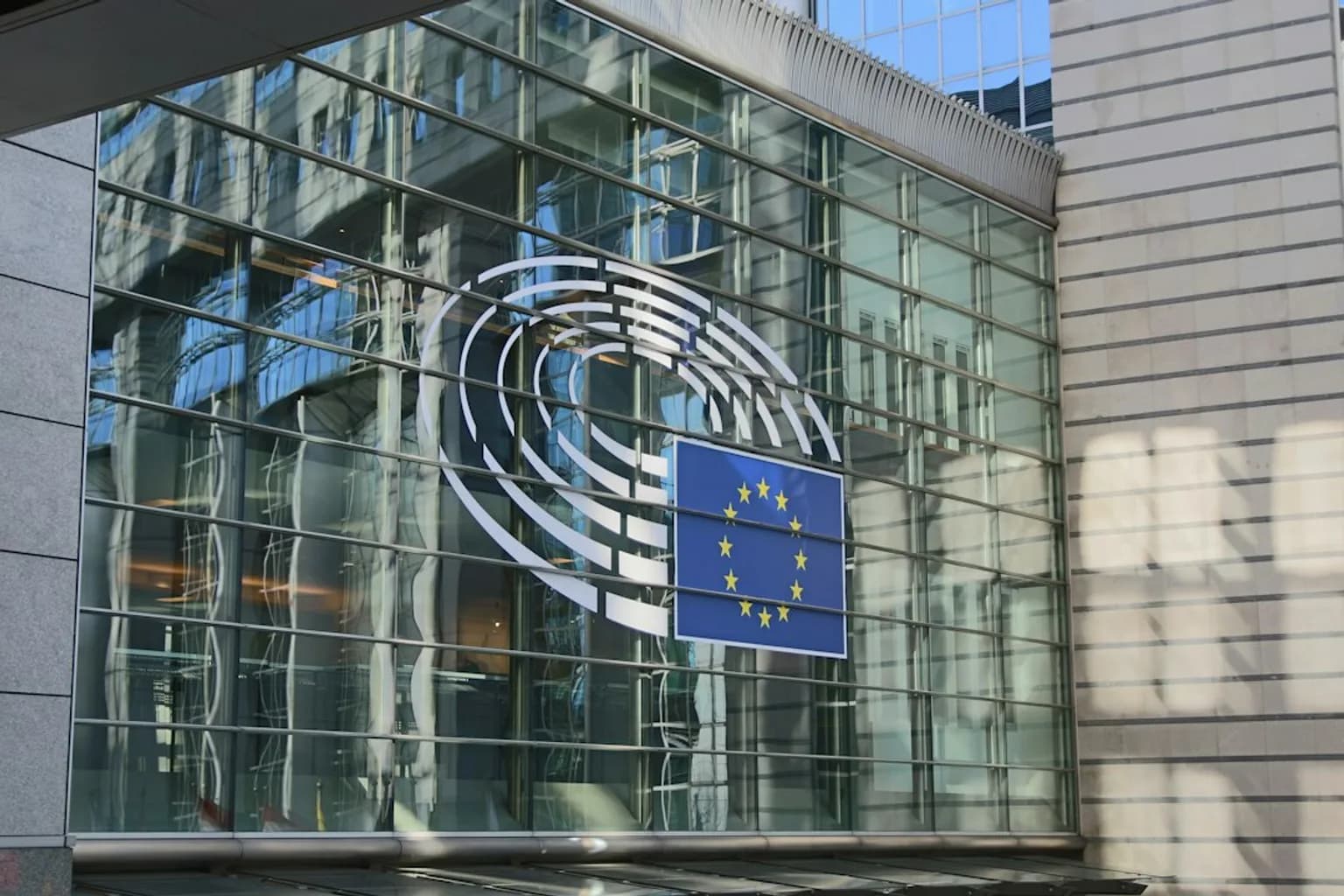
When the European Union set up its Space Threat Response Architecture in 2021, its remit was to protect satellite systems jointly owned or operated by the bloc, including Galileo and the Copernicus remote sensing constellation. The EU has now widened that approach through Council Decision 2026/2195, dated 23 September, approving a collective response to threats against the satellites and related terrestrial infrastructure of any of its 27 member states.
The decision extends the EU’s response to threats that affect the security of the bloc, its member states, or both, even where EU space assets are not directly involved. It permits joint political, economic or military action. The threats covered include cyber-attacks, espionage, supply-chain disruption, ground stations and wider space-based infrastructure.
The move forms part of the EU’s pursuit of “strategic autonomy” in space. It follows a framework space security and defence strategy published in 2023.
In February 2026, the European Commission disclosed its European Space Shield action plan. Its four elements are interoperable national defence capabilities based on the Galileo Public Regulated Service, space domain awareness, measures against jamming and spoofing, and in-orbit servicing infrastructure.
On 7 August 2026, the Commission agreed with the SpaceRISE consortium to add 66 satellites to IRIS² for defence use. The addition is intended to expand secure governmental communications capacity within the EU by 60 per cent.
At the International Space Summit in Paris on 10 September 2026, Commission President Ursula von der Leyen confirmed a proposal to allocate €131 billion to defence, security and space in the EU’s 2028-2034 budget, five times the current amount. The summit, held at the Paris Grand Palais, brought together 90 countries as EU leaders set out their approach to space security.
“Our security depends on security in space,” von der Leyen said, as she argued for “a European space shield”. She also announced plans to expand the IRIS² secure communications constellation to more than 350 satellites, with deployment scheduled to begin in 2029.
Von der Leyen said the global space economy is expected to triple by 2035 and allocated 2 billion euros in venture capital for European space companies under the EU’s space security strategy.
French President Emmanuel Macron made the case for European capacity in more direct terms. “Europe must fly with its own luggage,” he said at the Paris summit, where he expressed the intention to see the European cargo spacecraft Nyx dock with the International Space Station within two years. He also set a goal of a first 100% European crewed spacecraft taking off from the Kourou spaceport in French Guiana within ten years.
French astronaut Sophie Adenot completed her third spacewalk at the International Space Station during the period of the EU announcements.
Defence Commissioner Andrius Kubilius said national systems existed, though they were slow and fragmented. He identified fragmentation, rather than funding, as the principal problem. Clayton Swope of the Center for Strategic and International Studies’ Aerospace Security Project and Michael Gleason of The Aerospace Corporation’s Center for Space Policy and Strategy were cited as experts on EU space security matters.
The need for shared information is central to the EU’s plans. Fifteen EU countries formally concluded an agreement on 25 September 2026 to create a military space data mechanism, initially expected to be worth around €50 million and run by the European Defence Agency. Austria, Belgium, Germany, Spain, Finland, France, Italy, Ireland, Latvia, the Netherlands, Poland, Portugal, Romania, Slovenia and Sweden are participating, and the mechanism is targeted to reach initial operating capability in early 2029.
Only France, Germany, Spain and Italy have significant access to a recognised picture of activity in space. Other EU countries rely heavily on the United States or commercial providers. The European External Action Service carries out the EU’s Common Foreign and Security Policy.
The pressure to build that capacity comes as orbit grows more crowded. The number of objects tracked in Earth orbit rose from 31,773 at the end of 2023 to 39,246 at the end of 2024, then reached approximately 45,300 by late 2025. ESA’s live catalogue recorded 46,770 tracked objects by 31 July 2026.





Comments (0)