
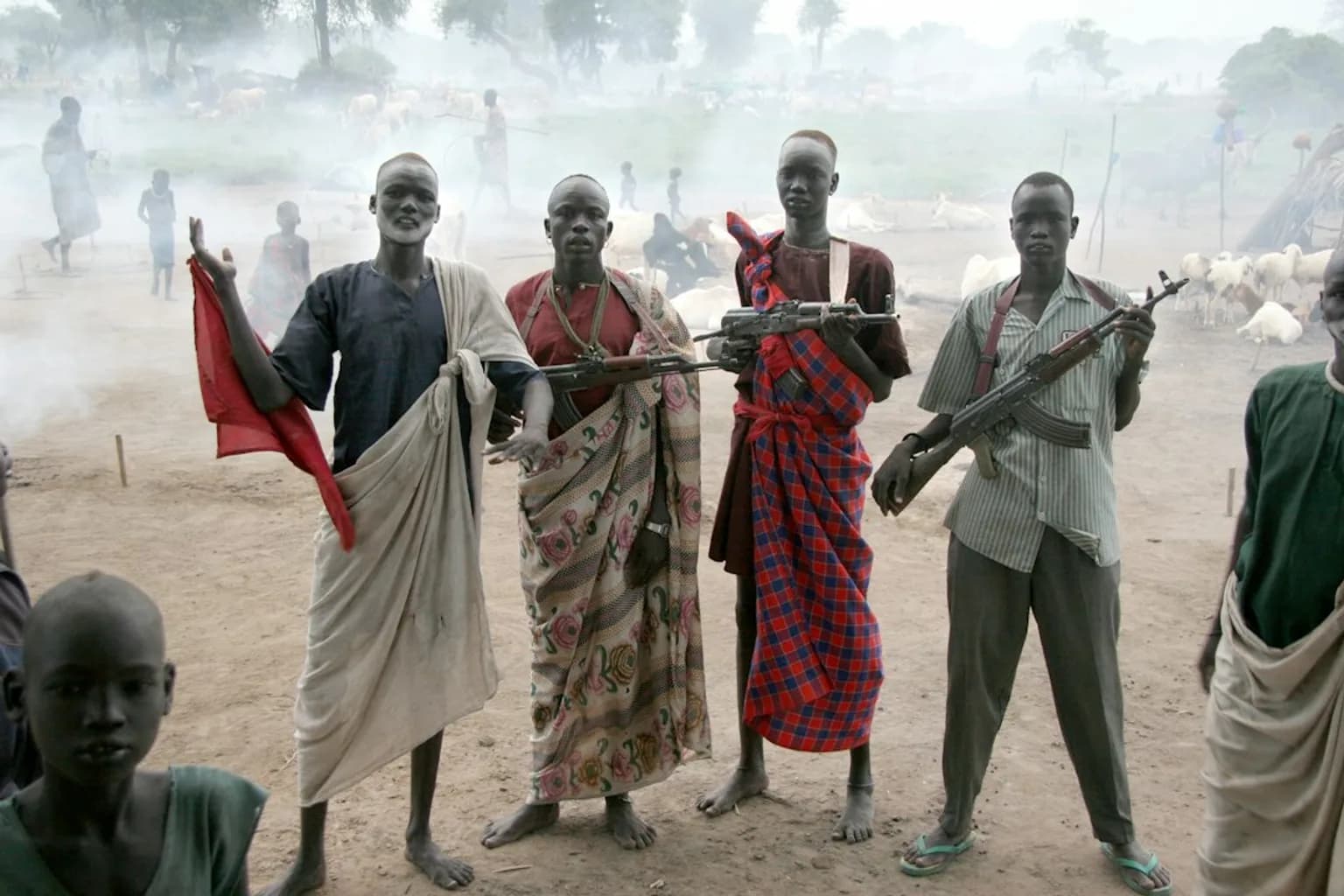
In Nyala, South Darfur, the share of children arriving at nutrition services who were admitted with severe acute malnutrition rose from approximately 5% to 11% between January and August.
The rise comes as Sudan faces a food crisis shaped by war and drought. The Integrated Food Security Phase Classification, or IPC, warned on 12 October 2026 that famine risk was intensifying across Greater Darfur and Greater Kordofan.
Sudan’s war began in April 2023, when tensions between the military and the paramilitary Rapid Support Forces escalated into open fighting. Conflict monitor ACLED says the fighting has killed at least 150,000 people, while about 13 million have been displaced.
By May 2026, nearly 19.5 million people, over 40% of Sudan’s population, were facing high levels of acute food insecurity. Of that number, 135,000 were in Phase 5, the most severe classification, marked by extreme food shortages, starvation, very high levels of malnutrition and deaths from disease or acute malnutrition.
An El Niño-induced drought is affecting roughly half of Sudan, compounding the disruption caused by the war. Western Kordofan is enduring one of its worst droughts since 2004 amid poor rainfall.
Crop conditions have deteriorated across the regions now facing the greatest danger. Poor vegetation growth affects 64% of cropland in North Darfur, where delayed rains disrupted cultivation and critically low food stocks have worsened food insecurity. Nearly two-thirds of cropland in North Darfur, and about half in South Darfur, West Kordofan and South Kordofan, is affected by poor vegetation growth.
Rain eventually came in late September, but too late to save most cereal crops. The loss has left families without food or income.
The effect is most visible among children. In Eastern Jebel Marra, South Darfur, two displacement camps recorded global acute malnutrition rates of 38% and 30.8%, above the 20% famine threshold. Across Greater Darfur, 13 of 17 nutrition surveys conducted since January found critical levels of acute malnutrition.
Medical care is extremely limited and often entirely inaccessible across Sudan, while clean water is becoming increasingly scarce. As of August, only 26% of people expected to need treatment for severe acute malnutrition with medical complications had received it. Without medical treatment, as many as two-thirds of children with severe acute malnutrition and medical complications could die.
In Greater Kordofan, more than 300,000 people have been forced from their homes since October 2025, creating displacement camps where malnutrition and mortality rates have reached catastrophic levels.
Food supplies and aid deliveries are also under pressure from the fighting. Markets in Greater Kordofan have been struck by more than 170 airstrikes, looting incidents or armed clashes this year. Two trucks contracted by the World Food Programme, or WFP, came under fire on 2 and 3 October, killing at least one person.
The IPC consists of 21 organisations and intergovernmental institutions, including UNICEF, the World Bank, the World Food Programme and the World Health Organization. It warned that catastrophic food insecurity, acute malnutrition and excess mortality would likely intensify without immediate humanitarian access and increased funding.
Sudan’s humanitarian response plan has a 57% funding gap, severely limiting lifesaving assistance.

Comments (0)