
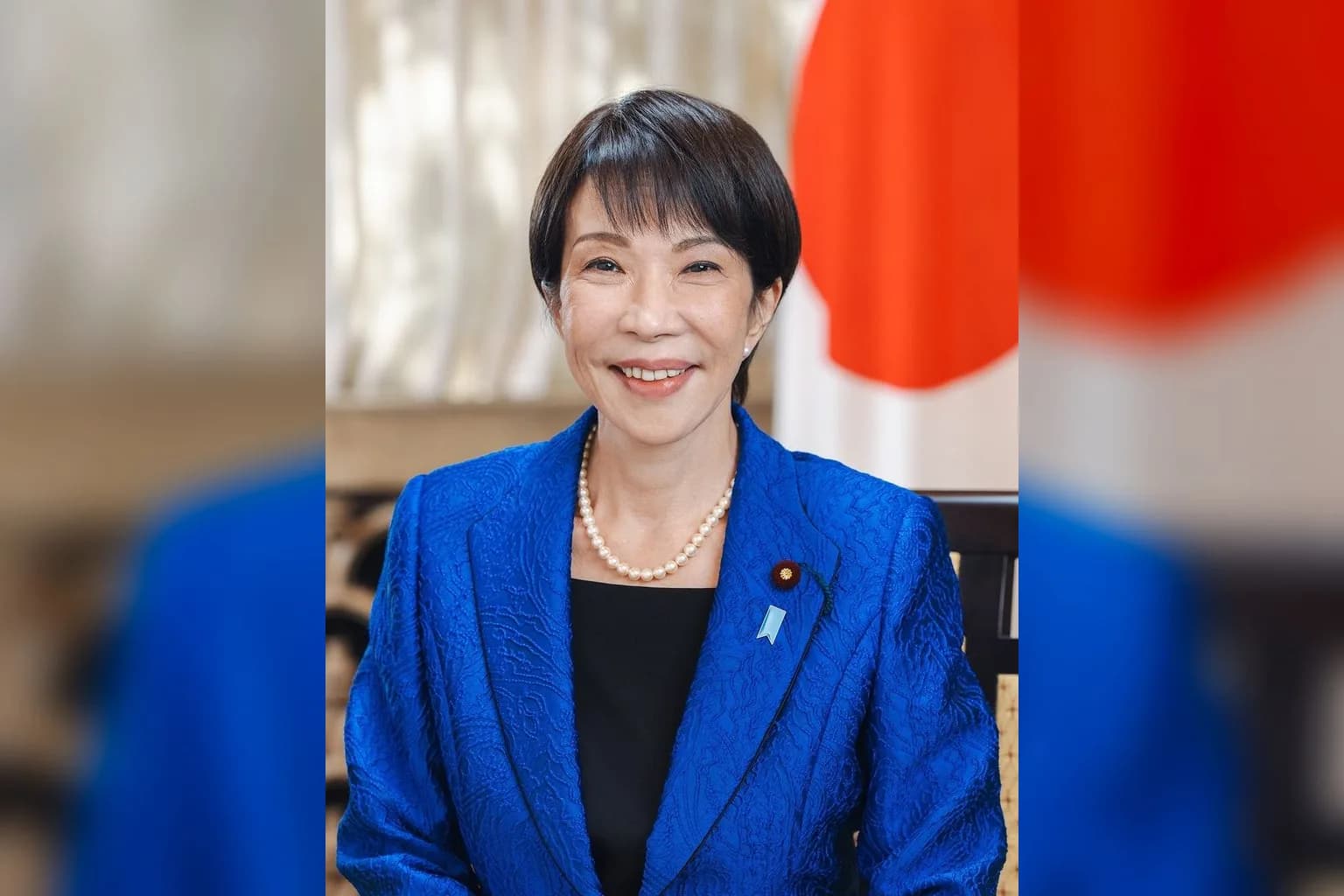
When Sanae Takaichi met Donald Trump in New York, the US president offered a warm assessment of Japan’s prime minister. “She's a friend of mine. We got to know each other very well over the last period of time, she's going to be a great prime minister,” Trump said.
Takaichi, who met Trump on the sidelines of the United Nations General Assembly, pointed to cooperation between the two governments on economic security. “Thanks to Donald's leadership and also my own leadership, our bilateral economic security cooperation in areas such as AI, semiconductors and critical minerals has been steadily advancing,” she said.
Xi Jinping then made a three-day state visit to Washington, from Wednesday to Friday. It was Xi’s first state visit to the US in over 10 years and his third face-to-face meeting with Trump since the US president returned to office.
The immediate strain between Beijing and Tokyo dates to remarks Takaichi made last November. She said a Chinese attack on Taiwan could constitute a “survival-threatening situation” for Japan.
Beijing subsequently imposed strict controls on exports of dual-use items bound for Japan, including critical minerals, rare earths and advanced tech. The measures carry particular weight because China controls 90 percent of the world’s processed rare earths and at least 60 percent of rare earth extraction.
Guo Jiakun, a Chinese foreign ministry spokesman, said the controls were necessary to curb Japan’s remilitarisation and nuclear ambitions. Beijing has described them as a direct response to Tokyo’s defence build-up.
Takaichi’s comments on Taiwan sent Sino-Japanese relations to their lowest point in decades.
In a Monday speech to the Diet, Takaichi called China an “important neighbor” and pledged to advance a “strategic relationship of mutual benefit” with Beijing. She also said Japan would “firmly assert” its positions on the East China Sea and the South China Sea, and demanded that China act “responsibly”.
Trump has previously placed himself between the two governments. He visited Tokyo before meeting Xi in South Korea last October, and Takaichi returned the visit with bilateral talks at the White House in March.
Before the latest Trump-Xi meeting, the US and China also agreed to establish a formal dialogue on artificial intelligence. Washington was considering delaying an announcement on arms sales to Taiwan until the end of the year.
The available information does not establish what Trump asked Xi about the restrictions on Japan, whether he sought direct talks between Chinese and Japanese leaders, or what outcome their Washington meeting produced. Those questions sit alongside the broader dispute over Taiwan, security and access to critical materials.




Comments (0)