
Presidents Donald Trump and Xi Jinping met in Washington on September 24 for high-stakes talks as the United States and China try to manage a widening contest over economic and technological power. The meeting came at an urgent point in the relationship, with disputes spanning trade, Taiwan, Iran, artificial intelligence and rare earths.
The two leaders appear to be relying on personal rapport and mutual interest to keep that competition from turning into open conflict. Their talks took place four months after Trump's visit to Beijing in May, an unusually compressed sequence of state visits in the history of U.S.-China relations.
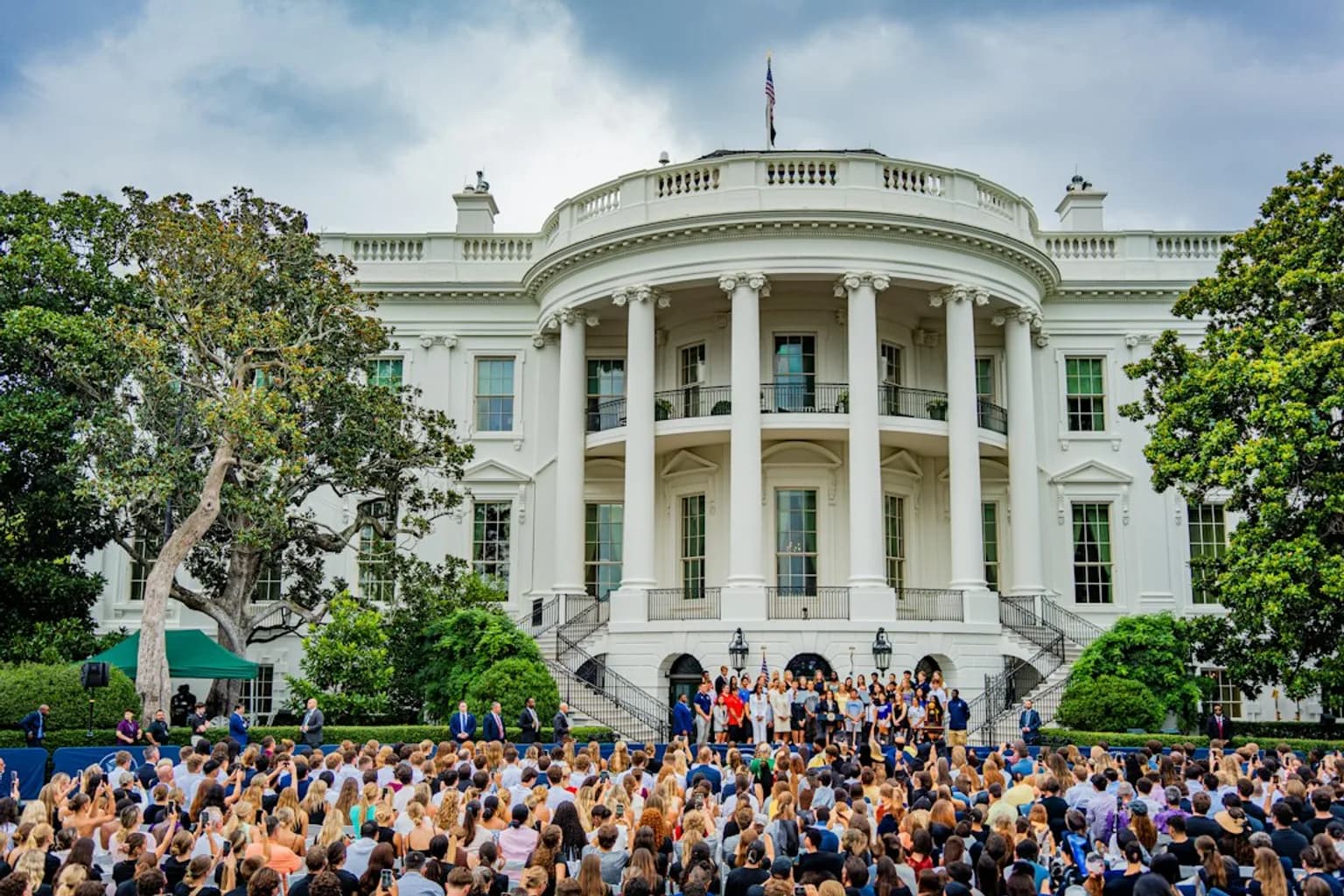
Xi's trip was his first state visit to Washington since 2015. It began with a State Arrival Ceremony at the White House involving 479 military personnel from all branches. The programme included a full honour cordon, the national anthems, remarks from both leaders, a military review and demonstrations. A B-2 Spirit and four F-22 Raptors then conducted a flyover.
Trump had indicated the breadth of the agenda before the meeting. Speaking to reporters aboard Air Force One on Sunday, he said: “I'll be discussing almost everything with him”.
That broad formulation reflected the range of unresolved issues. Washington and Beijing remain divided over the war in Iran. They are also seeking common ground on trade and on how to respond to the rapid advances in artificial intelligence. The wider relationship includes competition for economic and technological dominance that is likely to shape relations between the two countries for a generation.
Analysts were cautious about the prospect of major results from the Washington talks. Jonathan Czin of the Brookings Institution said: “I don't expect much to come out of this”.
Czin said the meeting was likely to echo Trump's May visit to Beijing. “In many ways, this is going to be a recapitulation of Trump's visit to Beijing back in May, where the focus was really on the ostensible rapport between the two leaders,” he said.
Wang Dong, a professor at Peking University, said any major agreement on artificial intelligence was “politically out of reach for now”. Yue Su of The Economist Intelligence Unit identified narrower areas where the two governments could make progress, saying there was “room for progress on tariffs, agricultural purchases and selected export controls”.
Kurt Campbell, a former US Deputy Secretary of State who is now Chairman of The Asia Group, also questioned how much substance would emerge from the visit. “This is less a summit and more a spectacle. This is designed for deep public consumption,” he said.
The ceremony underlined the importance both sides attach to controlling the public presentation of their relationship. Its military display came as the two powers confront disagreements over strategic issues and compete in advanced technology, while still seeking enough cooperation to limit the risks of escalation.
The outcome of the September 24 meeting was not known, including whether the leaders reached arrangements on trade, technology or geopolitical disputes. Xi's policy aims for the talks were also unclear. Trump and Xi were expected to meet again in November at the Asia-Pacific Economic Cooperation forum in Shenzen, China, giving both governments another opportunity to assess whether their renewed leader-level diplomacy can produce concrete results.


Comments (0)