
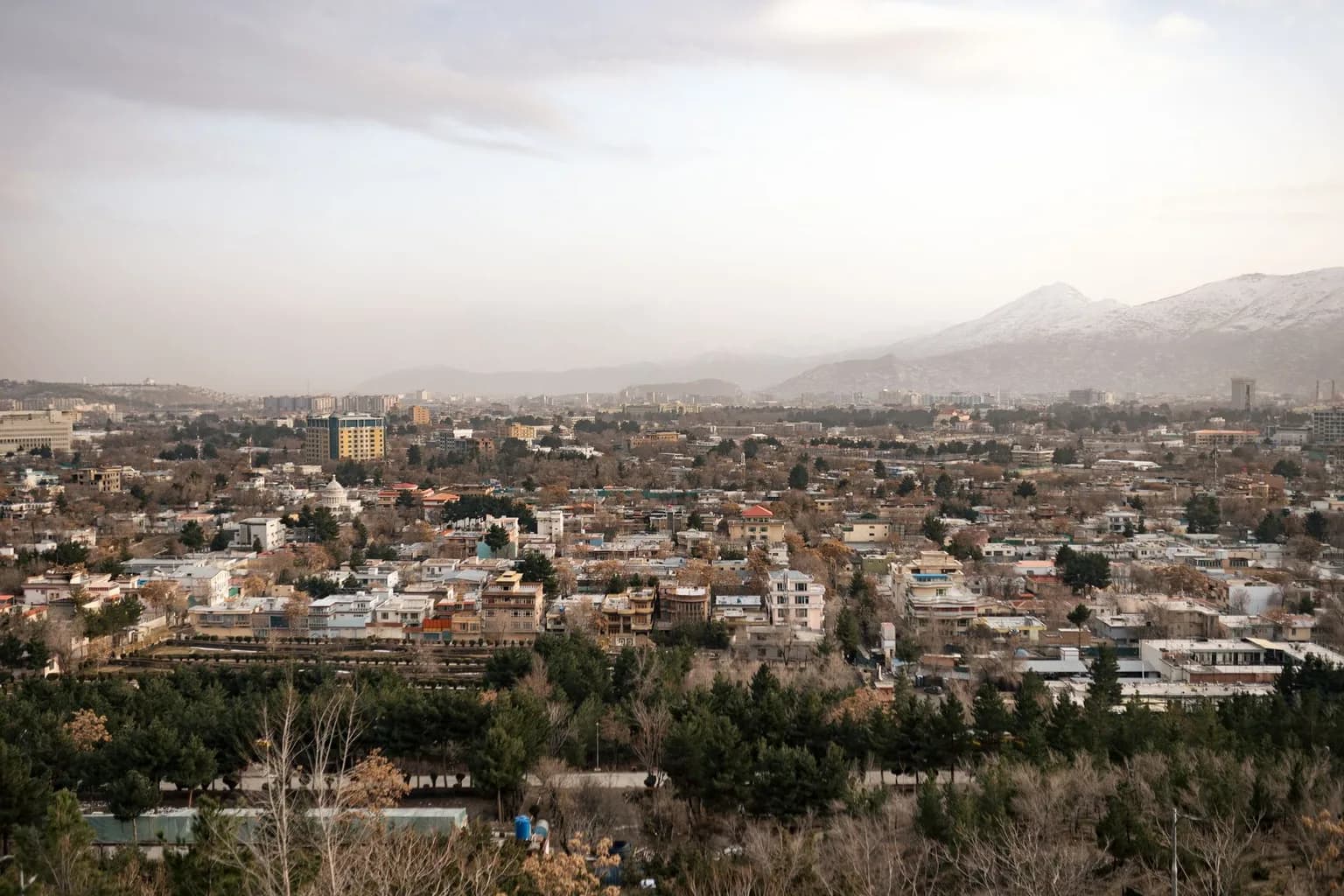
The Taliban govern Afghanistan from the Presidential Palace they occupied in August 2021, after the collapse of the Islamic Republic. By mid-August that year, they held every major city in the country.
The movement returned to power after a US troop withdrawal and the fall of the previous government. Its second period in office began amid immediate post-withdrawal chaos from 2021 to 2022.
Hibatullah Akhundzada, the Taliban’s supreme leader since 2016, officially leads a unified Islamic state. The movement says an official council of clerics oversees policy under his authority.
That presentation conceals a more divided reality. Power is fragmented among rival factions, including groups aligned with Pakistan’s Inter-Services Intelligence (ISI), groups linked to regional warlords and a faction seeking a more puritanical interpretation of Sharia.
The Taliban’s control therefore remains incomplete. Warlord factions operate in the peripheries of territory held by the movement, while ethnic tensions simmer in the east.
A period of consolidation followed from 2022 to 2023. During it, the Taliban strengthened its control, then moved from initial tolerance of girls’ primary education to a complete ban in 2023 after pressure from hardliners.
That decision formed part of wider restrictions imposed by the Taliban on the rights of women and girls.
Since 2023, Afghanistan has entered a period of economic and social strangulation under Taliban rule. The country continues to face deep economic and humanitarian problems, while the Taliban government remains largely unrecognised internationally.
Challenges to Taliban rule come from three directions: political-military groups outside its structure, opponents within the movement and groups with transnational ideological and operational foundations, including ISKP. ISIS-K continues to carry out sporadic attacks.
Ahmad Massoud leads the National Resistance Front of Afghanistan, one of the external groups challenging Taliban control. Yasin Zia leads the Afghanistan Freedom Front, another political-military group operating against the Taliban.
Opposition groups have conducted localised guerrilla operations and targeted assassinations in Kabul, Herat, Kandahar, Kunduz and Panjshir. Over the past five years, external groups and dissatisfied commanders within Taliban ranks have launched attacks, though they have achieved no significant success and remain weak.
Those internal critics include Mawlawi Mehdi, a Taliban commander in Balkh, and Juma khan Fateh, a commander in Badakhshan.
Sepahiyan-e Mihan, an internal opposition faction, gained prominence after taking the Yaftal-e Sufla district centre in Badakhshan for several hours. The episode showed that dissidents inside the wider Taliban structure could still challenge its territorial control.
The contest is therefore unfolding inside a government that still claims unity, as well as beyond it. The rivalries over authority, territory and the direction of policy sit alongside opposition campaigns that have yet to dislodge the Taliban from power.





Comments (0)