
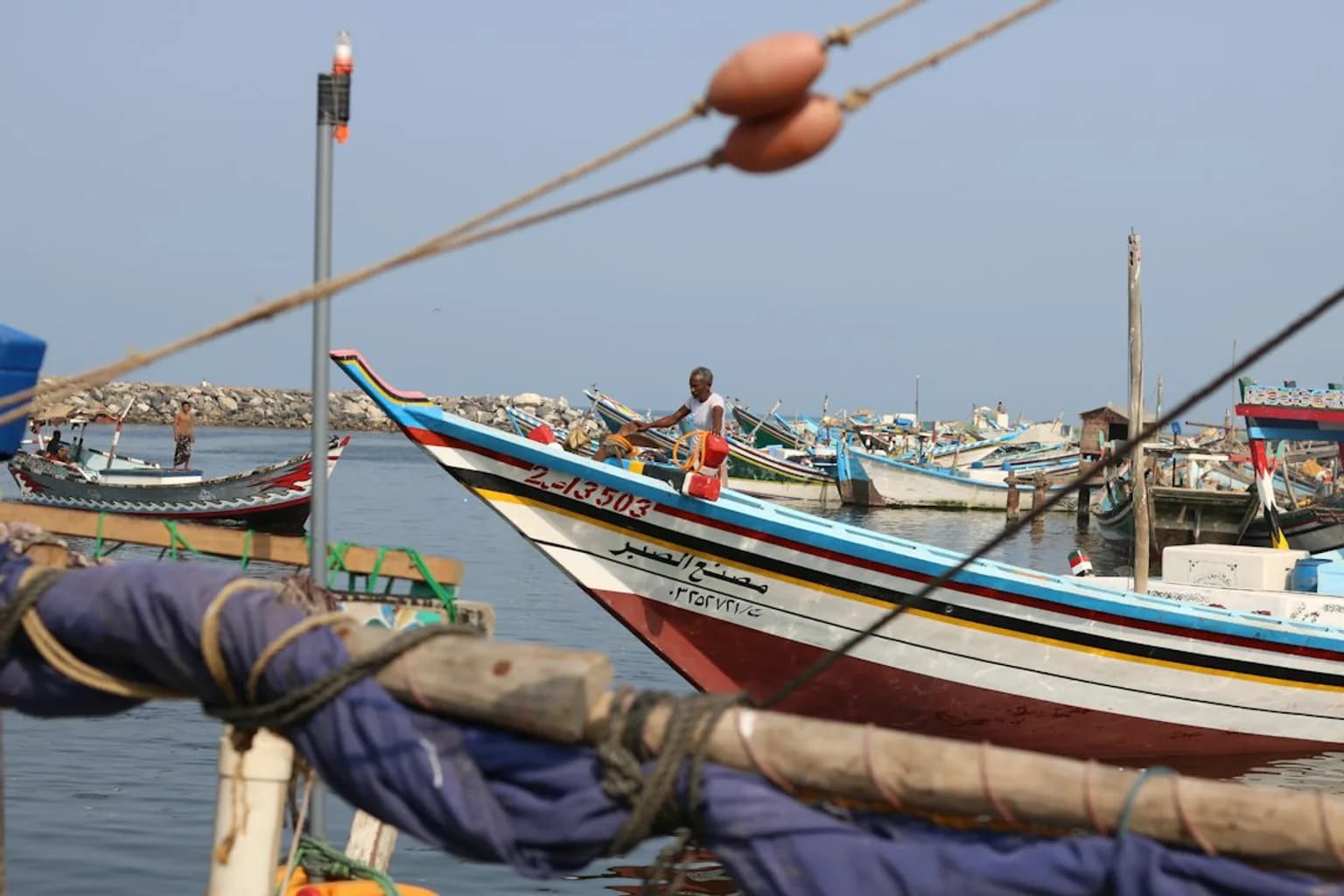
Yemen has been divided since the Houthis seized Sanaa and much of the north in September 2014, while the internationally recognised government retained the south, east and west.
A UN-brokered truce took effect in April 2022, yet fighting has intensified since July in Taiz, Marib, Al-Jawf and Al-Dhale.
The latest shift came when the Houthis routed Saudi-backed Yemeni government-aligned forces in a surprise offensive and captured much of Yemen’s southwestern coast overlooking the Bab el-Mandeb Strait, at the mouth of the Red Sea. Saudi Arabia has borne the brunt of the Houthis’ missile and drone barrages.
US Central Command (CENTCOM) then expanded its advisory mission for Saudi Arabia. More than 100 US military advisers are operating on the ground there, within an effort involving roughly 200 personnel, according to a US official.
The advisers help Saudi commanders assess intelligence on Houthi positions. Washington is also supplying geospatial support for strikes, a real-time battlefield targeting tool compared by a US official to the Pentagon’s Maven system, and US Air Force refuelling sorties for Saudi fighter jets facing potential missile threats from Yemen.
The United States is not directly taking part in strikes on Houthi positions. Its renewed assistance marks a partial reversal of its disengagement from Saudi Arabia’s role in Yemen’s war in recent years. The US military remains concerned about the potential for civilian casualties from Saudi strikes.
The Houthis have held the national capital and several other cities since September 2014. Yemen’s internationally recognised government and allied forces control large parts of the country’s south, east and west.
Rashad al-Alimi, chairman of Yemen’s Presidential Leadership Council, has announced a campaign called ‘Dawn of Yemen’ to recover the territory still held by the Houthis and extend government authority across the country. The Saudi-led coalition said 100 fighter jets were providing round-the-clock air support to Yemeni government forces.
US officials believe hundreds of Iranian Revolutionary Guard Corps officers are currently in Yemen. Washington is seeking to contain the economic fallout of its war with Iran without provoking further escalation around strategic waterways. The Pentagon’s aim is to keep the Yemen and Iran wars separate while protecting Gulf oil exports from attack.

Comments (0)