
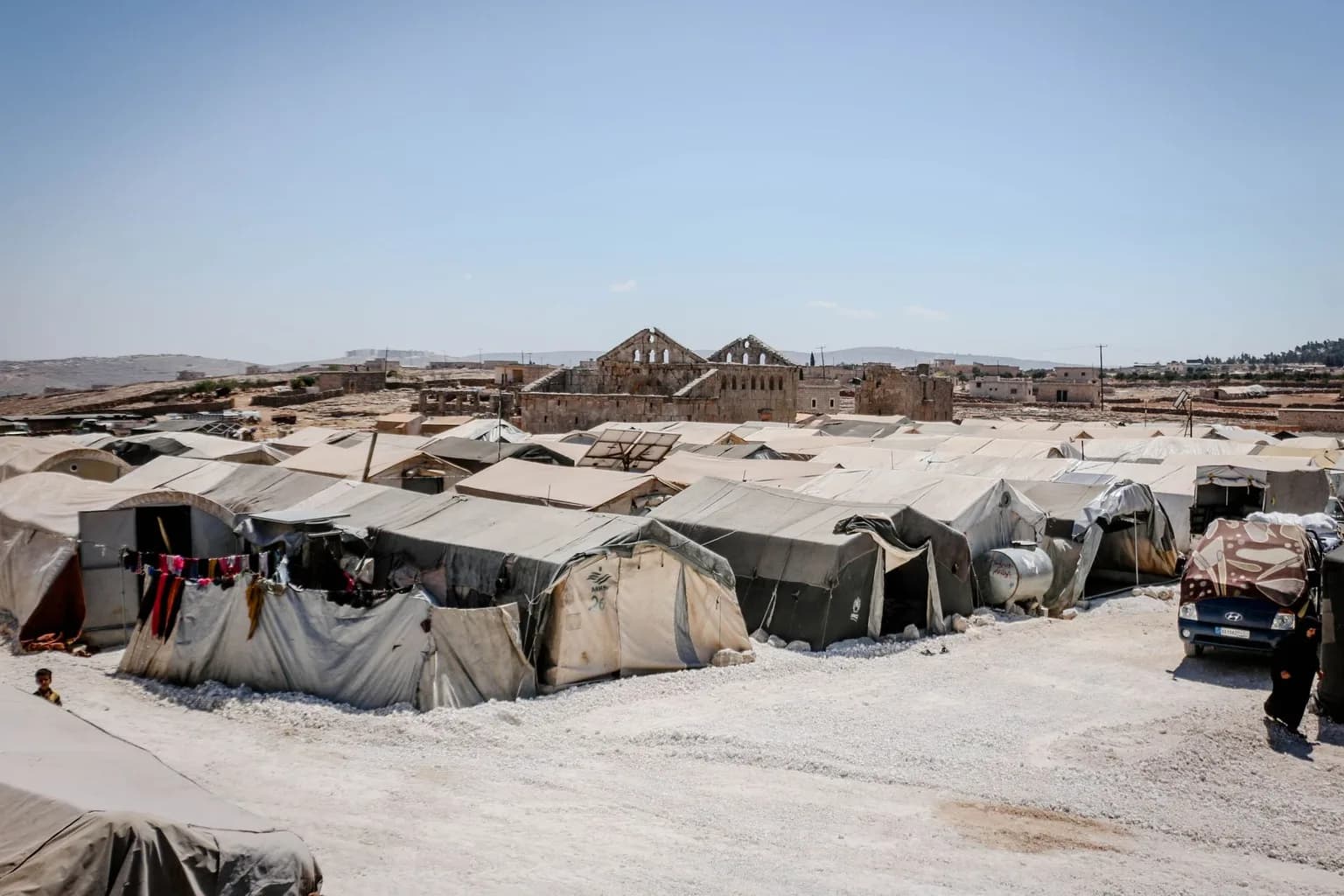
Yemen’s long-running civil war is placing further strain on a population already facing years of displacement, poverty and failing public services. Escalating clashes between Iran-aligned Houthi fighters and Yemeni government forces have forced thousands of families from their homes, while healthcare provision remains severely limited.
Many families uprooted by the latest fighting have already been displaced for a second or third time. In Taiz province, displaced people are living in a makeshift camp, reflecting the continuing movement of families who have lost access to their homes and regular services.
The conflict’s effects extend beyond the immediate danger from violence. Yemen’s weak economy and high inflation have left many people unable to afford everyday essentials, including safe drinking water, food, shelter, sanitation and fuel. These pressures have compounded the difficulties facing people who have been forced to move repeatedly.
Healthcare services are close to collapse after years of war. Many public health facilities have become non-functional, leaving huge numbers of people without access even to basic healthcare. Facilities that remain open face chronic shortages of supplies and equipment, while medical staff are either unpaid or receive salaries irregularly.
Médecins Sans Frontières, known as MSF, says it is working in Yemen to provide emergency medical care for people injured in conflict and outbreaks of violence. Its teams are also responding to surging rates of malnutrition and preventable diseases.
MSF says it treats people dealing with longer-term consequences of war, including mental health problems, malnutrition and difficulty obtaining essential services such as mother and childcare. The organisation also responds to outbreaks of measles, cholera and diphtheria.
MSF operates a hospital in Mocha and is providing lifesaving care in Mokha. Its work takes place amid insecurity, shortages and a public health system unable to meet many people’s needs. MSF says 90% of its funding comes from individual donors.
The latest escalation adds to overlapping pressures created by the conflict. Fighting is displacing families, economic conditions are limiting their ability to secure basic necessities, and healthcare services are struggling to treat both injuries from violence and the longer-term health effects of war.





Comments (0)