
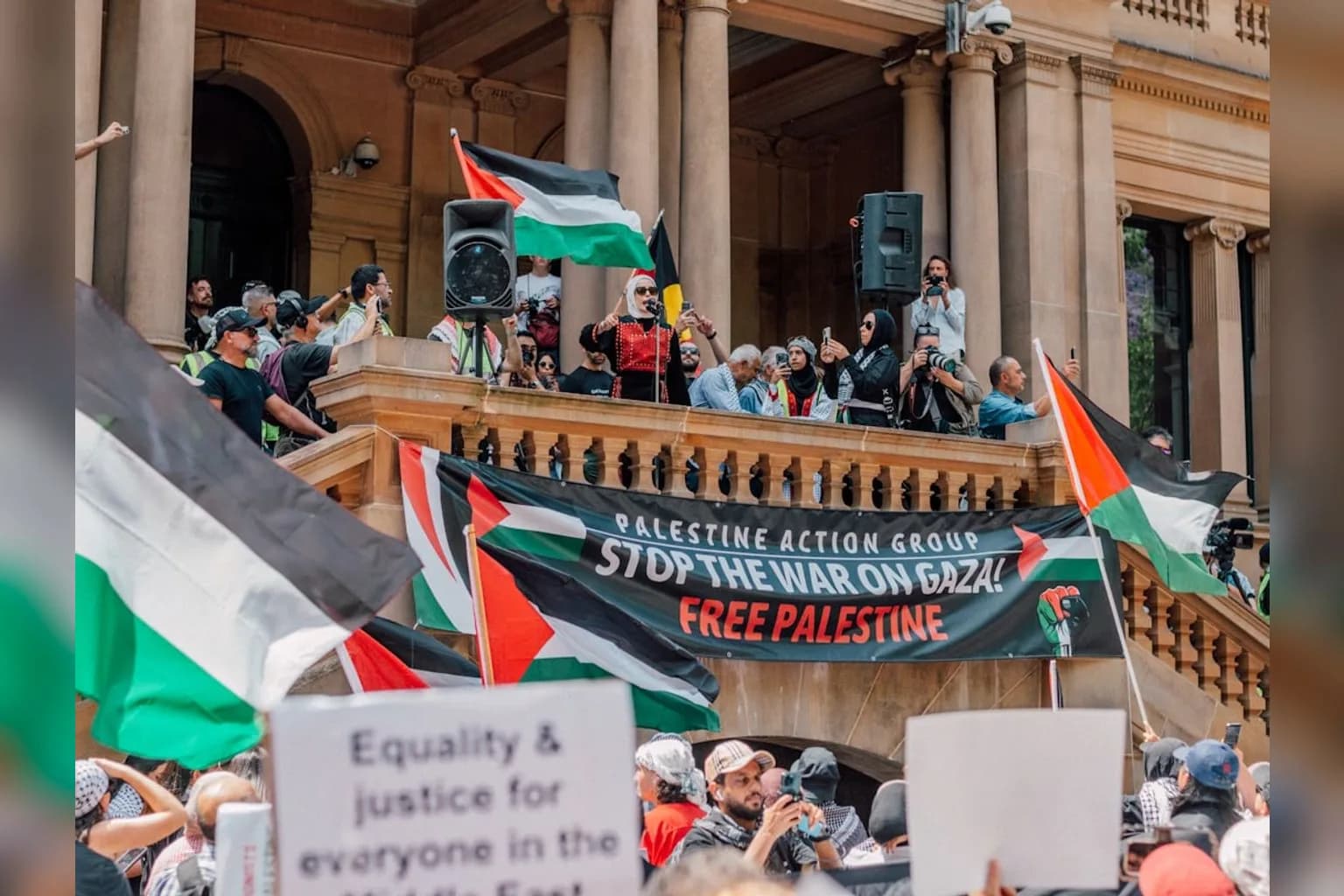
The cultural sector has become a significant site of Palestinian solidarity activism since the Israel-Gaza war began on 7 October 2023. Musicians, actors, directors and other artists have organised open letters, benefit performances, artistic collaborations and boycotts of Israeli film institutions. The campaigns have drawn support from hundreds and, in some cases, thousands of people. They have also unfolded alongside reports from artists that speaking publicly on Palestine has led to lost contracts, cancelled appearances and fewer professional opportunities.
One of the earliest collective interventions came on 20 October 2023, when Artists4Ceasefire sent an open letter to then-US President Joe Biden. The letter urged “immediate de-escalation and ceasefire in Gaza and Israel before another life is lost,” and began with 55 signatories. They included Cate Blanchett, Joaquin Phoenix, Juliette Binoche, Ramy Youssef, Susan Sarandon, Bradley Cooper, Annie Lennox, Ariana Grande, Drake and Billie Eilish.
Artists4Ceasefire expanded to more than 500 names by early 2025. Its supporters included Billie Eilish, Finneas, Ariana Grande, Drake, Jennifer Lopez, Cate Blanchett, Oscar Isaac, Ayo Edebiri, Anoushka Shankar, Andrew Garfield, Bradley Cooper and Cynthia Erivo. Musicians for Palestine also issued a letter calling for an immediate ceasefire in Gaza, humanitarian aid access and an end to the siege. Tom Morello, Brian Eno, Kid Cudi, Kehlani and Macklemore were among a few thousand people who had signed by the end of 2023.
Further music-industry organising followed. In 2024, Musicians for a Free Palestine brought together more than 70 musicians. Macklemore released “Hind’s Hall” that year, a song supporting pro-Palestinian student protests at Columbia University and drawing attention to civilian deaths in Gaza. Its title referred to Hind Rajab, a five-year-old Palestinian girl killed in Gaza.
Macklemore later faced a direct professional consequence. He was removed from the remaining eight US dates of Ed Sheeran’s Loop Tour after speaking about Gaza and the occupied West Bank during concerts at MetLife Stadium in New Jersey on 4 and 5 September. Finneas, the Danish band Lukas Graham, the Irish singer-songwriter Aaron Rowe and the Irish folk group Beoga subsequently left the tour in solidarity with him.
Macklemore said he would give his $1 million in net earnings from Ed Sheeran’s tour to six organisations: Palestine Children’s Relief Fund, HEAL Palestine, Gaza Soup Kitchen, Medical Aid for Palestinians, UNRWA USA National Committee and Anera. The available information does not establish the wider financial effect of his removal beyond the tour revenue at issue.
Film and fashion have produced similar disputes. In November 2023, the Mexican actor Melissa Barrera was dismissed from Scream VII after posting and resharing messages about Israel’s war on Gaza, genocide and ethnic cleansing. In July 2024, Adidas removed Bella Hadid from a retro shoe campaign that referenced the 1972 Munich Olympics after Israel criticised her inclusion. Hadid said several companies had ceased working with her because she had spoken publicly about Palestine.
Others have described broader career costs. Susan Sarandon, the Oscar-winning actor, said at the Venice Film Festival in September 2026 that film roles had recently been taken from her because of her political views. Zara Larsson told the Guardian in April 2026 that companies had dropped her and that she had lost industry opportunities because of her political positions, including advocacy for Palestinians and women’s rights. Larsson had declined an invitation to perform during the 2024 Eurovision Song Contest in protest against Israel’s participation.
Palestinian filmmakers have pressed a related argument about whose stories reach western screens. In 2024, Palestinian directors and filmmakers published an open letter about the representation of Palestine in the Western film industry. Its signatories included Elia Suleiman, Hany Abu-Assad and Farah Nabulsi.
In 2025, more than 1,300 artists signed a declaration saying they would not work with Israeli film institutions. Olivia Colman, Ayo Edebiri, Mark Ruffalo, Riz Ahmed and Tilda Swinton were among the signatories. At the 2025 Cannes Film Festival, 380 people from cinema and cultural industries signed a separate letter criticising the industry’s silence on Gaza. Pedro Almodovar, Mark Ruffalo, Javier Bardem and Brian Cox were among those who signed.
The movement has also used performances to raise money and produce new work. Brian Eno helped organise Together for Palestine, a four-hour benefit at Wembley Arena in London in September 2025. The event raised £1.5 million. In June, Roger Waters and the Palestinian singer Mona Miari “reimagined” Pink Floyd’s “Comfortably Numb” with new English and Arabic verses, footage filmed in Gaza and a section dedicated to Hind Rajab.
These efforts show how artists have sought to apply the collective reach of cultural institutions to a political cause. Yet the cases involving Macklemore, Barrera, Hadid, Sarandon and Larsson also point to the commercial limits faced by public figures whose positions clash with employers, promoters and sponsors. The pressures behind individual decisions, any legal remedies pursued by affected artists and the longer-term effect of the boycotts on Israeli institutions remain unclear.


Comments (0)