
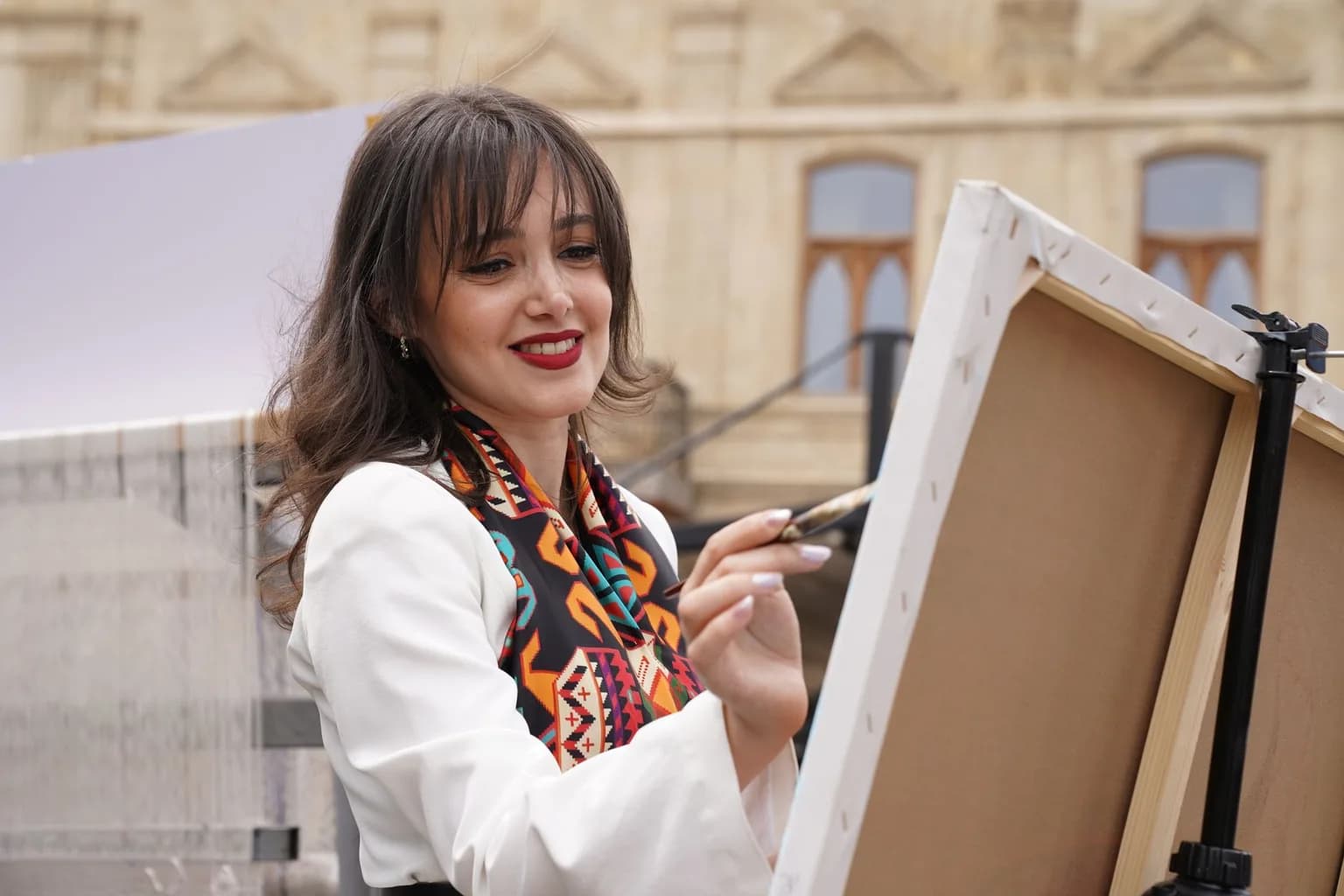
Lina Jouni, a Lebanese visual artist from Nabatieh in southern Lebanon, is making installations from the debris of Israeli missile strikes. Her materials include stones, pieces of iron, wires and shrapnel left across her area after Israeli forces withdrew in 2024.
The project began that year, after Jouni found a missile fragment following an attack near her home. She had returned to her village after the withdrawal and found the area covered with remnants of strikes. Several of the fragments now used in her work came from missiles that destroyed houses near her residence.
Jouni named one piece of debris “Uncle Zaytoun”. Another fragment came from the ruins of a house belonging to someone close to her. Other fragments have become faces, or recall people and places that suffered during the war or lost their children.
Among her most notable works is a Lebanese cedar symbol formed from shrapnel from a missile strike that destroyed a three-story house. The work draws on material associated with a specific loss while giving it a new form. Jouni has also made a statue at Ram Gallery from debris and other materials, titled “Revealing the Hidden”.
Her paintings address the war through scenes and memories she experienced. They depict suffering, tents, camps and destroyed villages. Together with the installations, the paintings form a record of the traces left by war and destruction in Lebanon.
Jouni said working with missile shrapnel differs from traditional sculpture and has required substantial effort and experimentation. Repeated attacks have also taught her to identify types of weapons from the debris they leave behind.
For Jouni, the process gives damaged objects a purpose beyond their original use. She describes her art as a way to turn weapons of death and painful memories into symbols of life and dignity. “Life does not end and we continue,” she said, explaining that each piece of rubble and shrapnel changes in her hands into something else.
Her work is intended to reclaim dignity for Lebanese citizens, particularly when they have few means to fight or defend themselves. It also seeks to show that reconstruction and life remain possible despite destruction.
The work comes from a period of renewed conflict between Israel and Hezbollah in southern Lebanon. The first conflict broke out in 2023 when Hezbollah launched attacks in support of Hamas. A second phase entered in March when Hezbollah joined the Middle East war on the side of Iran. Thousands of southerners lost their houses in these recent conflicts.
Jouni’s project shares thematic territory with “Hkeeli ya Jnoub” (“Tell me, O South”), an exhibition at Beirut’s Beit Beirut museum. The exhibition includes pictures and videos preserving memories of southern Lebanon, including “Keys Without Homes”, a video project about southerners who retained keys to houses that no longer exist.

Comments (0)