
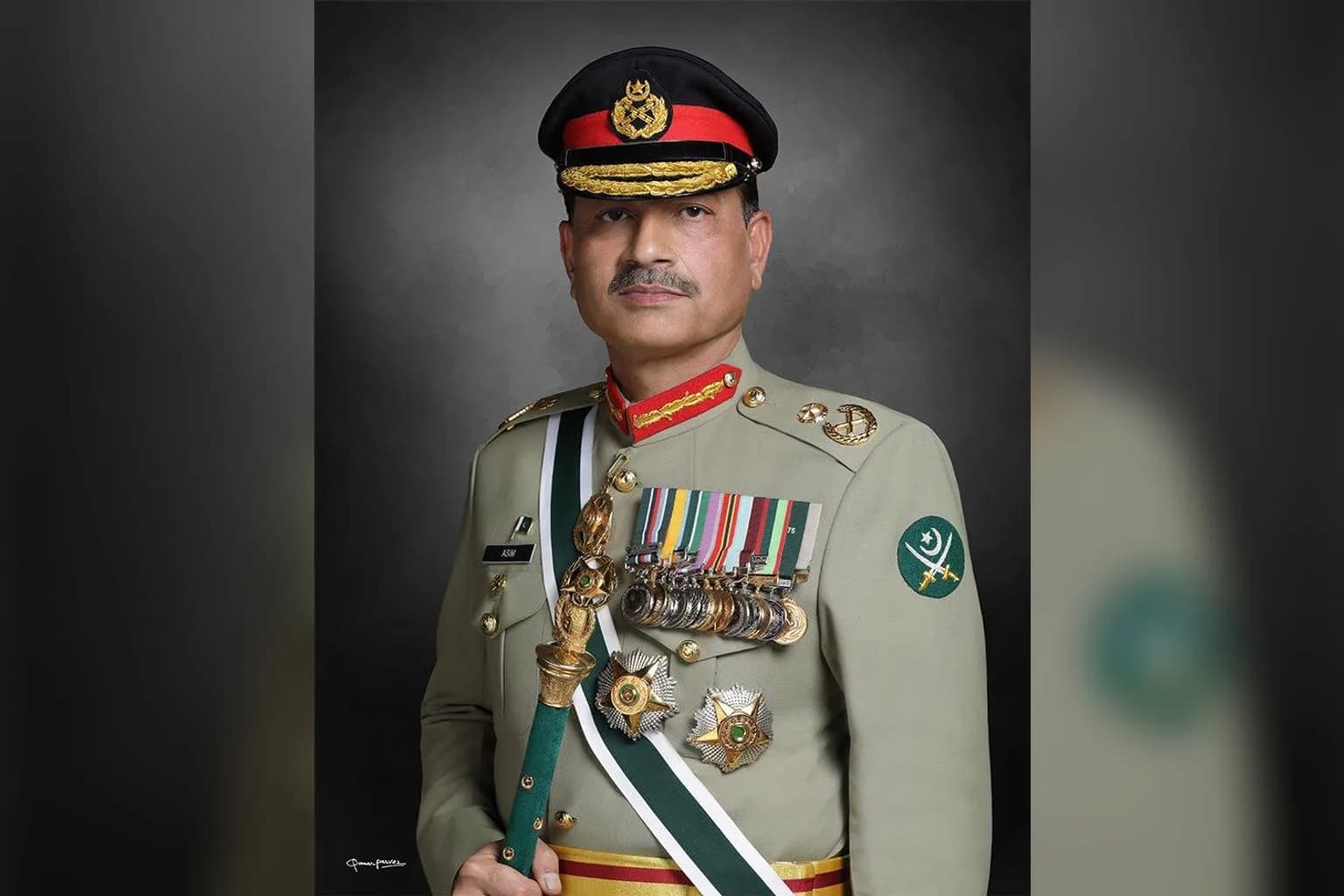
Field Marshal Asim Munir and Pakistan’s Defence Minister Khawaja Asif attended an emergency meeting in Riyadh on Monday, where representatives of Pakistan, Saudi Arabia and Turkey addressed threats facing the kingdom and agreed to begin implementing their joint defence agreement.
Pakistan has agreed to rapidly deploy more forces to Saudi Arabia without seeking a parliamentary vote, eleven years after its parliament chose to keep the country out of the Saudi-led intervention in Yemen.
The Mecca Joint Defence Agreement, signed by the three countries in August, was invoked for the first time on Monday. It contains a mutual-defence provision similar to NATO’s, treating an attack on one member as an attack on all.
The countries said they would take steps to provide the agreed forces and capabilities and ensure their “rapid deployment in the Kingdom”.
Pakistan already has forces stationed in Saudi Arabia through a long-standing military partnership. The statement on the new deployment gave no figure for additional troops or details of the equipment to be sent.
The information ministry said the alliance had completed all necessary government procedures. It did not say whether the cabinet or parliament had been involved.
That absence of a parliamentary vote marks a change from 2015, when Pakistan’s parliament voted to stay out of the Saudi-led military intervention in Yemen.
Munir’s authority has also been strengthened since then. Constitutional changes last year put him in command of all three services until 2030, granted him lifetime rank as field marshal and gave him immunity from criminal prosecution.
Michael Kugelman, a resident senior fellow for South Asia at the Atlantic Council, said: “There were times in the past when Pakistan's parliament would vote not to send troops, and the military would abide by that decision. But it's a different era now”.
The deployment follows an escalation in Yemen’s civil war. Saudi Arabia has faced repeated attacks since July from the Iran-backed Houthi movement in Yemen, targeting cities, oil infrastructure and maritime interests.
In September, the Houthis launched a major offensive that captured large areas from Yemen’s Saudi-backed government. Riyadh-backed forces began a counteroffensive on Monday to retake Houthi-held territory, including areas the group has controlled for more than a decade.
Asif told Geo News that Saudi Arabia was fighting alongside the Yemeni government against the Houthi militia and had recently made territorial gains. He said Pakistani and Turkish forces were in the operational area, while Saudi forces alone were engaged in combat.
Pakistan and Turkey had a “supportive role”, Asif said, with Pakistan carrying out reconnaissance activities.
Lt. Gen. Ahmed Sharif Chaudhry, Pakistan’s military spokesman and director general of Inter-Services Public Relations, said: “Our commitment to Saudi security is unconditional”.
He added: “Pakistan fully stands with the Kingdom of Saudi Arabia, both diplomatically and physically”. Pakistan would go “to any extent” to defend Saudi Arabia from attack, he said.
The immediate threat has reached Saudi territory. Falling debris from an intercepted drone killed one person and injured two in Taif on Thursday.
The Saudi-led military coalition said it had intercepted a Houthi drone headed for restricted airspace around Makkah. It also said drones originating in Iraq damaged three pumping stations on Saudi Arabia’s East-West Pipeline, temporarily forcing its closure.
Saudi Arabia’s holy cities of Mecca and Medina have also come under attack. The Saudi-led coalition said the Houthis had struck a Medina power station supplying electricity to the Prophet’s Mosque, an allegation the Houthis denied.





Comments (0)