
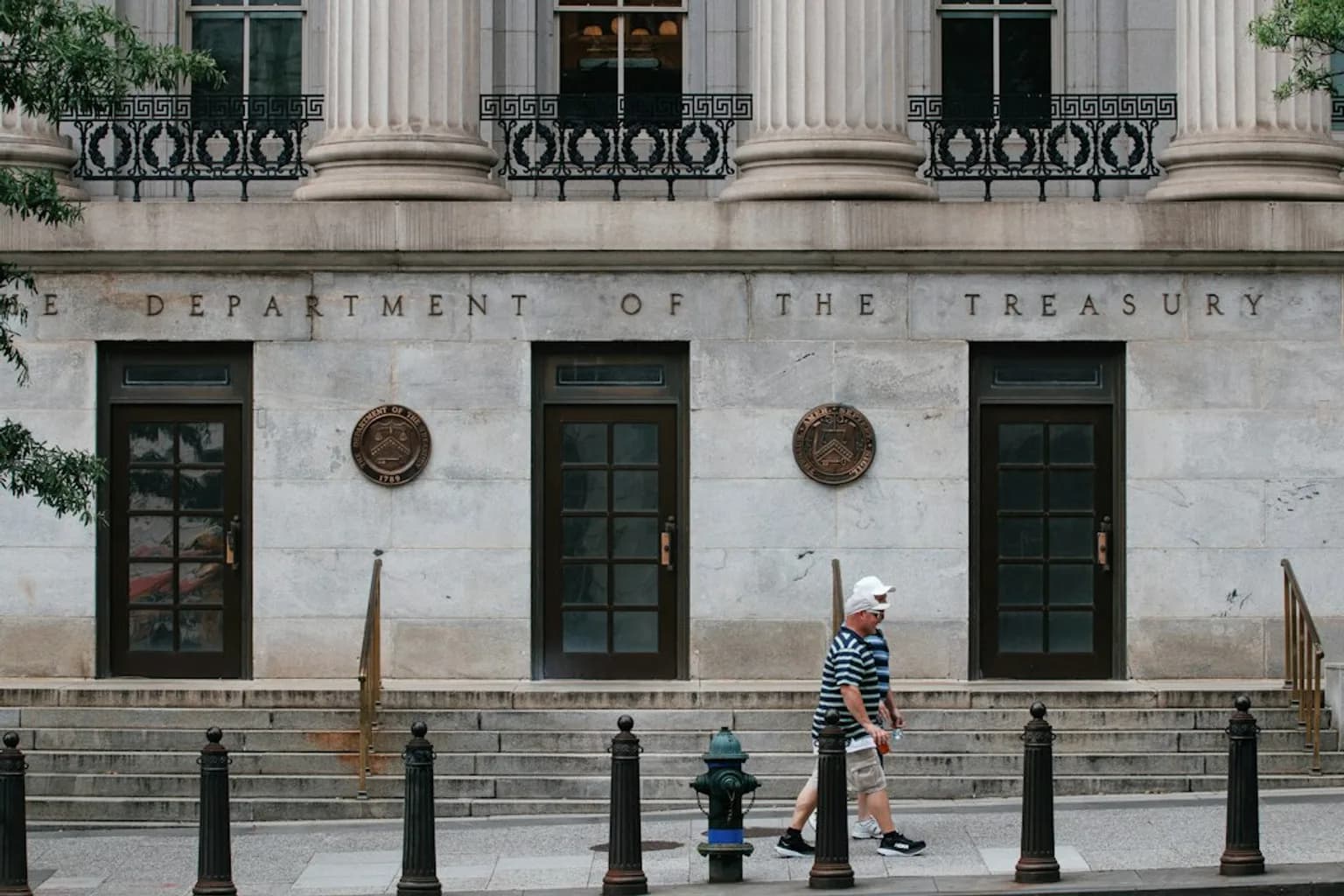
The US Treasury Department issued a formal alert to foreign financial institutions on Monday, 5 October, warning that business with Iran or its banking sector could bring sanctions from Washington.
Its message was unusually direct. “Foreign financial institutions continuing to transact with sanctioned Iranian financial institutions could be targeted at any time without advance notification and should take immediate action to terminate such activity and relationships,” the Treasury said.
The warning is part of Operation Economic Outcast, the campaign launched by Treasury Secretary Scott Bessent on August 24 to sever Iran’s remaining financial ties. Washington has intensified its effort to isolate Tehran economically since late August.
Bessent set out the administration’s position in uncompromising terms: “Iran's enablers cannot continue to enjoy access to the U.S. dollar and the global financial system.”
Washington has also told allies that transactions with Iran’s government could expose them to secondary sanctions. The Treasury announced new sanctions aimed at Iran’s financial, cryptocurrency, rail, automotive and manufacturing sectors.
The department said foreign institutions could face civil and criminal enforcement penalties where Iran-related transactions caused US financial institutions or other US persons to breach sanctions. It also warned that it could bar a foreign institution from opening or maintaining US correspondent or payable-through accounts, among the conditions it described as strict.
The pressure reflects a continuing weakness in the sanctions regime. Investigations published in September 2026 found that billions in Iranian funds were still moving through US correspondent bank accounts despite the measures intended to isolate Tehran.
The Treasury Department identified approximately $9 billion in Iranian-linked funds that moved through American banks during 2024. Iranian entities reportedly hide their role through front companies, currency exchanges and business partners in China, the United Arab Emirates and other jurisdictions.
Foreign banks with relationships with American financial institutions can give Iran indirect access to dollar-clearing accounts through correspondent banking. Treasury says Iran’s government has used so-called “shadow banking” channels to evade US sanctions.
One such case involved the UAE branch of Egypt’s state-owned Banque Misr. On August 28, the Treasury Department proposed cutting it off from US correspondent banking service.
FinCEN said Banque Misr’s UAE branches processed roughly $1.8 billion between January 2024 and June 2026 for 103 companies described as potentially part of Iranian shadow-banking networks. Banque Misr’s website lists JPMorgan Chase and Citigroup among its correspondent banks.
The US has also acted against two banks, one in the United Arab Emirates and another in Turkey, over their alleged help to the authorities in Tehran.
In a separate move, ten individuals and entities based in Iran, Hong Kong and Pakistan were sanctioned for procuring weapons and weapon components for Iran’s defense ministry.
Gene Lange, performing the duties of Treasury’s undersecretary for terrorism and financial intelligence, told the Journal that financial institutions “are on notice”. He said compliance was not optional.





Comments (0)