
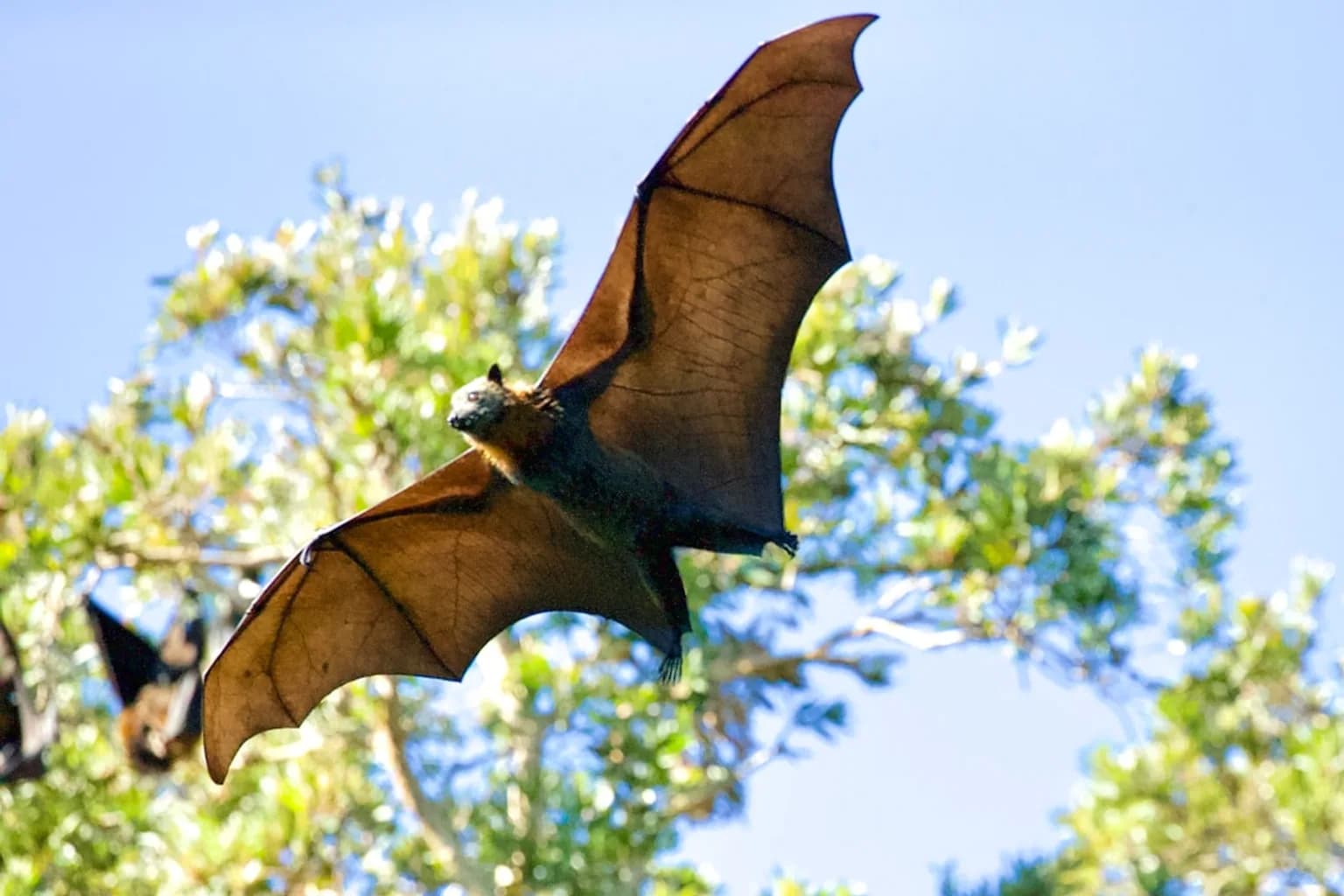
Bats most likely originated in Europe around 65 million years ago, according to a major genetic and fossil study published in Nature. The research challenges earlier proposals that placed the group’s origins in Asia, Africa or North America around 50 million years ago.
The work was carried out by 137 researchers from 64 countries through the Bat1K consortium, a global project dedicated to sequencing the genomes of all living bat species. Bat1K was launched in 2017 and seeks to sequence the genomes of all the living 1,500 bat species. The initiative was co-founded by UCD’s Professor Emma Teeling.
Researchers assembled genomic data from 103 bat species, representing every one of the currently recognised 21 bat families. They created new, top-quality genome assemblies for 41 species and analysed those genomes alongside 62 existing sequences. The team also incorporated 44 fossil bats from across the globe.
The combined evidence points to a European origin followed by an early movement into Africa. The researchers describe this as a Europe-Africa hub, from which bats later spread into Asia, the Americas and Australia. The study does not establish the exact routes or timescales of those later dispersals, or the environmental factors that drove the group’s emergence and expansion.
Prof. Liliana M. Dávalos of Stony Brook University, the study’s senior author, and her colleagues also reconstructed 26 ancestral bat chromosomes. Their analysis provides an evolutionary framework for a group that is the second most diverse mammal species in the world, accounting for one-fifth of all mammals.
The findings also place two central bat adaptations early in the group’s history. Bats are the only mammals known to have evolved true powered flight. The study concludes that powered flight and echolocation were both established near the origin of bats.
Echolocation was present in Eochiroptera, the very first known branch of bats, according to the research. A 50 million-year-old fossil from southern France, belonging to the extinct species Vielasia sigei, sits within the oldest branch of the bat family tree and shows signs of advanced echolocation. The evidence indicates that echolocation predates the diversification of modern bats.
The study leaves open the precise timing of echolocation’s evolution relative to powered flight. It also does not resolve the detailed mechanisms through which powered flight developed in the earliest bats, the full genetic basis of ancestral echolocation, or whether additional fossils could refine the timeline further.
By bringing genomic evidence together with fossils on this scale, the researchers have produced the most comprehensive analysis of bat evolution to date. Its central conclusion is a revised origin story: bats emerged in Europe around 65 million years ago before dispersing through Africa and onwards to other continents.





Comments (0)