
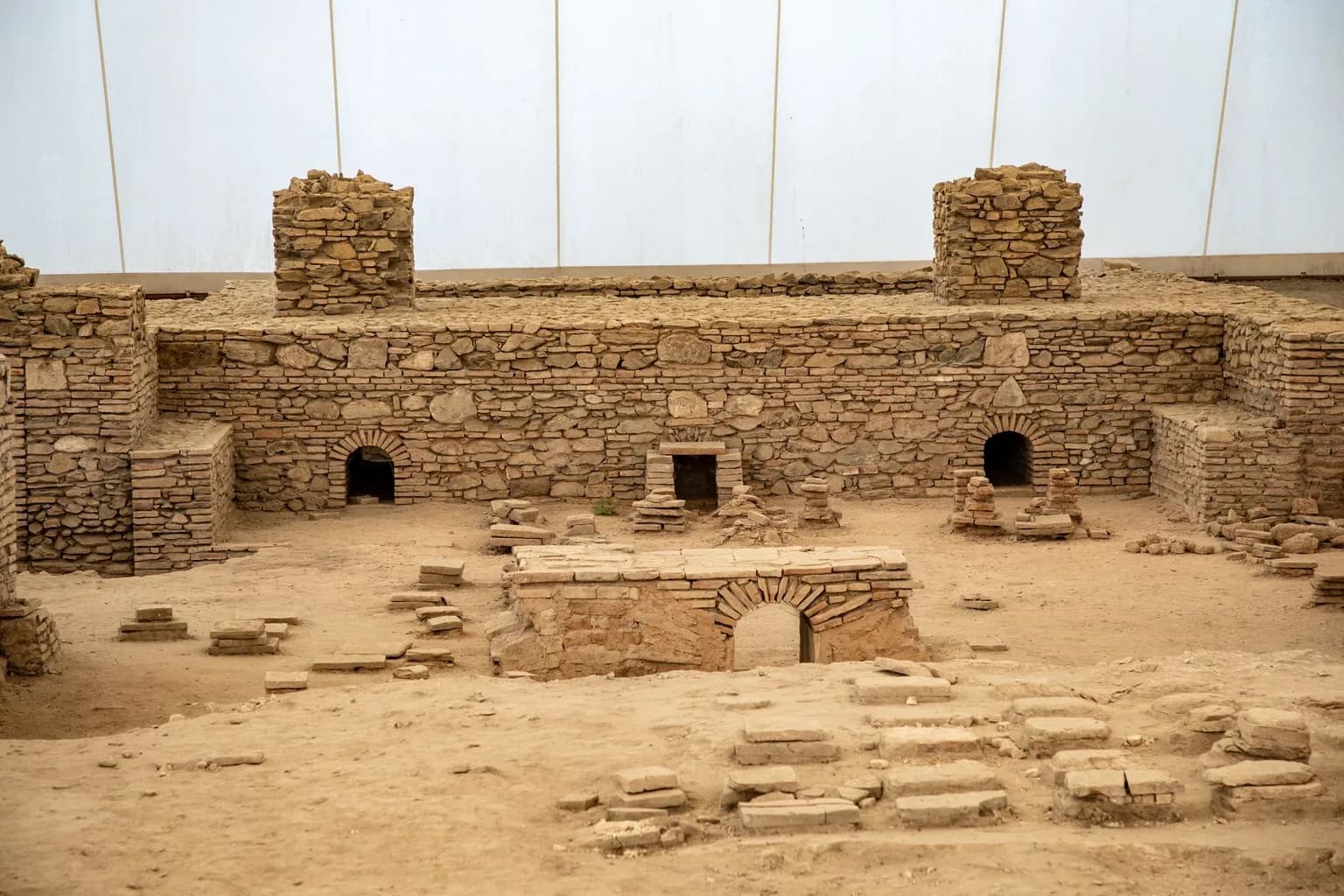
Archaeologists have carried out emergency work at Nunalleq, a Yup’ik heritage site on Alaska’s Bering Sea coast, as thawing permafrost and increasingly destructive coastal erosion threaten to remove the remaining deposits.
The rescue excavation took place between 24 May–13 June 2026, after a storm from the remnants of former Typhoon Halong sent approximately 20 metres of coastal tundra into the sea in October 2025.
Work there began in 2009 through a partnership between Qanirtuuq Inc. and the University of Aberdeen, and the team has documented 200,000+ artifacts since then.
A Perspective article published in Communications Earth & Environment on 8 September 2026 describes the pressures facing the site and other archaeological places in Alaska. It says climate change is damaging ancestral landscapes in the Arctic, while thawing permafrost threatens both archaeological sites and living cultural traditions.
The losses at Nunalleq have accelerated over the course of the research project. By summer 2024, at least 10–15 metres of coastline had disappeared compared with the first excavation season in 2009. Alaska Public Media reported after the October 2025 storm that coastal loss near the site had reached approximately 60 feet (approximately 18 metres).
The differing measurements reflect accounts of the same period of severe coastal loss. Whatever the precise extent, the effect on the excavation has been clear. Areas investigated in 2009 and 2010 have now been completely removed by erosion.
Permafrost had once helped preserve the settlement’s remains. In 2009, the research team reached frozen ground at approximately 50 centimetres depth. By 2018, frozen ground was absent at 1.5 metres depth, according to the account of the site’s changing conditions.
The thaw has made the ground less stable as storms erode the shore. The 2026 operation therefore focused on recovering material ahead of the next storm season, rather than following the slower pace of a conventional excavation.
The available information does not say how many artifacts were recovered during the emergency work, what kinds of objects were found, or whether any artifacts were lost in the October 2025 storm. It also does not set out a timetable for analysing the rescued material or a long-term plan for preserving the collection.
Nor are projections available for the future rate of erosion at Nunalleq. The documented loss of earlier excavation areas, however, shows the immediate constraint on the work: deposits that remain in place along the coast may be exposed or destroyed before archaeologists can study them.
Nunalleq is one of the archaeological sites in Alaska facing rapid coastal erosion. Its emergency excavation illustrates how the loss of frozen ground and storm-damaged coastlines is changing the practical conditions of research at heritage sites across the region.




Comments (0)