
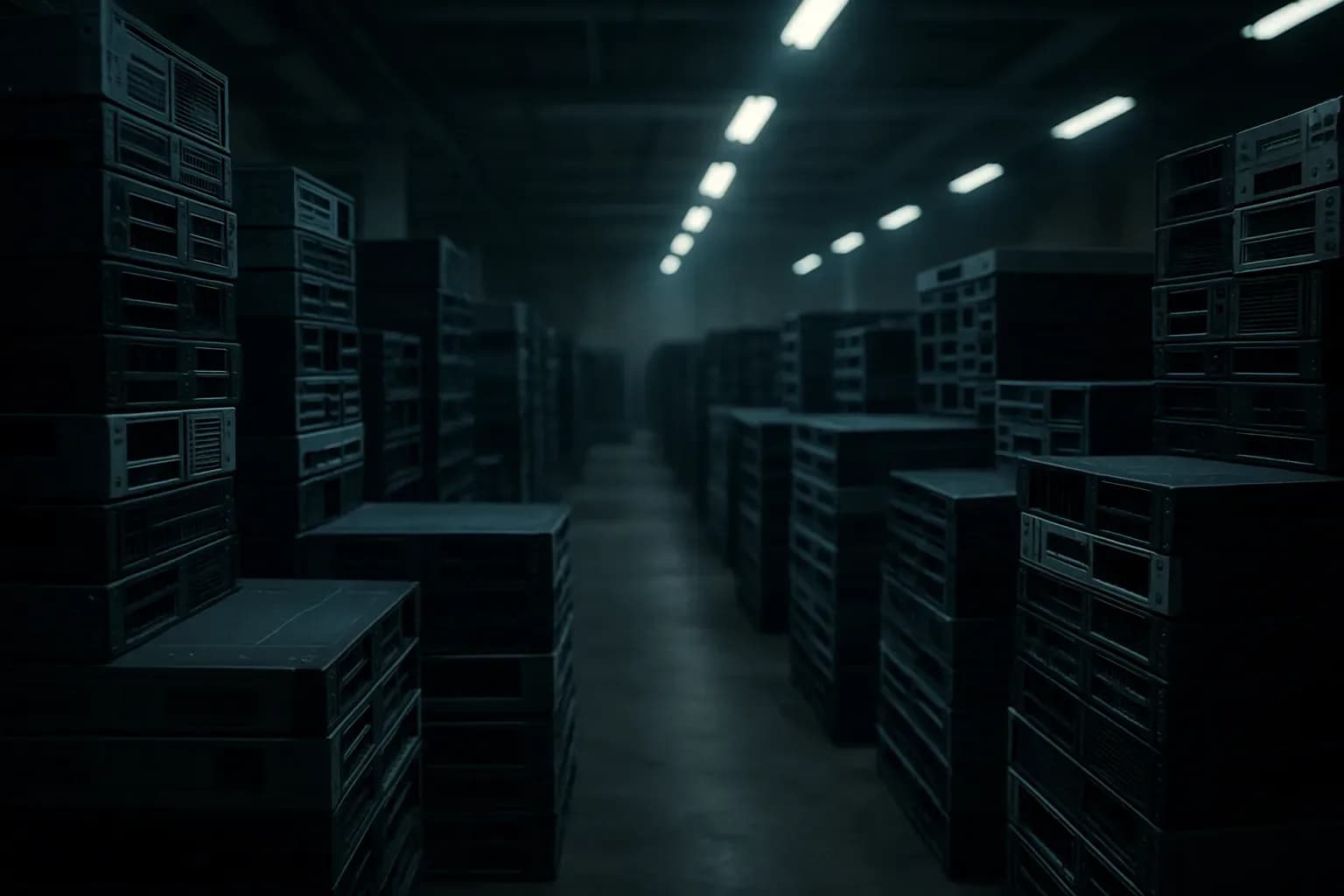
The rapid construction of artificial intelligence data centres could generate a large new stream of hazardous electronic waste, according to a report released on Wednesday by the Basel Action Network (BAN), an environmental organisation.
Part 1 of The Coming AI Waste Wave estimates that 8.6 to 13.1 million tonnes of AI-driven electronic equipment could be retired each year by 2030. Annual retirement could rise to 31 to 46 million tonnes by 2050, BAN said.
Across 2025 to 2050, the organisation projects that 395 to 617 million tonnes of equipment associated with AI could be retired. BAN said that amount would fill approximately 15 to 23 million 40-foot shipping containers. Placed end to end, the containers would be enough to circle the Earth about six times.
The report identifies a waste challenge alongside investment in data-centre capacity. McKinsey forecasts approximately $7 trillion in investment in data-center capacity between 2025–2030. BAN estimates that each gigawatt of installed data-centre capacity represents roughly 70,000 metric tons of physical equipment.
That equipment can contain valuable metals as well as lead, mercury, cadmium and so-called 'forever chemicals'. BAN said much of the new AI waste is likely to be contaminated with PFAs, the so-called 'Forever Chemicals'.
The organisation said only about a fifth of electronic waste is currently properly managed. It did not establish how hazardous materials in the projected AI-related waste stream would be handled.
BAN's forecast is roughly 40 to 60 times higher than the most widely cited academic projection. Earlier quantitative studies focused on servers and graphics processing units, or GPUs. The de Vries-Gao estimate put annual waste at only 131,000 to 225,000 metric tons by 2030.
BAN took a broader view of the infrastructure needed to operate a data centre. Its analysis includes servers and accelerators, networking equipment, power distribution, data storage and backup systems, and cooling infrastructure. Servers, accelerators and racks account for an estimated 13% of a data center's electro-mechanical infrastructure by mass, according to the report.
The analysis also includes what BAN calls a 'contagion' scenario, in which AI software requirements or demand for AI-capable hardware lead to the earlier replacement of other equipment. BAN says little data exists to quantify this effect.
BAN openly states that little data exists to measure hardware retired earlier because of AI software or AI-capable hardware requirements. The document is a white paper rather than a peer-reviewed lifecycle assessment, leaving substantial uncertainty over the eventual scale of the waste stream and the pace at which equipment is replaced.
The report projects that much of the hardware associated with AI infrastructure would need replacement every two to five years. It says this equipment is expected to be replaced rather than designed for repair, reuse or long service lives.
BAN estimates that total global electronic-waste generation could reach 196 to 211 million tonnes per year. This would be 19% to 28% above BAN's extrapolation of the UN baseline and more than triple today's annual total. The organisation estimates that AI-related equipment would account for 15–20% of global e-waste by 2050.
Current systems would face a far larger burden under those projections. Fewer than 25% of the 68.3 million tonnes of electronic waste generated worldwide each year is formally collected and recycled, according to the context cited by BAN. The report does not establish what share of future AI-related waste will be recycled, landfilled or illegally exported, or how quickly waste-management capacity could expand.





Comments (0)