
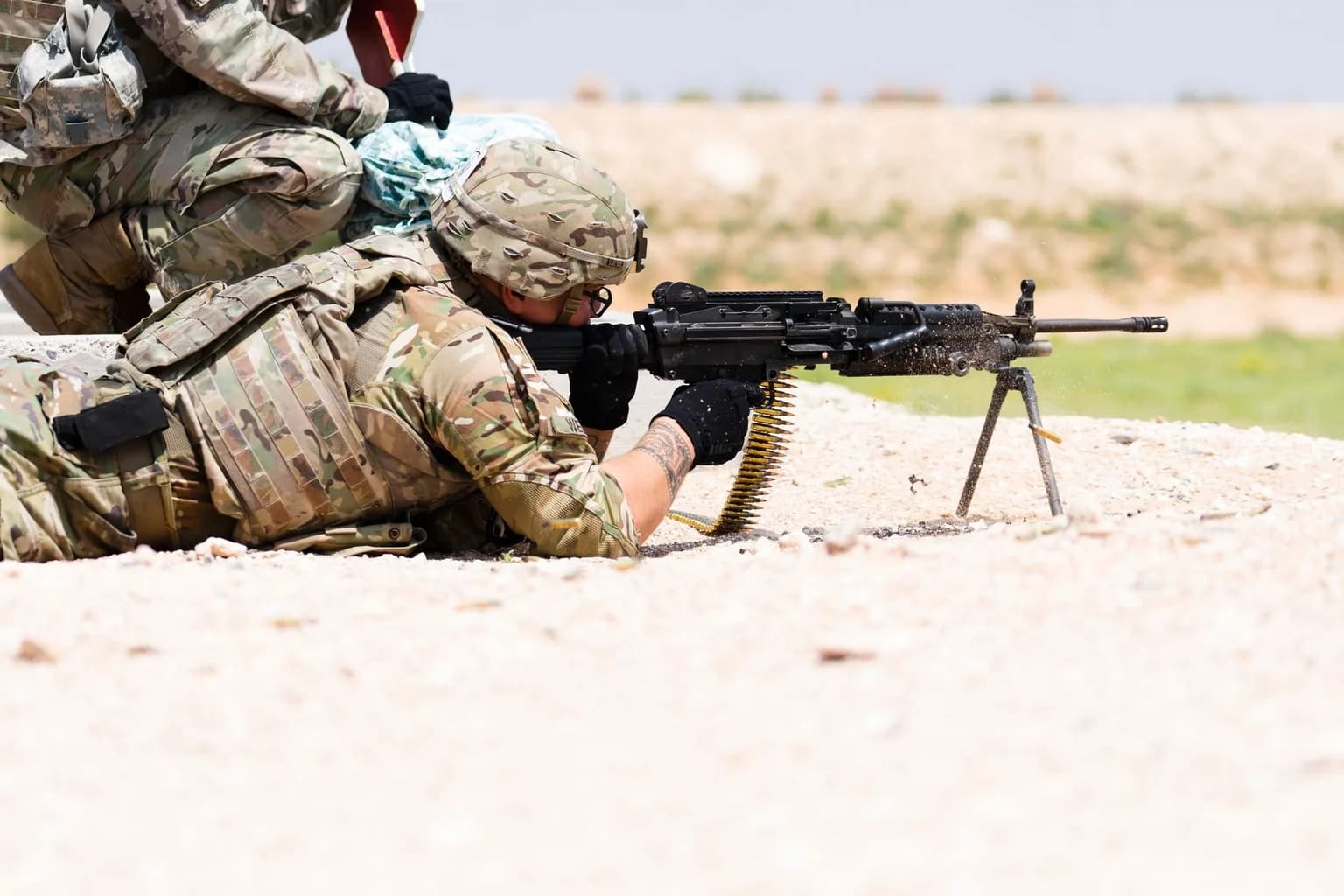
Iraqi officials have announced the complete withdrawal of United States military forces from Iraq, ending a presence that began with the 2003 invasion to topple Saddam Hussein. An Iraqi official said all combat soldiers and logistical support forces had left the country. There was no immediate confirmation from the American side.
The announcement follows a 2024 agreement between Baghdad and Washington to wind down the US-led mission. The US Department of Defense Pentagon had put the number of American soldiers in Iraq in recent years at around 2500.
Before the withdrawal, US forces were based in Arbil, at a facility near Baghdad's airport and in the so-called green zone in central Baghdad, where the government is located. In January 2026, Baghdad said US forces had completed their withdrawal from Ain al-Asad Air Base in the western Anbar province.
Abdul Amir al-Shammari, director of the office of Iraq's armed forces commander-in-chief, said on Sept. 26 that there were no foreign military bases on Iraqi territory. The Iraqi announcement leaves unresolved whether the Pentagon will formally confirm that all personnel have departed.
The withdrawal timetable had also provided for hundreds of troops remaining in northern Iraq to leave by the Sept. 30 deadline. Those personnel were expected mostly to be redeployed to Jordan and other countries in the region. Military equipment, including air defence systems, was also due to be removed.
The coalition headquarters will close on September 30. Iraq and coalition countries are expected to maintain ties through coordination on intelligence and arms programmes, although the precise form and scope of those arrangements remain unclear.
The US military relationship with Iraq has shifted repeatedly over more than two decades. American troops withdrew in 2011 after the invasion-era deployment. Iraqi authorities invited a smaller US-led mission back three years later to fight the Islamic State group.
The mission's original purpose changed after the Islamic State was defeated in Iraq by 2017 and in Syria by 2019. Baghdad and Washington then reached their 2024 agreement to phase out the force.
The departure also comes as Baghdad faces a separate deadline over Iran-backed Iraqi militias. Those groups have struck US-linked targets inside and outside Iraq since the US and Israel attacked Iran on Feb. 28.
Kataib Hezbollah, Harakat al-Nujaba and Kataib Sayyid al-Shuhada have rejected disarmament or attached conditions that Iraqi officials are unlikely to meet in the near future. Their demands include placing Kurdish peshmerga security forces in northern Iraq under the central government's military control, and expelling Iranian Kurdish dissident groups and the Kurdistan Workers' Party, or PKK.
Officials have given mixed signals over whether September 30 is a fixed date for the militias to disarm or the opening of further negotiations. It is also unclear whether the groups will ultimately surrender their weapons or face enforcement action from Baghdad.


Comments (0)