
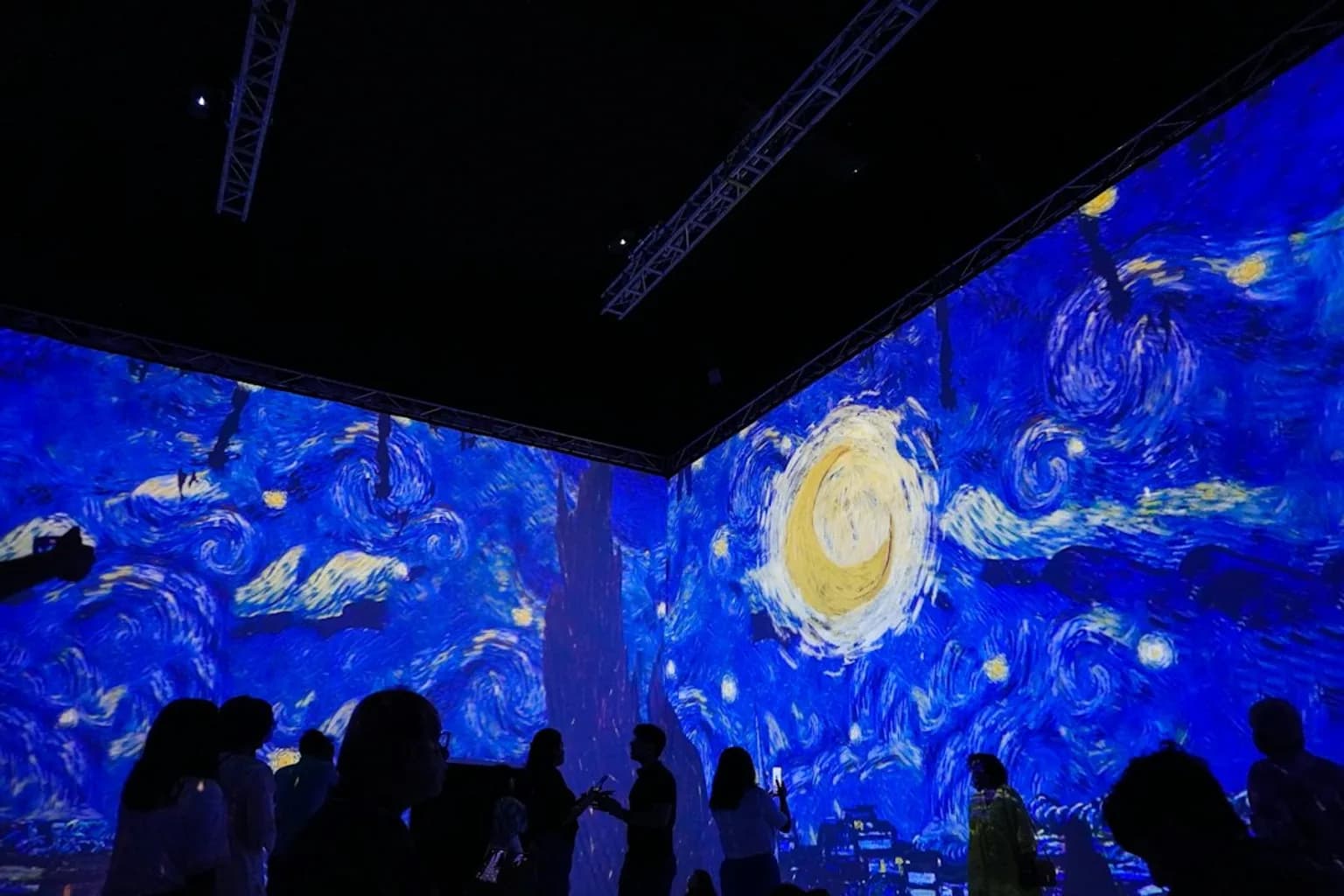
From a window at Saint-Paul-de-Mausole mental asylum in Saint-Rémy-de-Provence, Vincent van Gogh had only a restricted view of the night sky. Confined there at 36 after mental health crises, including an earlier confrontation with painter Paul Gauguin in which he severed his left ear, he painted in a studio from sketches and memory.
In a letter from around early June 1889, van Gogh described looking out before dawn: “This morning I saw the countryside from my window a long time before sunrise, with nothing but the morning star, which looked very big.”
For more than a century, art historians have treated June 1889 as the month in which he made The Starry Night, drawing on his reference to having completed “a new study of a starry sky” in a 18 June 1889 letter.
Now a paper published on October 22 in Scientific Reports argues that the scene instead matches the predawn sky over Saint-Rémy on July 22, 1889. The study identifies the painting’s stars as the V-shaped Hyades cluster in the Taurus constellation.
Its first author, Elijah Jeong-hyun Kim, is a space researcher, chief executive of a Seoul telescope maker and a doctoral candidate at Kyung Hee University. He travelled to Saint-Rémy-de-Provence in June and July 2019 to study the place from which van Gogh painted.
“No two skies are the same. Something always changes. I believe Vincent noticed those changes and put them into the painting,” Kim said.
Kim’s team used a shape-analysis program called Procrustes to compare the relative positions of groups of stars. It matched five stars in the work with five stars in the Hyades.
Using computer-aided design tools and historical astronomical data, the researchers compared the painting’s star positions with every night in Saint-Rémy across June and July 1889. June 23, July 22 and July 23 produced the strongest matches.
They argued that July 22 was the closest fit. Before dawn that day, the Hyades rose in the east alongside Venus, while a crescent moon sat above the horizon.
The moon is central to their case. The painting shows a waning crescent, while in mid-June the moon would have been in a waning gibbous phase.
Weather records also showed intermittent winds from July 15th to 26th, followed by strong mistral gusts starting on July 27th.
Kim said: “I am confident that July 22 is the better date. I will bet on this date.”
The proposal runs against earlier attempts to read a particular night into the painting. In the 1980s, the art historian Albert Boime used planetarium reconstructions to connect three stars with Aries as seen from the location on June 19, 1889. He also found a difficulty in that explanation: the work’s slivered crescent did not match the waning gibbous moon visible in late June.
The Van Gogh Museum in Amsterdam has affirmed that the painting was made in June 1889. It said van Gogh did not aim for exact likenesses, and that the positions of the celestial bodies cannot reliably date the work.
Don Olson, professor emeritus of physics and astronomy at Texas State University, also disputes the study’s alignment. “The calculated position of brilliant Venus, in relation to the V shape of the Hyades asterism, does not match the painting,” he said.
Olson said the authors’ narrow assumed field of view conflicts with the wider view needed to include the painting’s round hills and cliffs.
Jose Luis Aragon of the National Autonomous University of Mexico offered a more qualified response. “Still, I would see the July date as an intriguing hypothesis rather than a settled answer,” he said.
Aragon said the study’s wider value lay in its evidence that the work drew closely on observation. “What I find most convincing is the broader message: The painting is not pure fantasy. Van Gogh watched the real sky very closely.”
The Starry Night is in the permanent collection of the Museum of Modern Art in New York City.



Comments (0)