
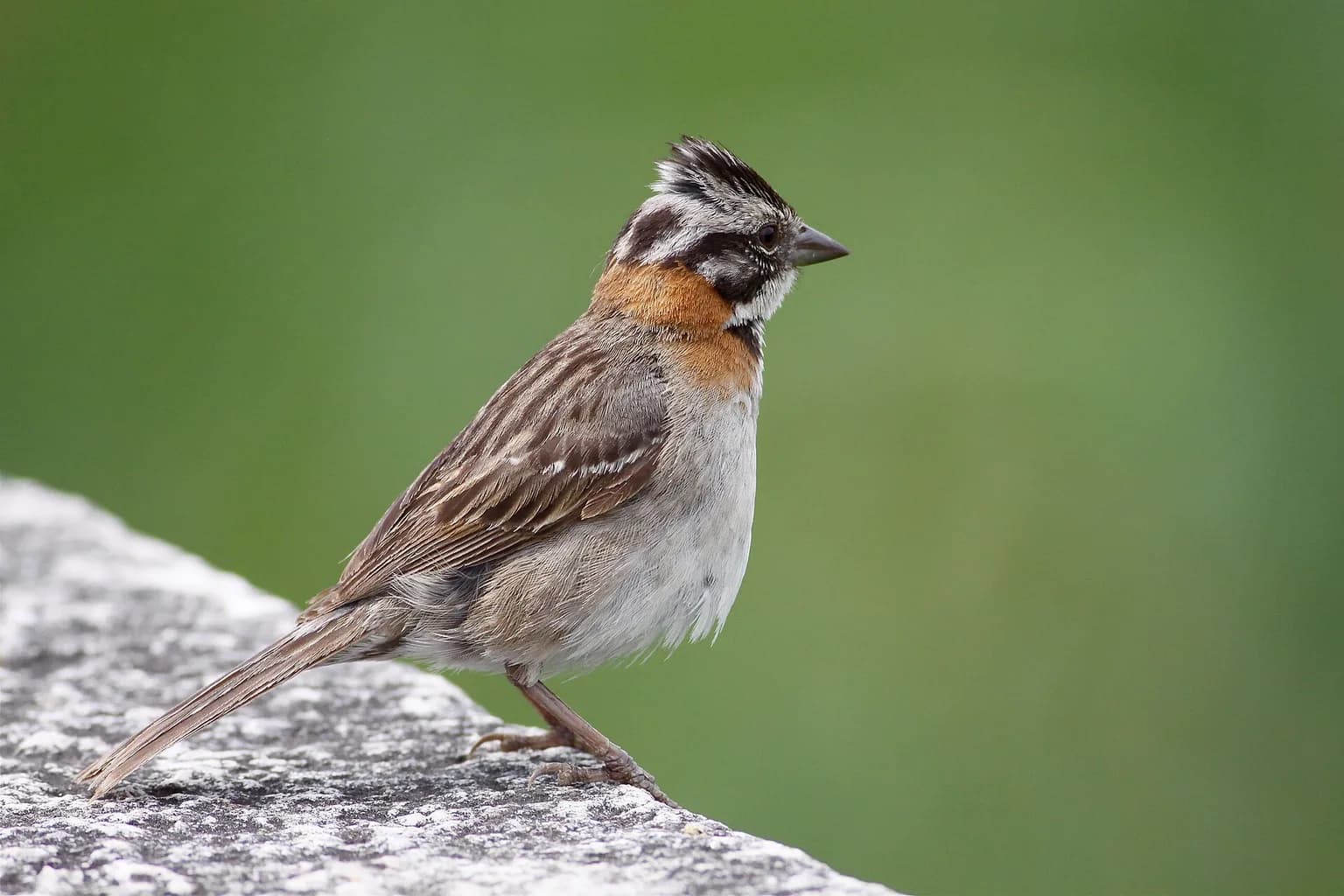
In a Buenos Aires park where rufous-collared sparrows have become fewer, researchers played a song the local birds had once sung in the 1960s, reconstructed from marks on paper rather than an old recording.
The dialect had disappeared from the park population for reasons scientists cannot explain. Then, less than three months after the computer-generated version was played, one local bird started to copy fragments of it.
The experiment was designed by scientists in Buenos Aires to see whether artificial tutoring could return a vanished dialect to local rufous-collared sparrows.
The original song survived only as hand-drawn annotations from the 1960s. Researchers used those annotations to build a computer simulation of the missing song.
For songbirds, such details carry practical weight. They use songs to attract mates and defend territory, and their complex vocalisations are generally learned from other birds. Male birds are better placed to attract a mate when they sing in a complex, reliable and well-performed way.
Each song examined in the study has two parts: a trill that is shared among birds in the same region, and a theme that differs. The loss of adults as populations shrink can leave younger birds without the chance to hear traditional songs, allowing communication patterns to disappear.
Gabriel B Mindlin, a physics professor at the University of Buenos Aires who co-authored the study, has stressed that biodiversity involves learned animal behaviour and culture as well as genetic material.
Other conservation work has shown that bird song can recover through learning. Cirl buntings moved from Devon to Cornwall first produced songs that were squeaky, slow and much less varied than those of the Devon source populations. Eight years after translocation, their songs had returned to normal.
Separate research in Australia found that zoo-bred regent honeyeaters learned traditional songs from wild tutors and then transmitted them to younger birds.
The Buenos Aires result suggests that digital sound simulation could support the preservation of bird singing patterns when adult birds cannot alone pass them to a new generation. Researchers are optimistic that synthetic recordings may help teach songs to other species whose populations are declining, including threatened songbirds.



Comments (0)