
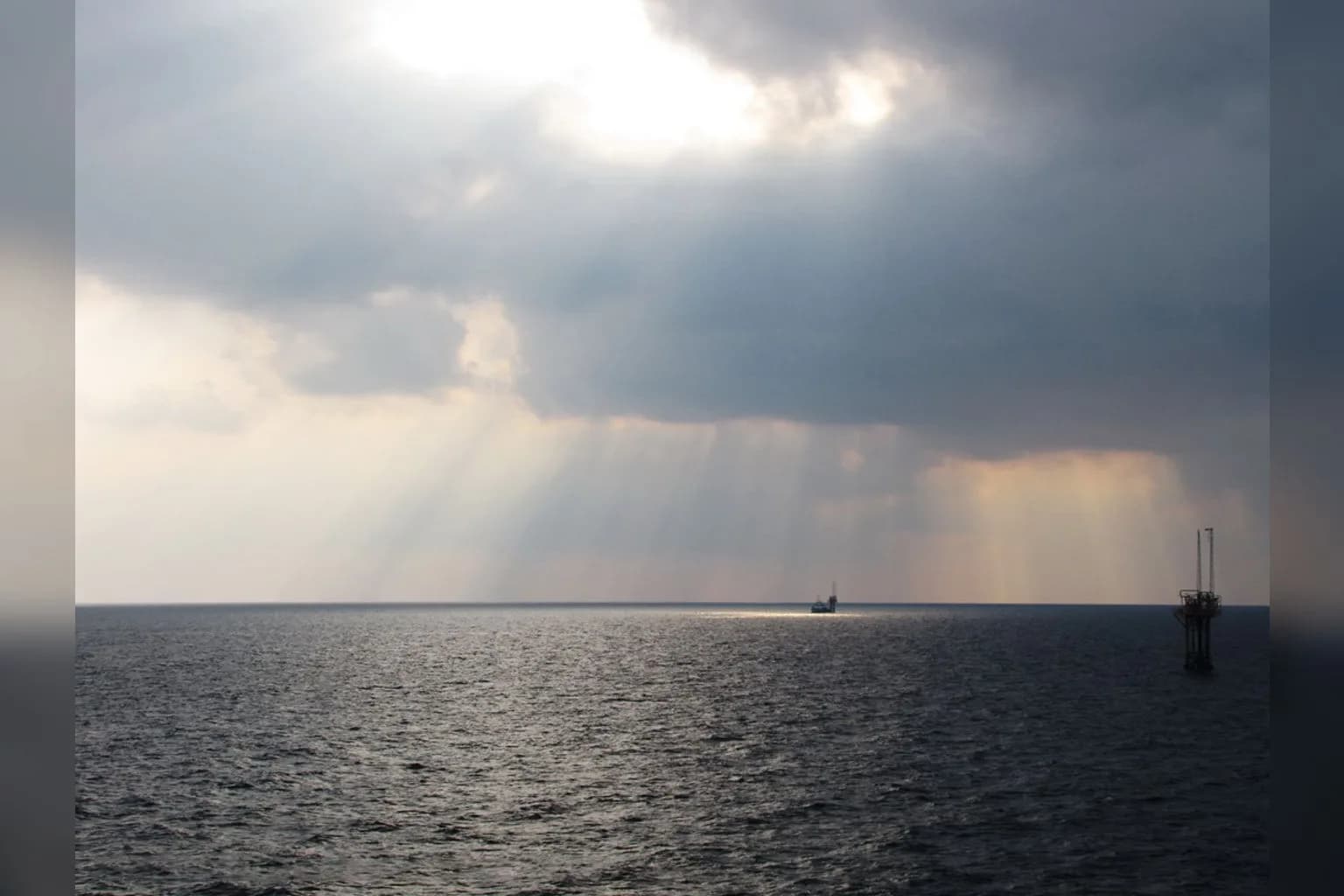
A tanker crossing the Strait of Hormuz on 1 October was hit by an unknown projectile, starting a fire onboard. The crew was reported safe. By 4 October, the passage was classified as Restricted on day 219 of the Hormuz crisis.
The strait, one of the world’s most strategically important maritime passages, had handled about 84.8 ship transits a day before the crisis. AIS-visible commercial traffic has since fallen to 6.3 vessels a day over the past week, about 7% of normal levels. The disruption has helped push Brent crude above $100 a barrel.
The crisis began on 28 February 2026, when US and Israeli strikes on Iran killed Supreme Leader Ali Khamenei and Iran declared the strait closed to hostile shipping. Attacks on merchant ships began on 1 March, and the Islamic Revolutionary Guard Corps, or IRGC, formally confirmed the closure on 2 March. AIS-visible crossings dropped sharply within days, from 57 transits on 28 February to none on 4 March, according to IMF PortWatch.
A Pakistan-mediated two-week ceasefire between the US and Iran was announced on 7 April and took effect on 8 April. Iran then established the Persian Gulf Strait Authority on 5 May, requiring ships to obtain transit permits.
The Islamabad Memorandum, signed on 17 June, produced a partial reopening. Traffic reached 51 transits on 24 June. June was still the busiest month since the war began, averaging 12.9 AIS-visible crossings a day, compared with 84.8 a day in the year before the war.
The relief did not last. The interim US-Iran ceasefire collapsed on 8 July, and the US reimposed its naval blockade of Iranian ports on 14 July. Ships now cross either through a US-coordinated southern corridor in Omani waters or with Iranian permits through the Persian Gulf Strait Authority.
On 25 August, the US said its Navy had cleared mines from the shipping lanes after underwater drones identified more than 100 suspected mines. In early September, commodity-vessel traffic averaged 10 transits a day over a 10-day period, its lowest level since May.
On 8 September, the US struck five Iranian tankers near Kharg Island and in the Gulf of Oman. Iran said it attacked 10 ships near the strait after the United States sank five Iranian oil tankers. The exchange was the largest declared action against shipping since the war began.
At least one seafarer was killed in the Iran-US attacks near the strait. Saudi Arabia said an Iranian attack on the Bahri-owned tanker Sidr killed two Filipino seafarers while it was transiting the passage.
Iran’s foreign minister set out a seven-day plan at the UN in New York on 24–25 September. President Trump rejected the proposed reopening plan on 26 September, saying the deal “would not be acceptable”. Iran has also blacklisted 45 vessels over alleged breaches of its Strait of Hormuz transit arrangements.
Iran has announced plans to publish details of a new restricted zone in the Gulf, along with maps for an alternative shipping corridor through Iranian and Omani waters. For now, the tanker fire on 1 October and the traffic figures of the following days underline how little commercial movement has returned to the strait.

Comments (0)