
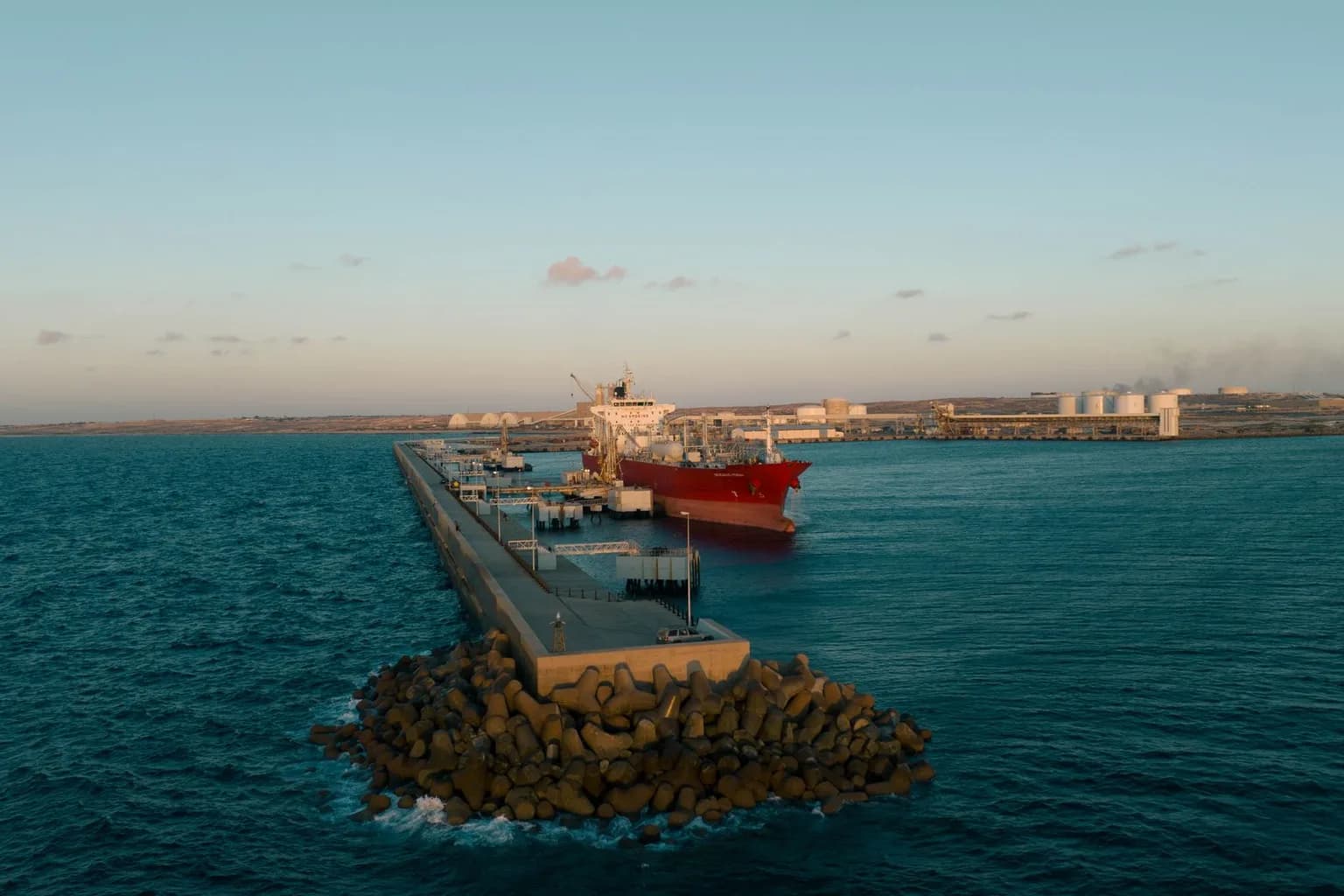
Yousef Kiblavi, the head of Syrian Petroleum Company, said an agreement for Iraqi crude exports through Syria was close to completion, with truck shipments expected to begin “as soon as possible”. He said he hoped the first convoy carrying crude would reach Syria by mid-October.
The planned route would take Iraqi crude by land to the Syrian port of Baniyas on the Mediterranean Sea, bypassing the Strait of Hormuz. Syrian authorities have indicated they are ready to provide the corridor after Iraqi authorities asked for help exporting crude as well as fuel oil.
The proposal builds on an operating supply chain. Iraqi fuel oil is already carried by truck to Baniyas, where it is loaded onto tankers for onward export. About 1,000 trucks make the journey daily, each able to carry about 220 barrels.
Kiblavi said crude movements could involve at least as many or more than 1,000 trucks a day, reflecting the larger volume of Iraqi crude.
Iraq is searching for an outlet after the closure of the Strait of Hormuz dealt a severe blow to oil revenue. Approximately 3.3 million barrels of Iraqi oil a day passed through the strait in 2025.
That exposure is large for a producer that ranked fifth globally in crude production in 2025, at about 4.39 million barrels per day, according to Energy Information Administration data. Iraq is also the second-largest oil producer in OPEC after Saudi Arabia.
The pressure extends beyond Iraq’s immediate revenues. About 72% of its exported oil went to Asia, primarily China and India. In 2024, Iraq produced about 4.4 million barrels of oil per day and maritime exports totalled more than 3.2 million barrels per day.
Across the Middle East Gulf region, Kpler put non-Iranian crude and condensate exports at a minimum of 16.5 million barrels per day from 1–28 September. It said 60%, or 9.9 million barrels per day, crossed Hormuz.
The truck route is an immediate option. Iraq and Syria are also working on infrastructure intended to provide a larger and more durable outlet to the Mediterranean.
The countries signed a memorandum of understanding in Washington in July to revive the Kirkuk-Baniyas crude pipeline. Rebuilding that route could take four years and cost at least $15 billion because it would need new infrastructure.
Iraq’s existing northern export route follows the Kirkuk–Ceyhan pipeline through Turkey to the Mediterranean Sea. Operations on that route have been suspended since 2023.
Oil Minister Bassem Mohammed Khudair announced on Tuesday, September 8 that Iraq was moving ahead with a major pipeline project involving US and Qatari firms. The consortium includes Chevron, TI Capital and Qatar’s UCC.
The project is intended to connect Basra, Iraq’s southern oil hub, with Fishkhabur near the northern border. Its plans include a western branch towards Baniyas.
US President Donald Trump praised regional energy developments publicly last week, citing the construction of several pipelines and cross-border oil transport towards Syria’s coast.
For Baghdad, the central question is whether the Syrian corridor can move enough crude to soften the loss of maritime access while longer-term pipeline plans take shape. The timing, initial volume and terms of the crude-export agreement have yet to be set out publicly.

Comments (0)