
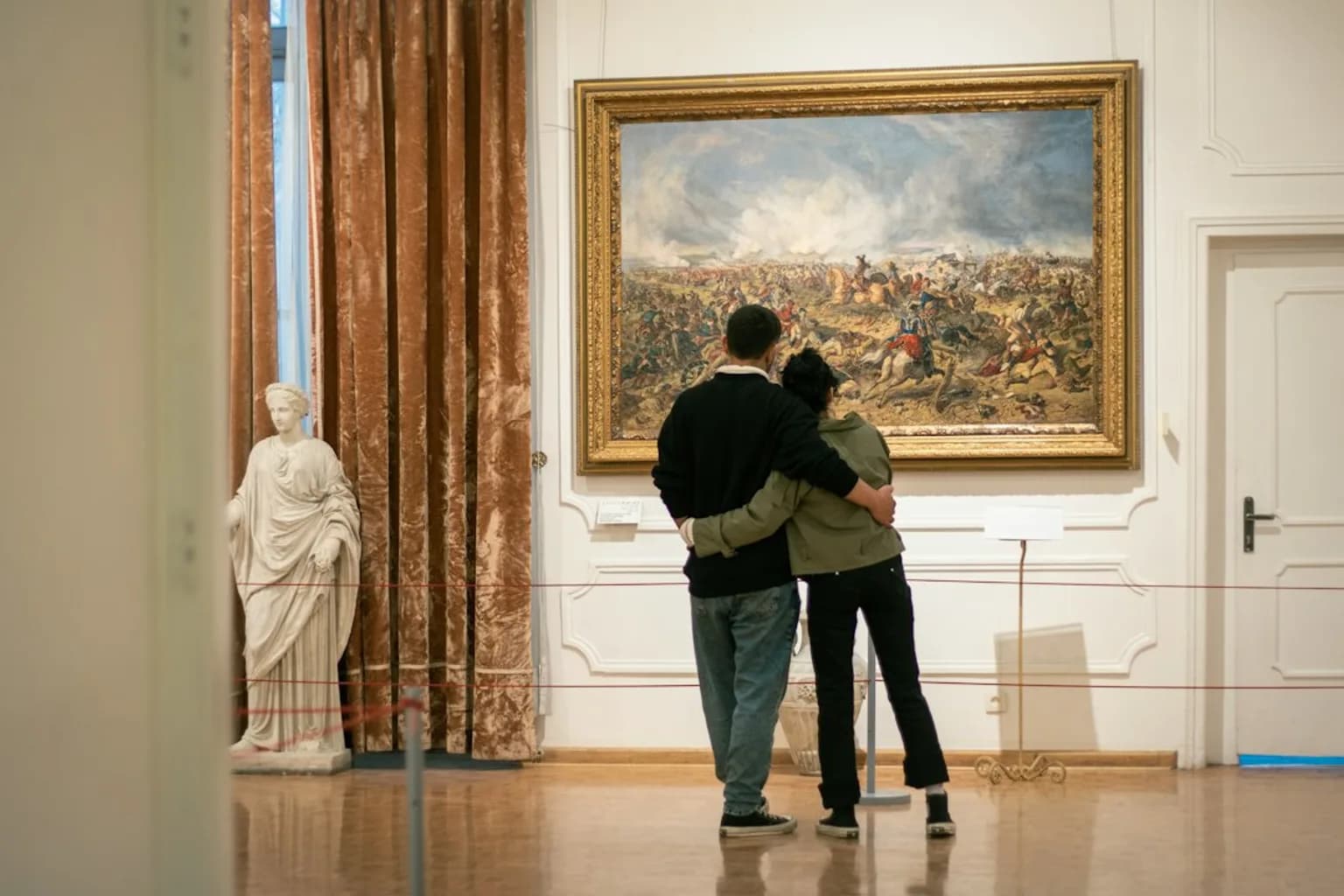
At 4am, Elham Issari was at her computer in Tehran, looking on YouTube for a way to make lead white paint in her backyard without poisoning herself. A single tube of white paint had been offered to her for 5m tomans, about $36.
For artists in Iran, even the materials of the trade have become hard to find. Sanctions and supply shortages have made basic supplies difficult to obtain, pushing some artists towards expensive channels or improvised methods at home.
The pressure deepened after airstrikes on 28 February, when commercial galleries in central Tehran closed their doors.
Dario Duran, a 38-year-old Canadian-Iranian curator, had already built a life in Iran after moving there six years ago and founding Duran Art Projects. Born in Shiraz and raised in Canada, he holds degrees in photography, art history and curatorial studies.
Displaced during the war, Duran fled Shiraz with his parents, who were visiting from Canada. From the north, he bought a couple of gigabytes of internet access to get onto WhatsApp.
He then sent an open letter to international collectors, museum directors and gallerists, seeking to restore a connection between Iranian artists and audiences abroad. The response, he said, was immediate and overwhelming.
Duran and Mariam Rasti, the co-founder of Duran Art Projects, who had fled the capital, spent five months developing Continuum: Artist Relief for Iran.
The platform brings together more than 500 original works by over 200 contemporary artists living and working inside Iran. It is intended to connect them directly with international audiences, collectors and institutions.
Eleven commercial galleries across Iran agreed to give up 100% of their sales commissions. Duran Art Projects charges no platform fees, meaning 100% of each completed artwork sale goes to its artist.
The effort confronts obstacles that have long made international participation difficult. Galleries abroad have been reluctant to represent Iranian artists because sanctions complicate shipping, payments and other transactions, while visa restrictions make overseas travel hard for artists.
A second route opened in London. Nearly 200 works by around 100 Iranian artists went on display at Ab-Anbar Gallery from 19 to 26 September in an exhibition called 'A Present Tense: Contemporary Artists Living and Working in Iran'. Around 20 Iranian galleries and art spaces took part.
Salman Matinfar, Ab-Anbar’s founding director, had once been part of Iran’s art scene before closing his Tehran gallery and opening the London venue in 2020. He began talks with Orkideh Daroodi, founder of Tehran’s O Gallery, to organise the exhibition.
Ab-Anbar provided its space and waived its commission. Daroodi said galleries responded in trust, accepting the risks of sending works abroad and securing their return.
The conflict made the task especially costly and difficult. Organisers selected smaller works on paper, cardboard and textile to make transport possible, while Iranian galleries accepted shipping costs that proved significantly higher than expected.
Support for artists at risk has also taken other forms. The Iranian Artist Support Project, led by the Artistic Freedom Initiative, gave pro bono immigration representation, relocation help, temporary housing, resettlement funds and employment opportunities to 53 at-risk Iranian artists, journalists and dependent family members.
Continuum and the London exhibition offer channels through an increasingly obstructed system. Whether they can produce sustained sales, representation or broader access to international audiences remains unknown.
Comments (0)