
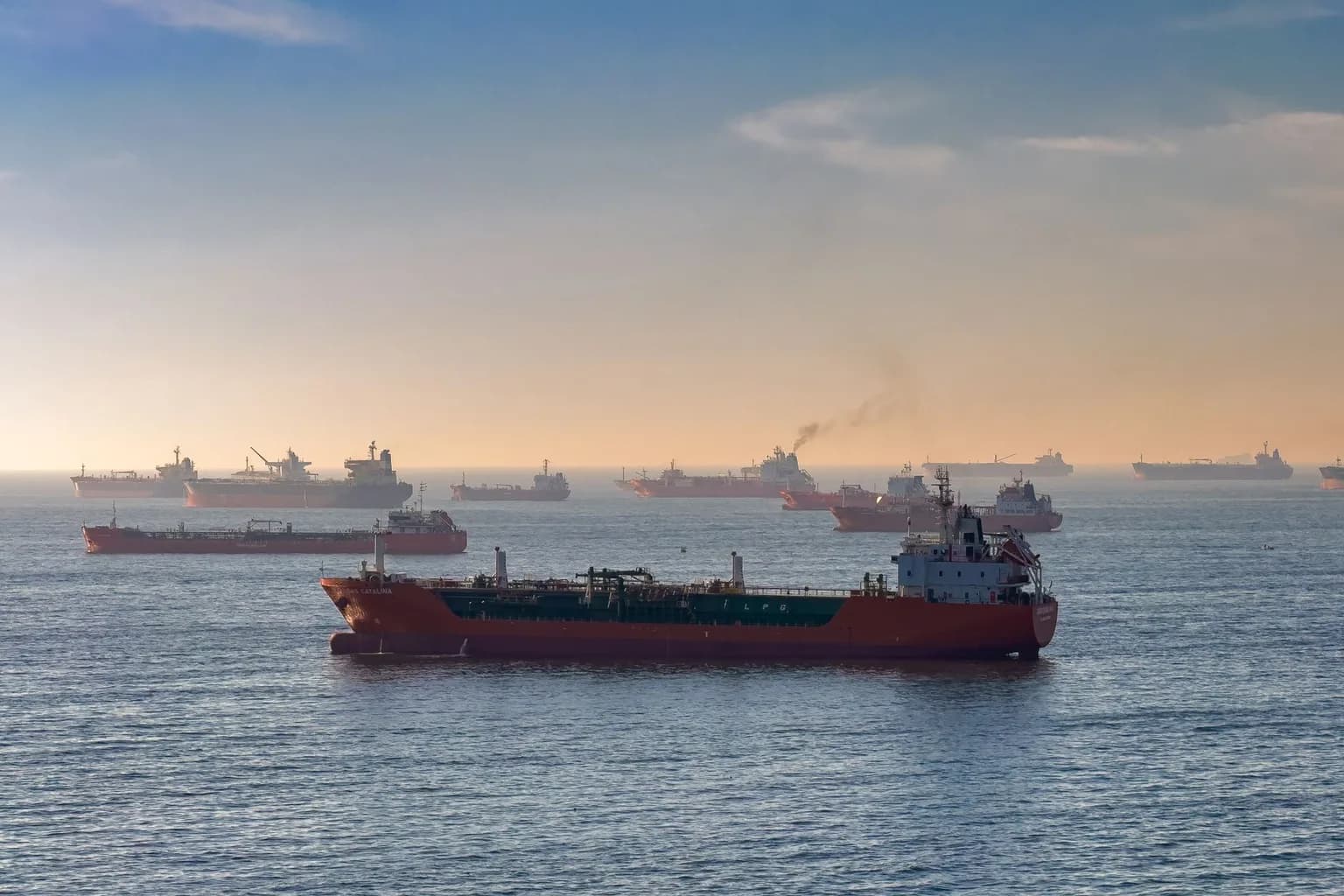
The Strait of Hormuz remains central to Middle Eastern oil trade, yet far less crude is now travelling directly through it. Before the war, 83% of the region’s crude crossed the strait. In September, the share physically transiting it had fallen to 60%.
Oil exports from the Middle East, excluding Iran, nevertheless exceeded their pre-war average last week, according to Kpler. At least 16.5 million barrels a day left the region between September 1 and 28, matching the pre-war average when Iran is excluded.
The recovery follows a sharp reversal from March, when conflict disrupted routes and exports ran 10.5 million barrels a day below the pre-war monthly average. September’s exports were 10.5 million barrels a day above March’s monthly average.
Producers have shifted 40% of Middle East Gulf exports away from Hormuz, compared with 17% before the war. In September, 23% of crude was loaded outside the strait, mainly off the Gulf of Oman, while 17% departed through the Red Sea.
Saudi Arabia’s East-West pipeline links its main eastern oil fields to the Red Sea terminal at Yanbu, avoiding Hormuz. Pipelines in Saudi Arabia and the United Arab Emirates have become key alternative export routes.
Much of the crude still passing through Hormuz is moving by shuttle tanker or through ship-to-ship transfers, rather than remaining on one vessel for the journey. Tanker attacks have increased across the region, and producers have chosen alternative routes and expensive shipping workarounds rather than cut output.
Michelle Brohard, Kpler’s head of policy and geopolitical risk, said she suspected Gulf producers were paying Iran for safe passage. ‘I suspect there is a toll that's being paid, which is giving these ships safe passage,’ she said.
Brohard speculated that the payment could amount to 10 to 20 percent of a cargo’s value. She presented the assessment as suspicion rather than a confirmed finding.
Iran’s Islamic Revolutionary Guard Corps was reported by the shipping journal Lloyd’s List as early as March to have introduced a ‘toll booth’ system for controlling vessel traffic through the strait. Iran also has a government body, the Hormuz Safe Marine Services Authority, established to collect fees for vessels’ safe transit through the waterway.
In September, the US government sanctioned the digital assets firm BitBank, saying it had been used by the Hormuz Safe Marine Services Authority to transfer money to Tehran.
That sequence does not establish a systematic Iranian levy. Abdul Khalique, head of the Liverpool John Moores University Maritime Centre, said no public proof confirms a state-run toll system. He said the alleged arrangement may be more accurately understood as an informal security mechanism.
Ali Fadavi, a senior commander in the Islamic Revolutionary Guard Corps, said on Sunday that only three to four million barrels per day were moving along a US-supervised route. He described that volume as negligible beside pre-war traffic.
Before the war, one-fifth of the world’s oil and natural gas exports passed through Hormuz. Experts say export volumes have recovered, while warning that the present arrangements remain far from normal and may prove difficult to sustain.
Comments (0)