
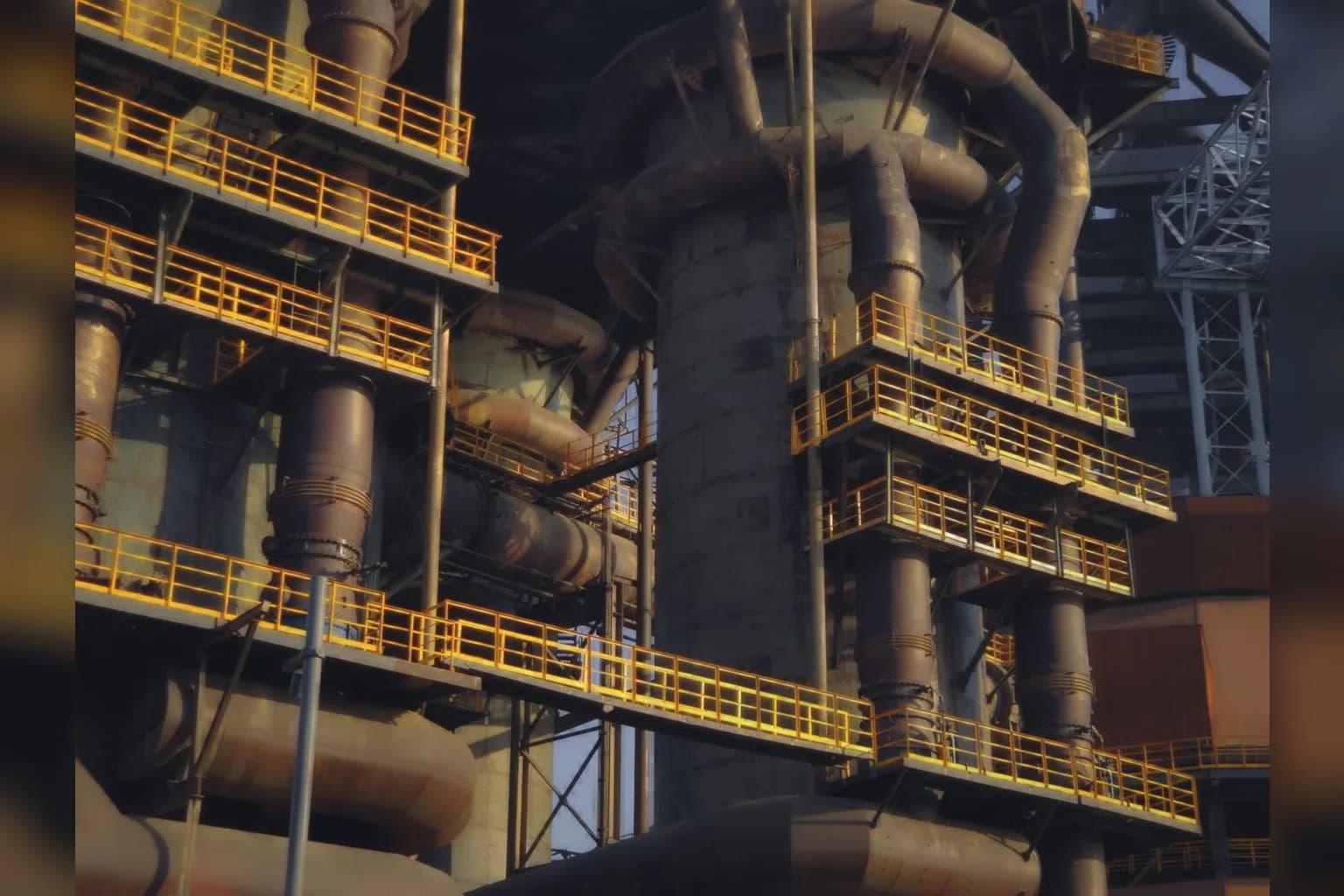
In Guangdong Province, China launched its first near-zero carbon steel production line in December 2025. The plant uses direct reduced iron, or DRI, from a hydrogen-based shaft furnace with an EAF, cutting carbon emissions between 50 and 80%.
Baowu Steel, the state-backed steelmaker and world’s largest producer, makes over 130 million tonnes of crude steel per annum. It set an advanced CO2 peak-out target in 2023 and a carbon neutrality target in 2050. Its new line offers a working example of cleaner production, though such projects remain unusual in an industry constrained by surplus capacity and expensive energy.
The difficulty matters far beyond one plant. China produced over half of the world’s total crude steel in 2025, and its steelmakers face a looming reinvestment choice as a significant share of capacity built after 2000 reaches the end of its first capital cycle.
The government suspended its existing capacity replacement programme in August 2024. A revised policy framework proposed in 2025 would bar new capacity in key regions and require the retirement of at least 1.5 tonnes of existing capacity for every tonne added.
Advertisement
There are still no signs of faster blast-furnace retirements, despite population projections and a construction slowdown pointing to a likely structural fall in steel demand. Demand in China is projected to fall by about 40% by 2100.
In June 2026, Beijing released a 3-year action plan that named hydrogen DRI as a technology to work on implementing. China has very little existing DRI capacity of any type, leaving a large gap between the policy ambition and the industrial base needed to deliver it.
Excess capacity is expected to rise from 601 million tonnes in 2024 to 721 million tonnes by 2027. That surplus puts downward pressure on prices and profitability, reducing companies’ ability to fund research, development and investment in low-emission solutions.
So far, 15.5 million tonnes of low-emission projects have been put on hold. High energy costs, especially electricity prices, weaken the business case for hydrogen-based steelmaking, while green hydrogen remains too expensive to produce at scale.
Green steel made through hydrogen direct reduction costs 20-40% more than steel from conventional blast furnaces. The market tolerates only around 10% of that cost increase. The relative premium for a low-emission steel product in China rises by 6 percentage points, from 16% to 22%.
Low-carbon, low-cost green and blue hydrogen is one of the biggest barriers to growth in the green steel industry. China’s steel decarbonisation policy has largely focused on incremental emissions reductions at existing plants. In the US and Europe, industrial policy has directed subsidies and support towards first-of-a-kind emissions-free steel plants, while support in China has been more muted.
The result is a tight industrial calculation. Beijing has identified hydrogen DRI as a priority, and Baowu has demonstrated the technology at a production line. Yet the sector must make cleaner investments while traditional capacity still weighs on profits and domestic demand is expected to decline.
Advertisement

Comments (0)